Concord Grape Jelly Recipe With Powdered Pectin
This homemade Concord grape jelly recipe captures that deep, unmistakable grape flavor using fresh Concord grapes, sugar, and powdered pectin. That's it. After making the from fresh picked grapes, I've found that the secret to perfect grape jelly isn't a complicated ingredients list. Instead, it's giving the juice plenty of time to strained rest before turning it into jelly.
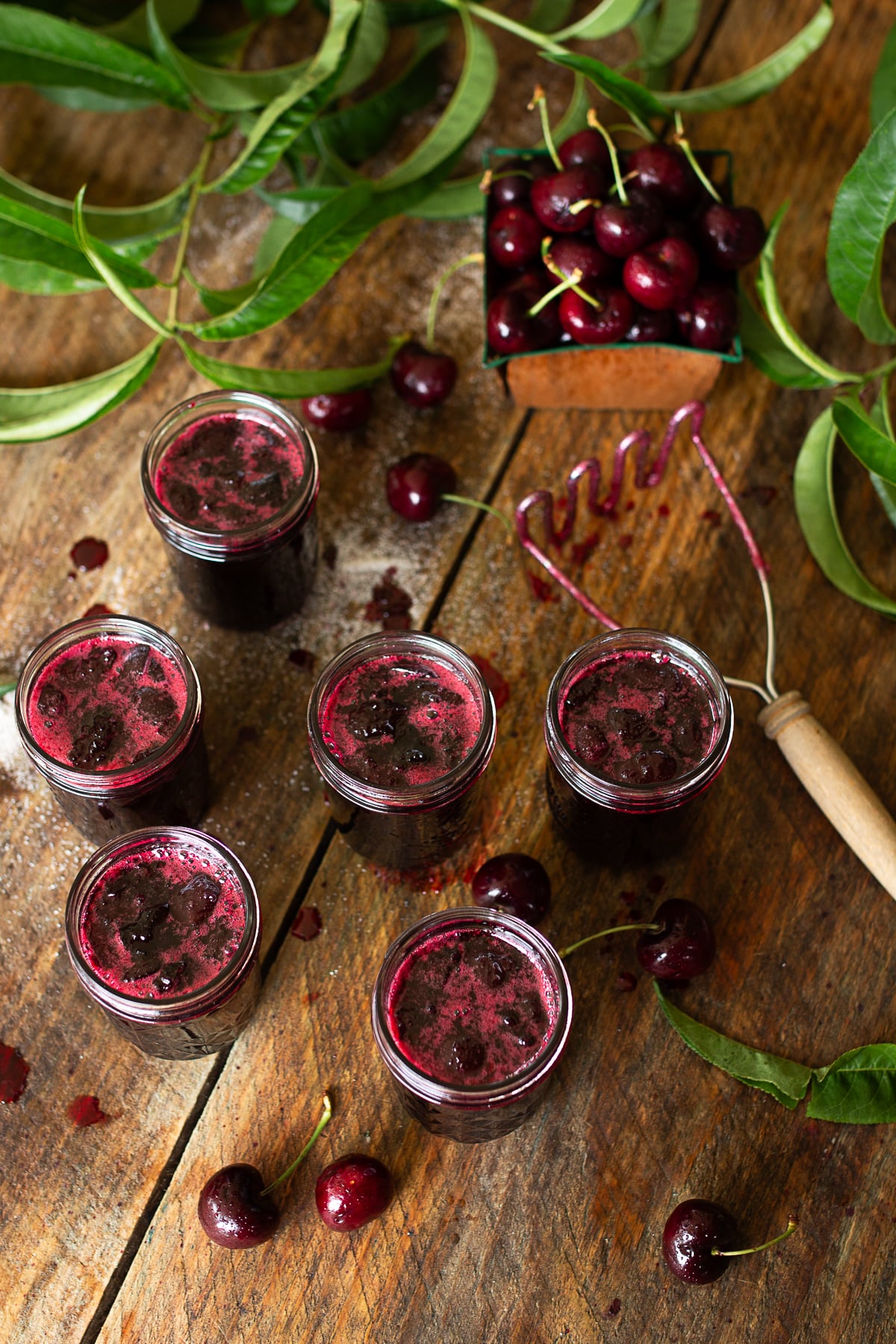
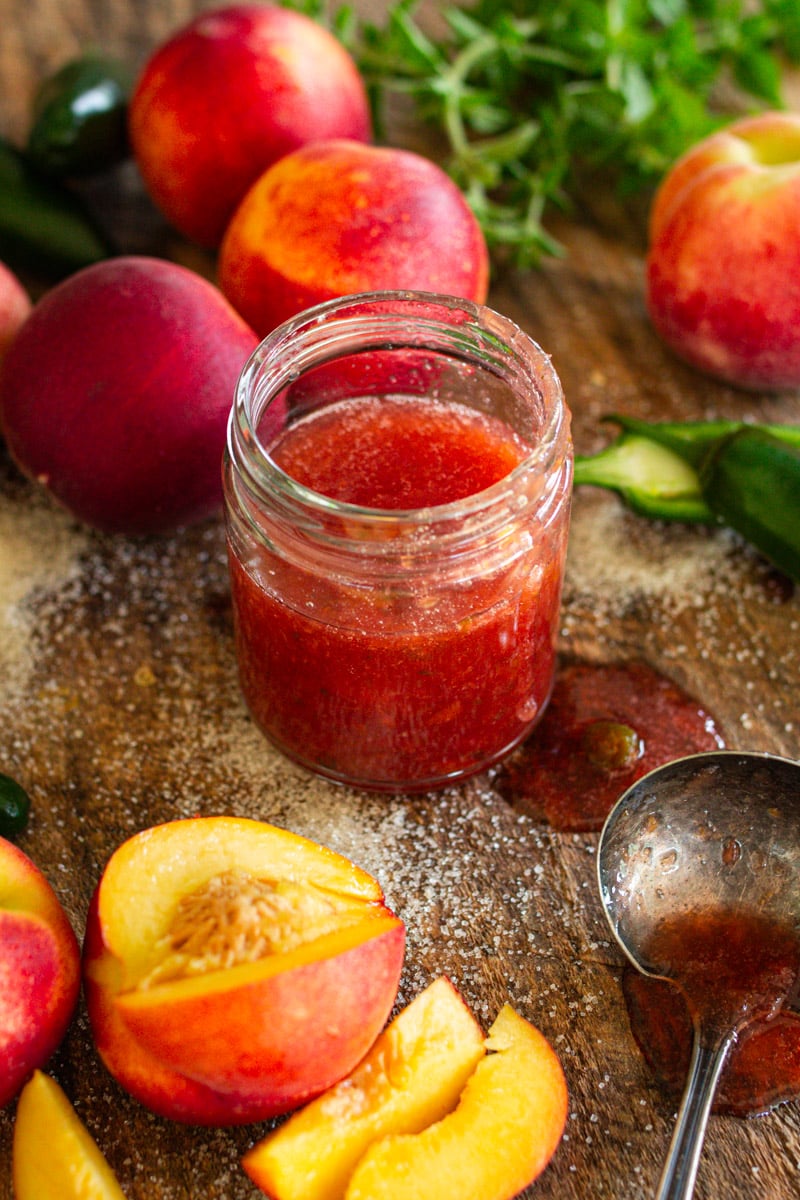
I make enough Jams and jellies throughout the year that I purchased a bulk powdered pectin instead of relying on individual boxes or liquid pectin. It's easy to measure for different recipes and I always have it in my pantry whenever a fruit ripens and I need to preserve it quickly. If you also love using powdered pectin, this method is for you. And make sure to check out my other jams and jellies like this cherry jam, or this thick chunky peach jam.
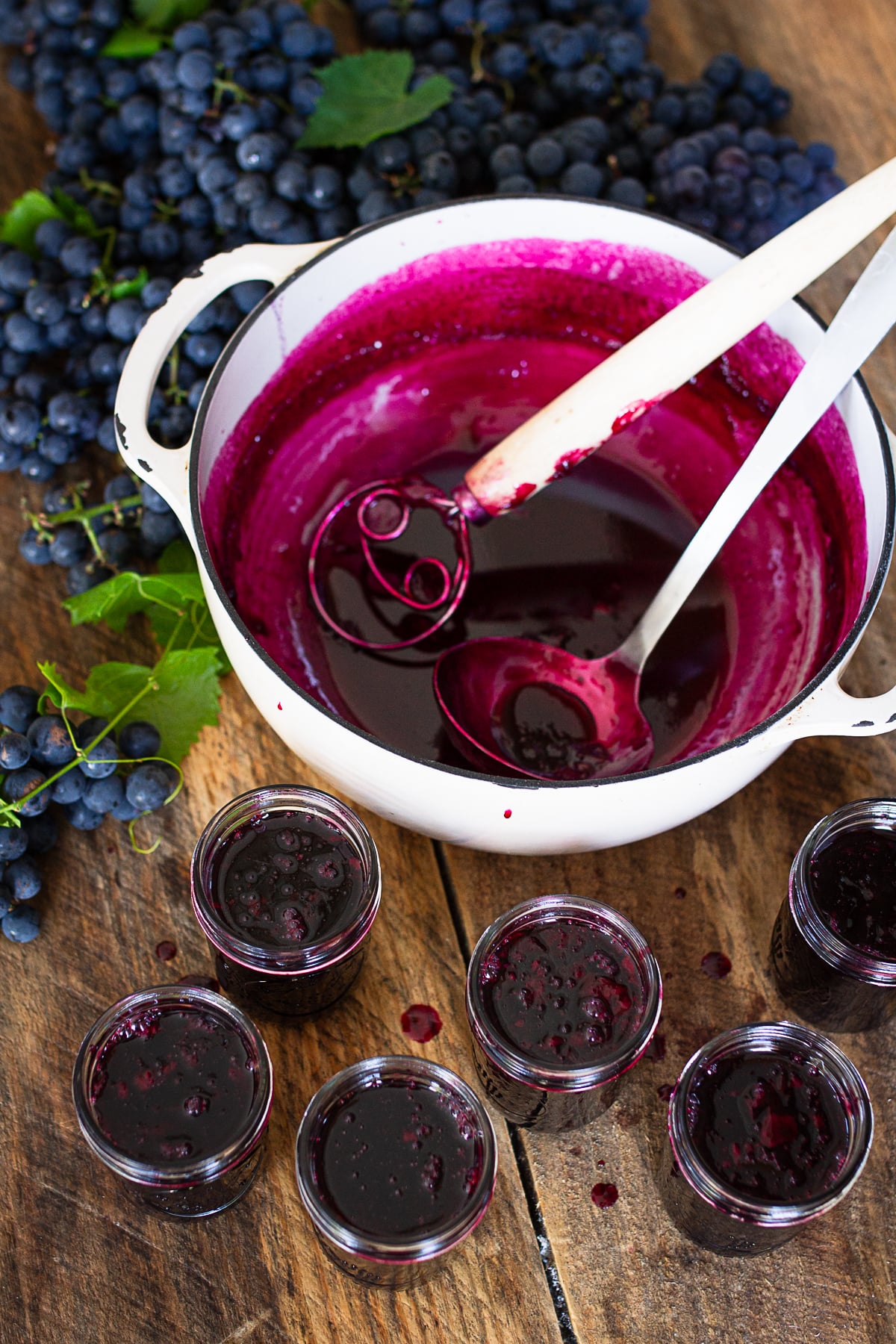
Quick Look: Concord Grape Jelly
🍇 Flavor: Deep, sweet Concord grape flavor with a little natural tartness
🫙 Yield: About 5 to 6 half-pint jars
⏱️ Time: Plan on two days, including an overnight rest for the grape juice
🥄 Pectin: 5 tablespoons regular powdered pectin
✨ Texture: Smooth, soft-set, and easily spreadable
💧 Canning Method: Water bath canning
⚡ Pro Tip: Strain the grape juice more than once. I strain mine three times throughout the process to remove seeds, pulp, sediment, and crystals.
SUMMARIZE & SAVE THIS CONTENT ON
Jump to:
- Quick Look: Concord Grape Jelly
- Why You'll Love This Recipe
- What Makes This Concord Grape Jelly Different? The Three Strain Rule.
- Key Ingredients
- Expert Tips
- How To Make Concord Grape Jelly
- Storage Tips
- More Homemade Preserving Recipes You'll Love
- Final Thoughts From the Homestead
- Concord Grape Jelly Recipe
Why You'll Love This Recipe
Made with fresh Concord grapes: Cooking whole grapes gives this jelly the deep grape flavor and beautiful purple color.
Used powdered pectin: This recipe is made specifically with regular powdered pectin, which is what I keep on hand for my homemade ams and jellies.
Four simple ingredients: Fresh grapes, water, sugar, and powdered pectin are all you need.
Made for long term pantry storage: Water path canning lets you turn a grape harvest into jars you can enjoy long after the grape season has ended.
What Makes This Concord Grape Jelly Different? The Three Strain Rule.
The biggest thing I learned making grape jelly from fresh grapes was just how important straining is. Who knew right?
Many traditional grape jelly recipes recommend pouring the cooked grapes into cheesecloth, muslin, or a jelly bag and allowing the juice to slowly drip through. I started with cloth, but it was taking far too long for the amount of grape pulp I had.
A fine mesh strainer and large metal spoon worked much better for me.
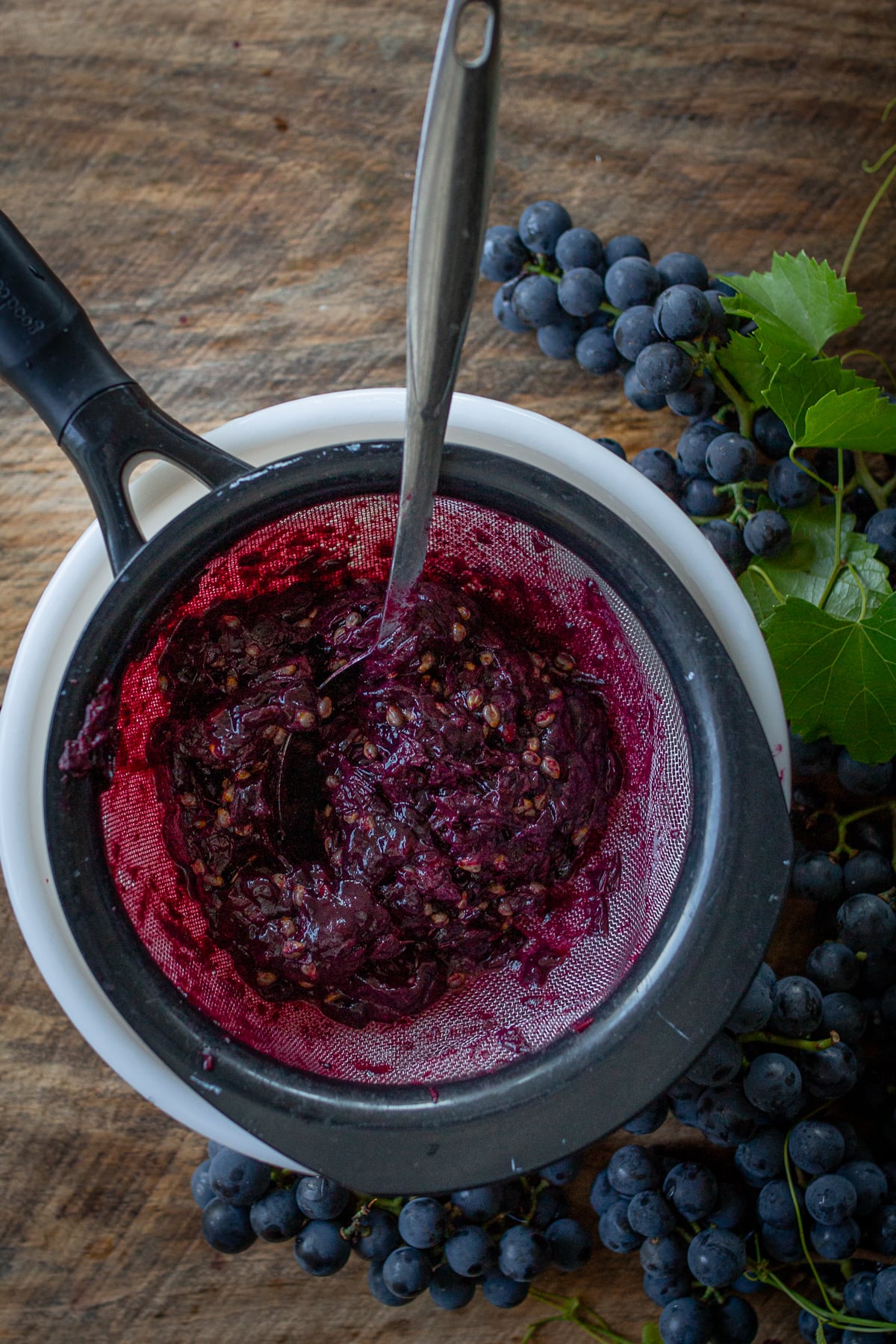
I could easily move the pulp around with a spoon and gently work the juice through the fine mesh strainer instead of waiting forever for it to drip through cloth. You may end up with a little more sediment this way, but you also extract more juice from the grapes with less waste. If you want a clearer juice, you can do the second strain through muslin. I simply ran mine through the fine mesh strainer again, which removed quite a bit more sediment the second time.
Cover and refrigerate the strained juice overnight. As grape juice chills, tiny tartrate crystals can form and settle out. The next day, strain the juice one final time before making the jelly to remove those crystals and any remaining sediment.
Three strains may sound excessive, but I found this method worked best for me. But feel free to experiment with straining as you choose!
Key Ingredients
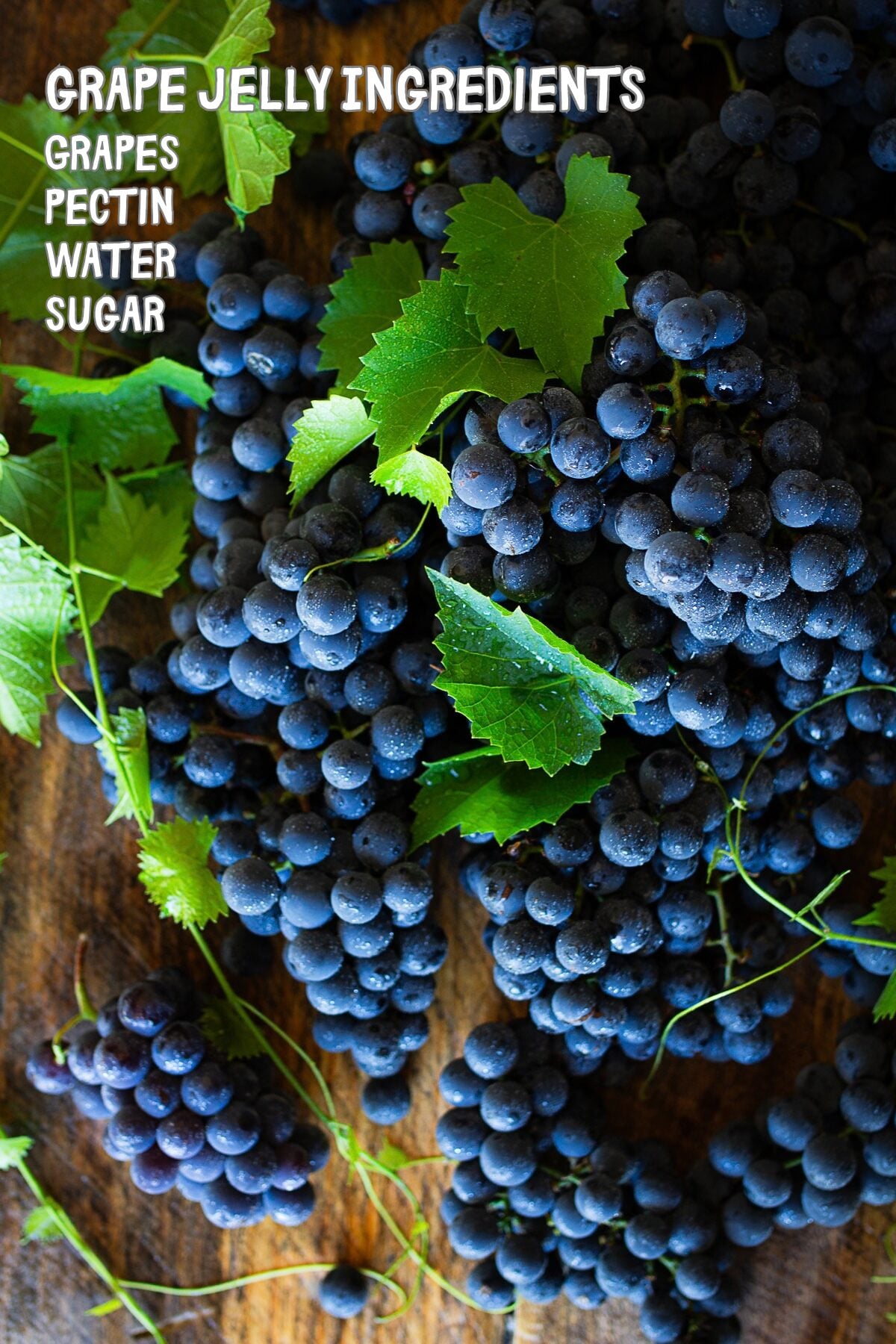
- Concord Grapes: They give the jelly its beautiful purple color and unmistakable grape flavor. You'll need 3-4 pounds of fresh grapes to produce the 4 cups of juice needed for one batch of jelly.
- Powdered Pectin: This recipe uses 5 Tablespoons regular powdered fruit pectin.
- Granulated sugar: Four cups sounds like a lot, but sugar does more than sweeten jelly. It works with the pectin and natural acid in the grapes to create the proper gel and helps preserve the finished jelly. Don't simply reduce the sugar or your jelly may not set properly.
- Water: This helps the grapes not burn to the bottom at the beginning before they start releasing their juice.
Expert Tips
Plan on two days. Extract and strain the juice on day one, refrigerate it overnight, then make and can your jelly the next day.
Use a fine mesh strainer. I started with cloth and found it incredibly slow. With a mesh strainer, I could gently work the pulp with a spoon and get considerably more juice from the grapes.
Strain three times. I strain twice after cooking the grapes and once more after the juice rests overnight. That final strain removes more sediment and the tiny tartrate crystals that can form as grape juice chills.
Don't worry about perfectly clear juice. A little fine sediment doesn't bother me. I'm more interested in getting plenty of juice from the grapes than producing crystal-clear jelly.
Have everything ready before making the jelly. Get your canner heating, jars prepared, sugar measured, and canning tools out. Once the jelly reaches its final boil, you'll want to move quickly.
Skim the foam well. I learned this one firsthand. Excess foam can set into an unappetizing layer at the top of the jelly, so take the time to remove it before filling your jars.
How To Make Concord Grape Jelly
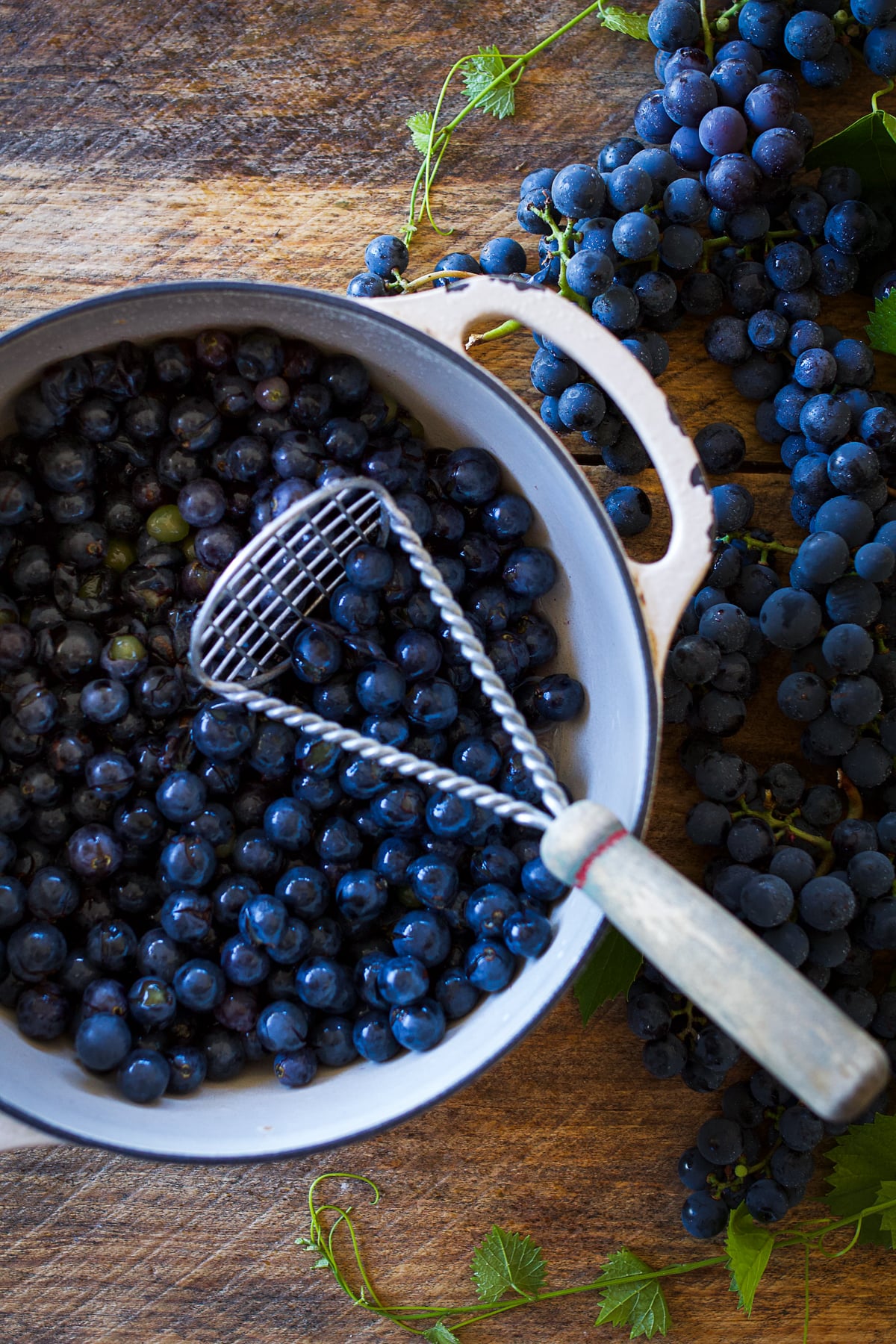
Step 1: Cook the Grapes
Remove the grapes from their stems, wash well, and place them in a large heavy-bottomed pot with ½ cup water. Bring to a boil, crushing the grapes with a potato masher as they soften. Reduce the heat and simmer for about 10 minutes, until the grapes have broken down and released their juice.
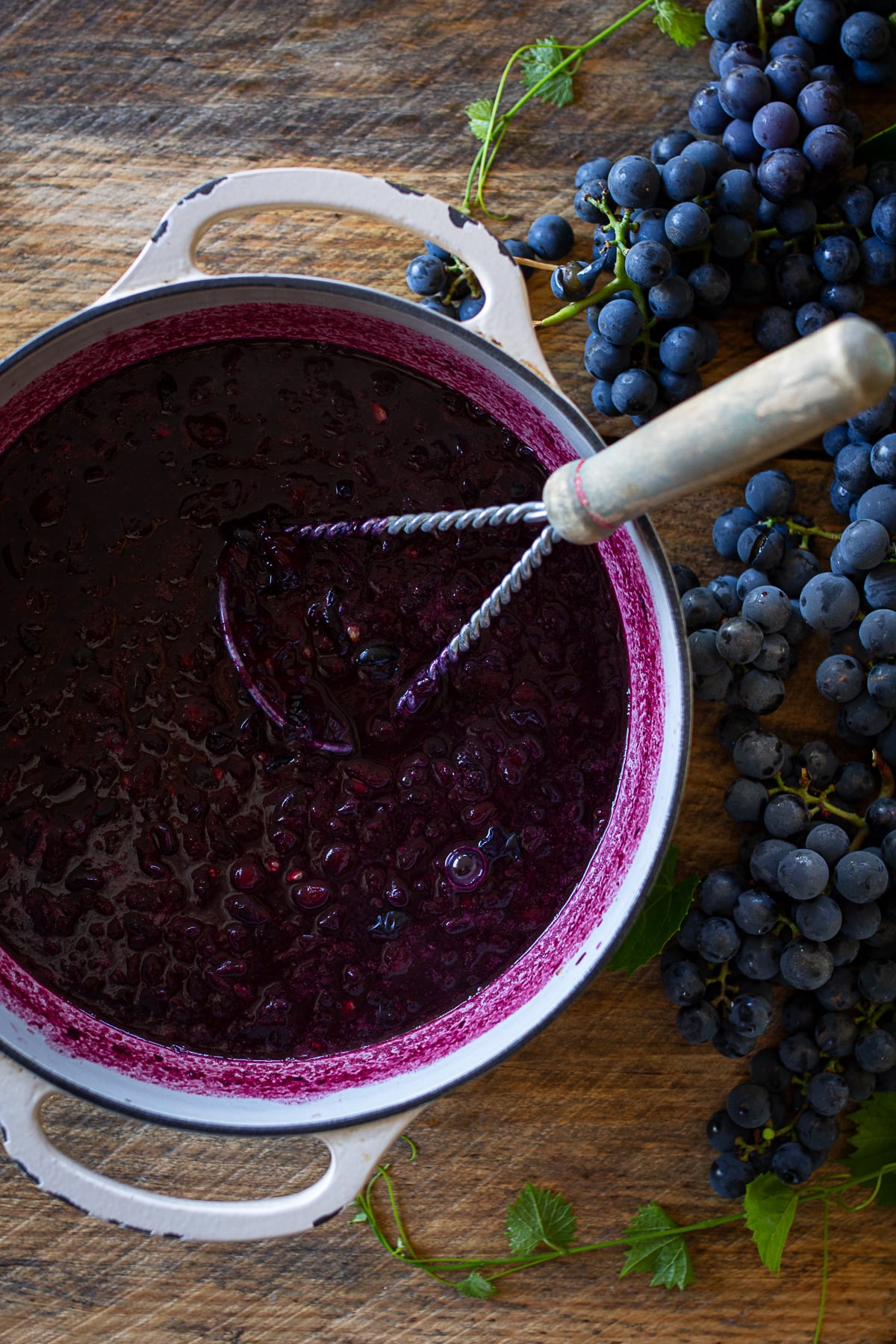
Step 2: Mash the Grapes
As the grapes soften, use a potato masher to crush them and release the juice. Reduce the heat and simmer for about 10 minutes, continuing to mash as needed until the grapes have broken down.
Step 3: Strain and Refrigerate Overnight
Pour the cooked grapes through a fine mesh strainer set over a large bowl, gently working the pulp with a spoon to extract the juice. Strain the juice a second time, then cover and refrigerate overnight.
Step 4: Strain Again and Make the Jelly
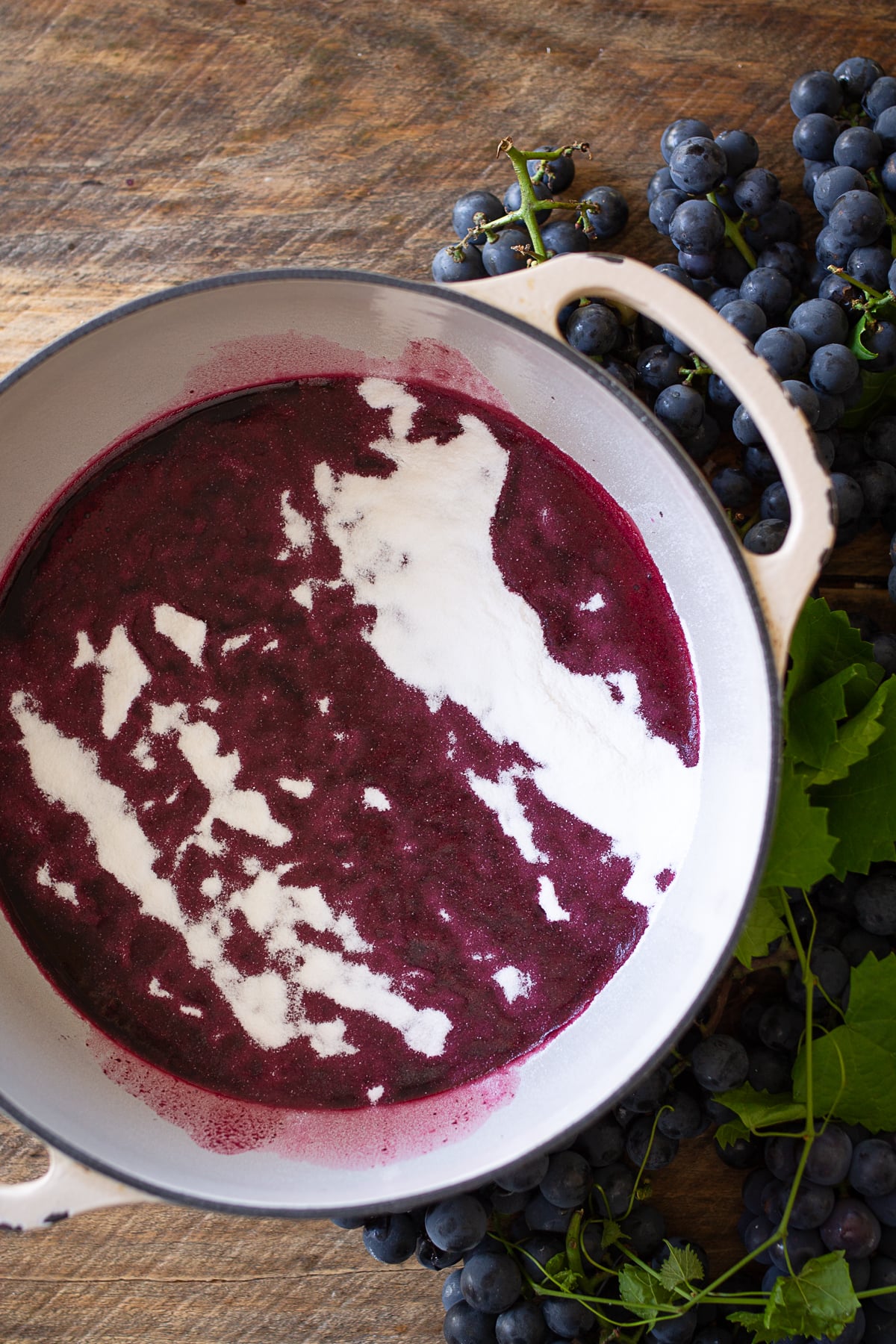
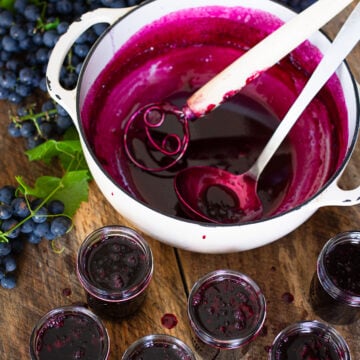
The next day, strain the chilled juice one final time and measure exactly 4 cups. Combine the juice with 5 tablespoons powdered pectin in a large pot and bring to a full rolling boil. Add all 4 cups sugar at once, return to a rolling boil, and boil hard for 1 minute, stirring constantly.
Step 5: Skim and Fill the Jars
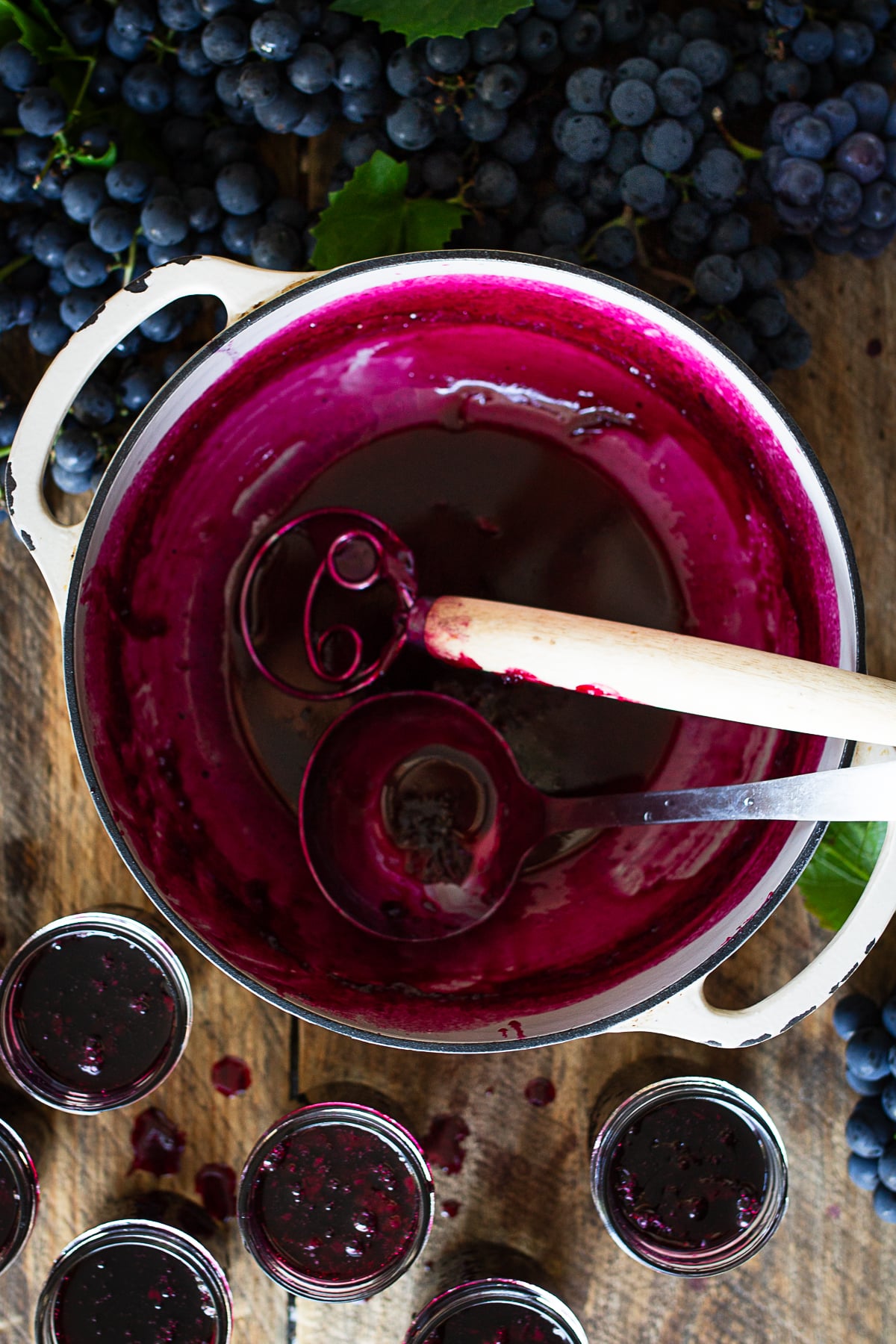
Remove the jelly from the heat and thoroughly skim the foam from the surface. Ladle into prepared half-pint jars, leaving ¼ inch headspace. Wipe the rims, center the lids, and apply the rings fingertip tight.
Step 6: Water Bath Can
Place the jars in the boiling water bath canner and process for the appropriate time for your elevation. Remove the jars and let them cool undisturbed for 12 to 24 hours before checking the seals. Allow up to 48 hours for the jelly to reach its final set.
Concord Grape Jelly FAQ's
Yes. Concord grapes contain natural pectin and can be made into jelly without commercial pectin, but the cooking method is different. This version uses powdered pectin for a quicker set.
Chilling freshly extracted grape juice allows sediment and naturally occurring tartrate crystals to settle out. Straining it again the following day removes much of this before you make the jelly.
Not as a direct substitution. Liquid and powdered pectin are used differently in jelly recipes, so this recipe should be made with regular powdered pectin.
Give it time before deciding something went wrong. Jelly is much thinner while hot and can take 24 to 48 hours to develop its final consistency. The natural pectin in the grapes and the strength of different powdered pectin products can also affect the finished set.
Storage Tips
Sealed jars: Store properly processed jars in a cool, dark, dry place.
After opening: Keep opened grape jelly refrigerated.
Unsealed jars: Refrigerate any jar that doesn't seal properly.
Label your jars: Add the date before storing so you can use your oldest jelly first.
More Homemade Preserving Recipes You'll Love

⭐️⭐️⭐️⭐️⭐️ Enjoy this recipe? Leaving a five-star review is one of the kindest ways to support my little corner of the internet. Thank you!
Final Thoughts From the Homestead
I love seeing jars of grape jelly lined up in the pantry, knowing they'll end up spread over warm homemade bread, biscuits, morning toast, and plenty of peanut butter and jelly sandwiches. That's one of my favorite parts of preserving: taking what we have in abundance right now and turning it into something my family will reach for all year long. I hope a few jars of this Concord grape jelly become just as well loved in your home.
Concord Grape Jelly Recipe
Equipment
- 1 pack Half Pint Jam Jars
Ingredients
For the grape juice
- 3.5 Pounds Fresh Concord grapes
- ½ Cup Water
For The Jelly
- 4 Cups Concord grape juice strained
- 4 Cups Granulated Sugar
- 5 tablespoon Powdered Fruit Pectin
Instructions
- Cook the Grapes: Remove the grapes from their stems and wash well. Place them in a large heavy-bottomed pot with ½ cup water. Bring to a boil, crushing the grapes with a potato masher as they soften. Reduce the heat and simmer for about 10 minutes, until the grapes have broken down and released their juice.
- Strain and Refrigerate Overnight: Pour the cooked grapes through a fine mesh strainer set over a large bowl. Gently work the pulp with the back of a spoon to extract the juice, then discard the skins, seeds, and pulp. Run the juice through the fine mesh strainer a second time, cover, and refrigerate overnight.
- Strain Again and Prepare for Canning: The following day, strain the chilled grape juice one final time to remove additional sediment and tartrate crystals. Measure exactly 4 cups of juice.
- Prepare your water bath canner and warm half-pint jars. Measure the sugar and have your lids and canning tools ready before beginning the jelly.
- Make the Jelly: Pour 4 cups grape juice into a large heavy-bottomed pot and stir in 5 tablespoons powdered pectin. Bring to a full rolling boil over high heat, stirring frequently.
- Add all 4 cups sugar at once. Stir constantly and return the mixture to a full rolling boil. Boil hard for 1 minute, stirring constantly, then remove from the heat.
- Skim and Fill the Jars: Immediately skim the foam thoroughly from the surface of the jelly. Working quickly, ladle the hot jelly into prepared half-pint jars, leaving ¼ inch headspace. Wipe the rims clean, center the lids, and apply the rings fingertip tight.
- Water Bath Can: Place the jars in the boiling water bath canner, making sure they are covered with at least 1 inch of water. Cover the canner and return the water to a full boil. Once boiling, process half-pint jars for 10 minutes, adjusting the processing time for your elevation as needed.
- Remove the jars and allow them to cool undisturbed for 12-24 hours before checking the seals. Allow the jelly up to 48 hours to develop its final set.
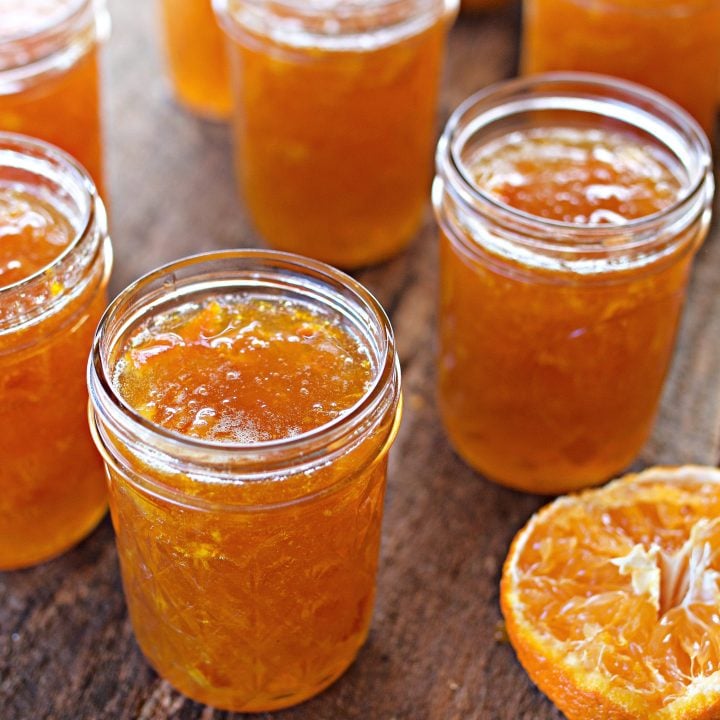


This turned out so good! It has that deep, old-fashioned Concord grape flavor I was hoping for, with a smooth texture that spreads beautifully on toast and homemade bread. The extra straining is worth it, and I love seeing these gorgeous jars lined up in my pantry. Definitely making another batch next grape season.