Homemade Grape Juice Concentrate
Homemade grape juice concentrate is surprisingly easy to make with fresh Concord grapes, and you don't need to add sugar to do it. After cooking and straining our homegrown grapes, I gently reduce the fresh juice by half, turning 4 cups of grape juice into 2 cups of rich, naturally sweet grape concentrate.
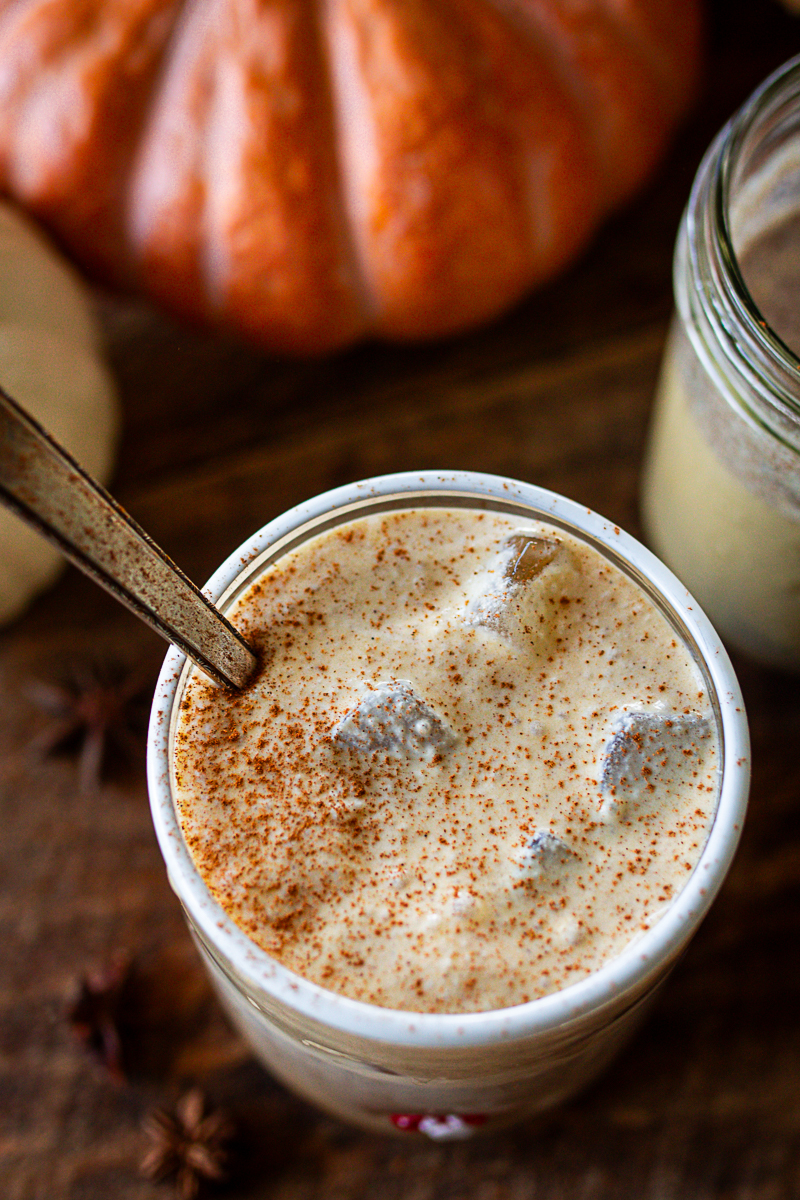
I've kept 100% grape juice around for my kids since they were little, especially during the winter months, and wanted a homemade version using the grapes we grow ourselves. I was used to the sweetness and thicker consistency of Welch's 100% grape juice, so my goal was to create a concentrated juice without adding cups of sugar to get there. And after making this concentrate, you should also try this Pumpkin Cold Foam, or my favorite holiday Cranberry Orange Spritzer.
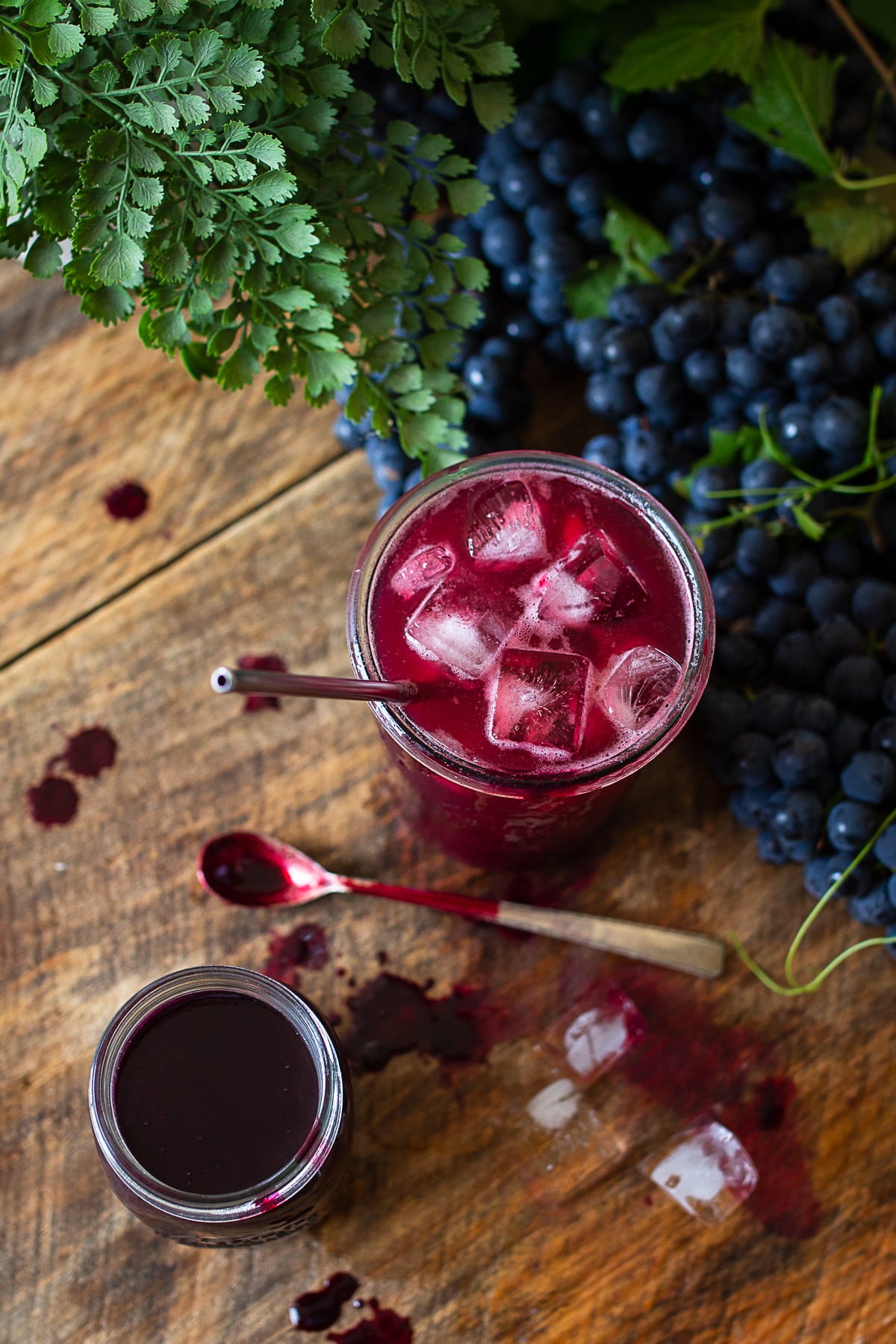
Quick Look: Homemade Grape Juice Concentrate
🍇 Flavor: Rich, concentrated Concord grape flavor
🫙 Yield: About 2 cups concentrate from 4 cups prepared grape juice
⏱️ Time: Plan on two days if allowing the juice to rest overnight
🥄 Added Sugar: None
✨ Texture: Richer and slightly thicker than regular grape juice
❄️ Storage: Refrigerate for short-term use or freeze for longer storage
⚡ Pro Tip: Reduce the strained juice by half to concentrate the natural sugars without adding sweetener.
SUMMARIZE & SAVE THIS CONTENT ON
Jump to:
- Quick Look: Homemade Grape Juice Concentrate
- Why You'll Love This Recipe
- Will Homemade Grape Juice Concentrate Be Sweet?
- Key Ingredients
- Expert Tips
- How To Make Grape Juice Concentrate
- Grape Juice Concentrate FAQ's
- How I Use Grape Juice Concentrate
- Final Thoughts From the Homestead
- Other Drink Recipes To Try:
- Grape Juice Concentrate
Why You'll Love This Recipe
- No added sugar: The sweetness comes entirely from the grapes.
- Uses whole grapes: The grapes are cooked with their skins and seeds before being strained.
- Easy to concentrate: There's no special equipment involved. Simply reduce 4 cups of prepared juice to 2 cups.
- Freezer friendly: Freeze the concentrate in small portions so you can pull out exactly what you need.
- A great use for fresh grapes: If you have more Concord grapes than you can eat fresh, and have already canned homemade grape jelly, than this is another way to put them up.
Will Homemade Grape Juice Concentrate Be Sweet?
The sweetness of your concentrate depends largely on the grapes you start with. Fully ripe Concord grapes generally have more natural sugar and less of that sharp, tart flavor, while grapes picked a little early can make a noticeably more tart juice. Growing conditions and the grapes themselves can also affect the balance of sugar and acidity, so every batch may taste a little different.
For the sweetest concentrate without adding sugar, use fully ripe grapes that taste sweet when you eat them fresh. If your fresh grapes make you pucker, reducing the juice will concentrate that tartness along with the natural sugars. You can still use them, but you may want to sweeten the finished concentrate with sugar to taste. I prefer to leave mine unsweetened and let the flavor of that year's grapes determine the finished juice.
Key Ingredients
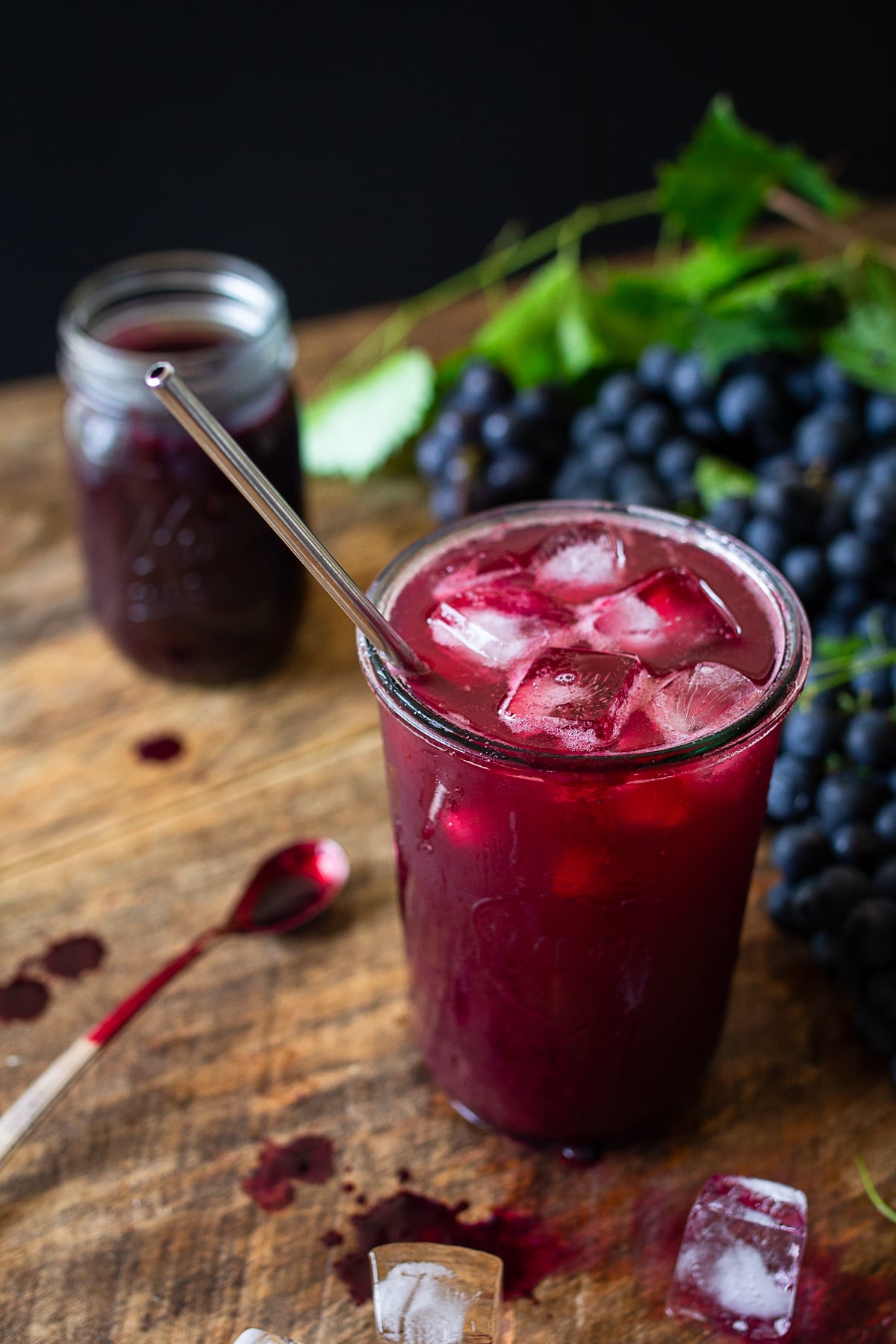
Concord Grapes
Concord grapes have a deep purple skin, seeds, and the bold grape flavor I want in a concentrate. I cook them whole before straining so the juice extracts color and flavor from the entire grape.
Water
A small amount of water helps get the grapes cooking before they begin releasing their own juice. Once extracted, we're going to remove water again by reducing the finished juice.
Expert Tips
Use ripe grapes. The sweeter your grapes are when you begin, the sweeter your finished concentrate will be.
Cook the grapes whole. I leave the skins and seeds in while the grapes cook and remove them during straining.
A fine mesh strainer works well. I can gently move the pulp around with a spoon and extract more juice instead of waiting for it to slowly drip through cloth.
Let the juice rest overnight. Refrigerating the strained juice allows sediment and tiny tartrate crystals to settle out so they can be removed with another strain the following day.
Keep the heat gentle. We're trying to evaporate excess water, not scorch the natural sugars in the grape juice.
How To Make Grape Juice Concentrate
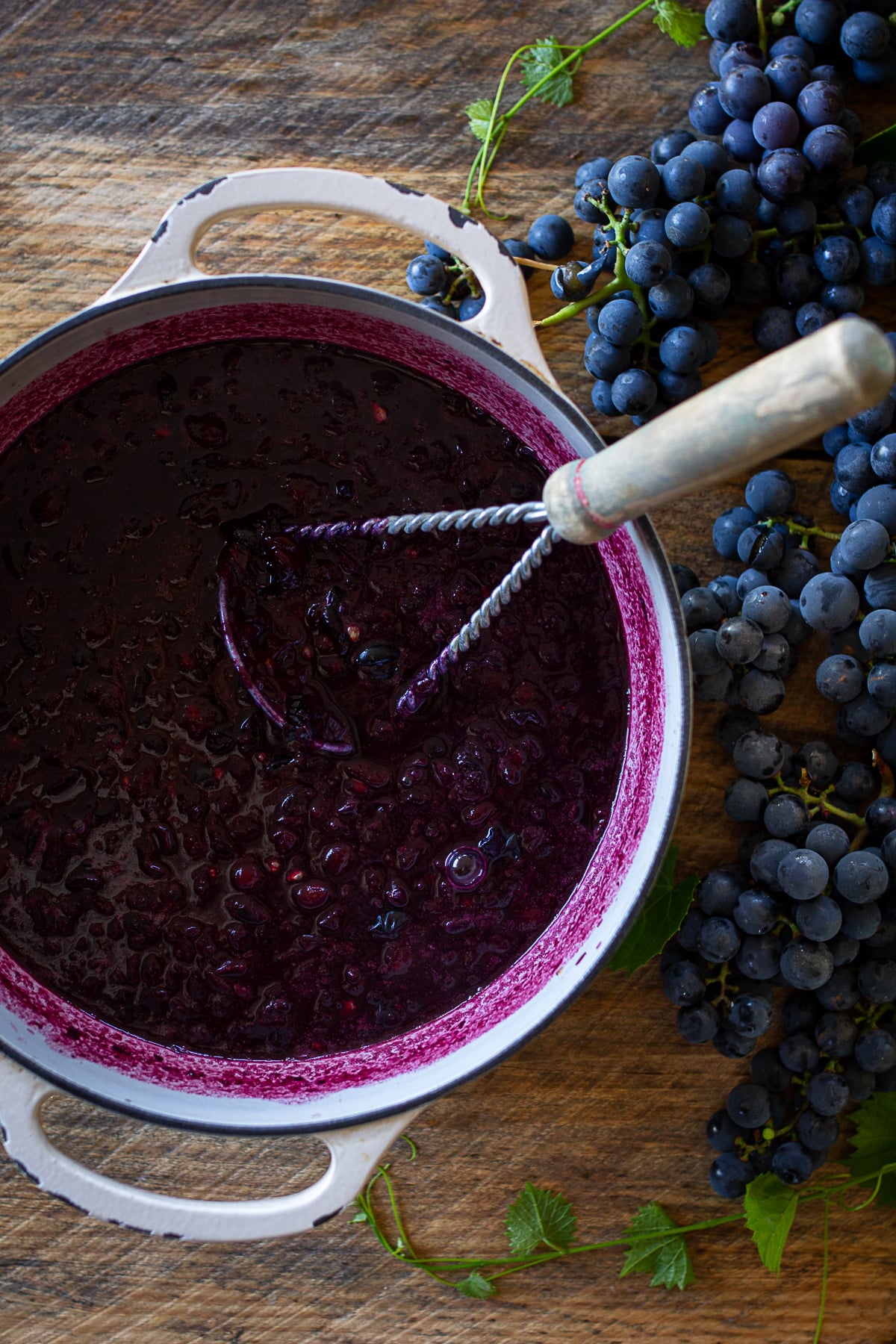
Step 1: Cook and Mash the Grapes
Remove the grapes from their stems and wash well. Place them in a large heavy-bottomed pot with a small amount of water and bring to a boil. As the grapes soften, mash them with a potato masher to release the juice. Reduce the heat and simmer for about 10 minutes.
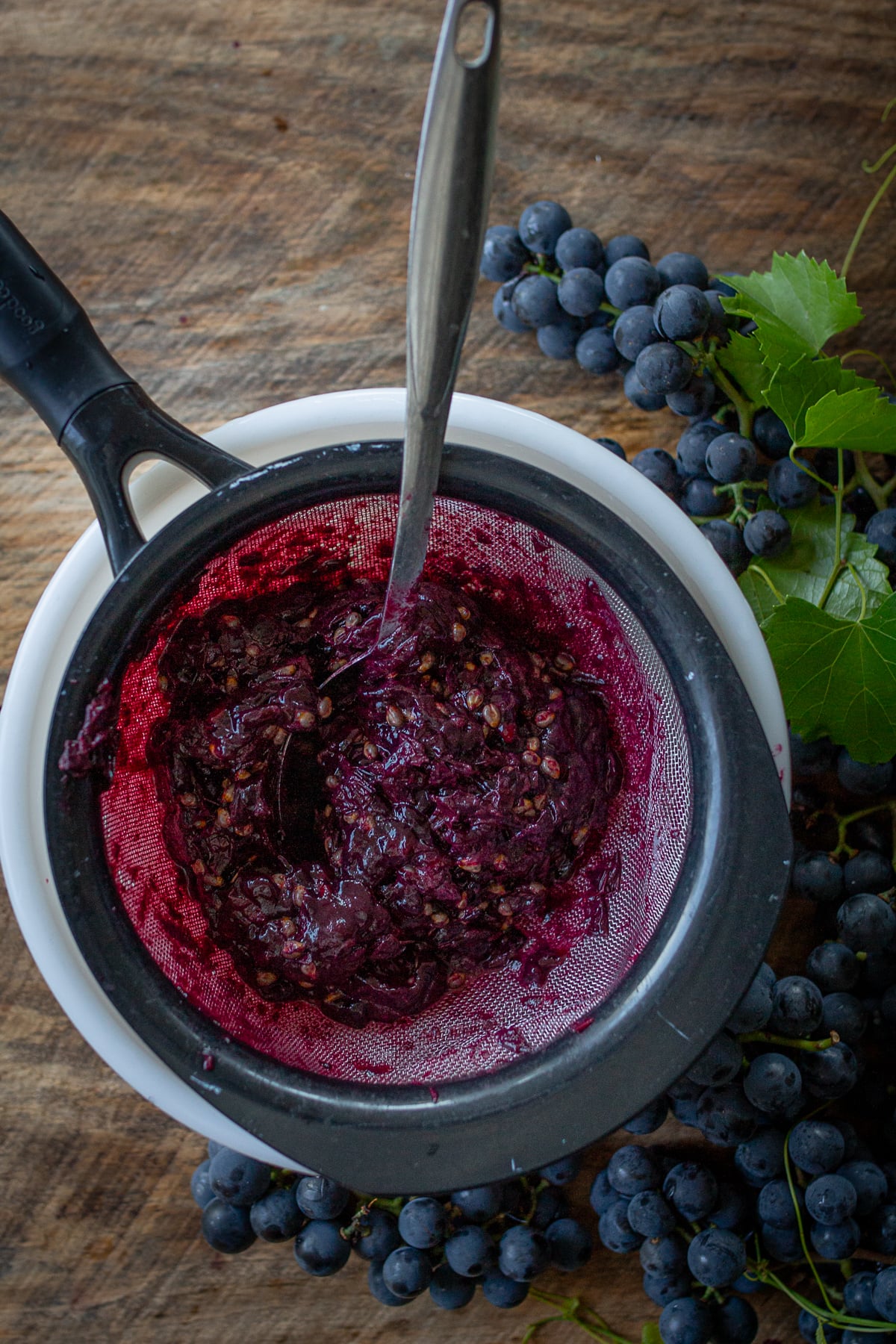
Step 2: Strain the Grape Juice
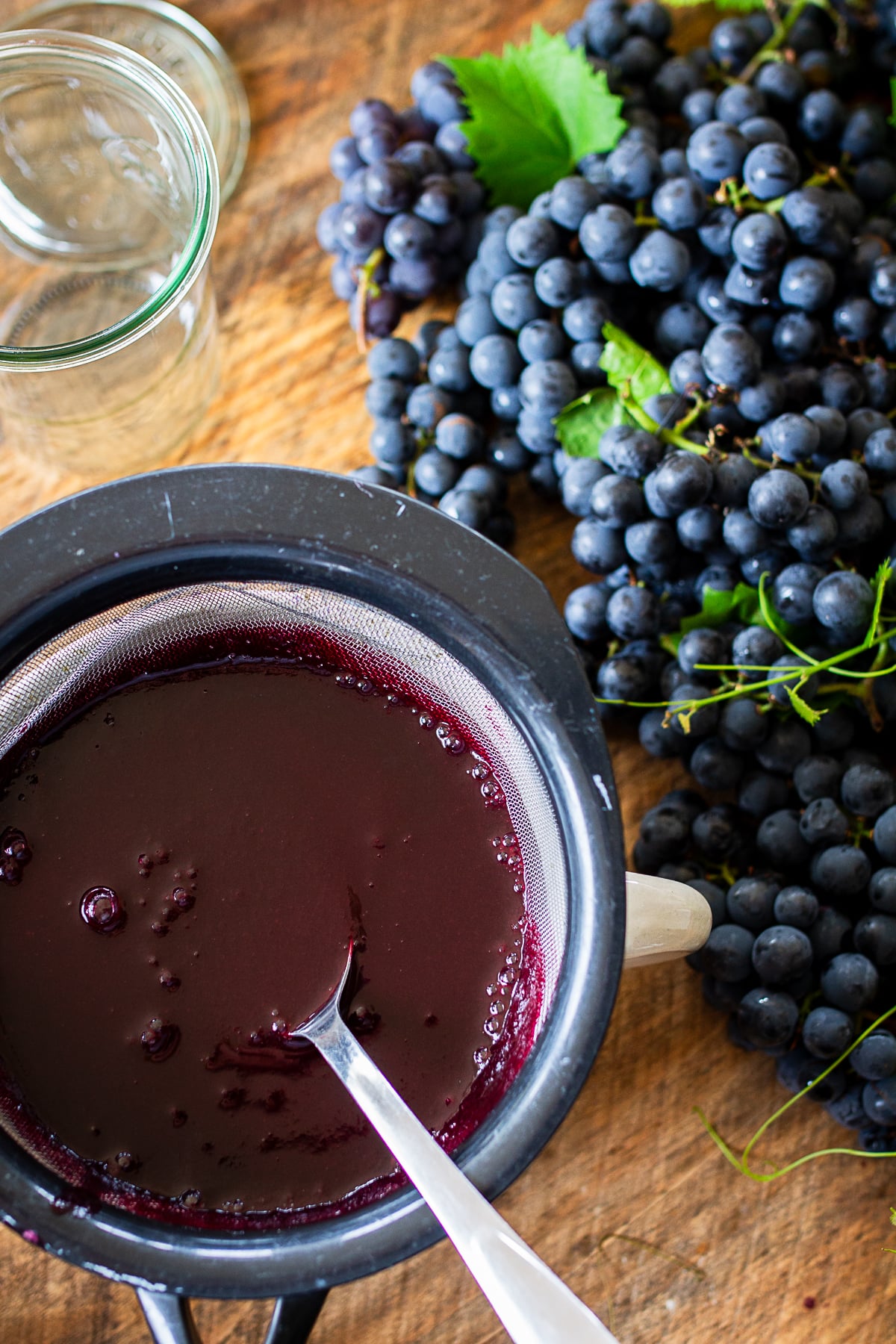
Pour the cooked grapes through a fine mesh strainer over a large bowl, gently working the pulp with a spoon to extract the juice. Strain the juice a second time, cover, and refrigerate overnight.
Step 3: Strain Again and Reduce
The following day, strain the chilled juice once more to remove additional sediment and crystals. Measure 4 cups of strained grape juice into a wide, heavy-bottomed saucepan.
Simmer uncovered over medium-low heat until the juice has reduced to approximately 2 cups. Avoid a hard rolling boil and stir occasionally as the juice becomes more concentrated.
Step 4: Cool and Store
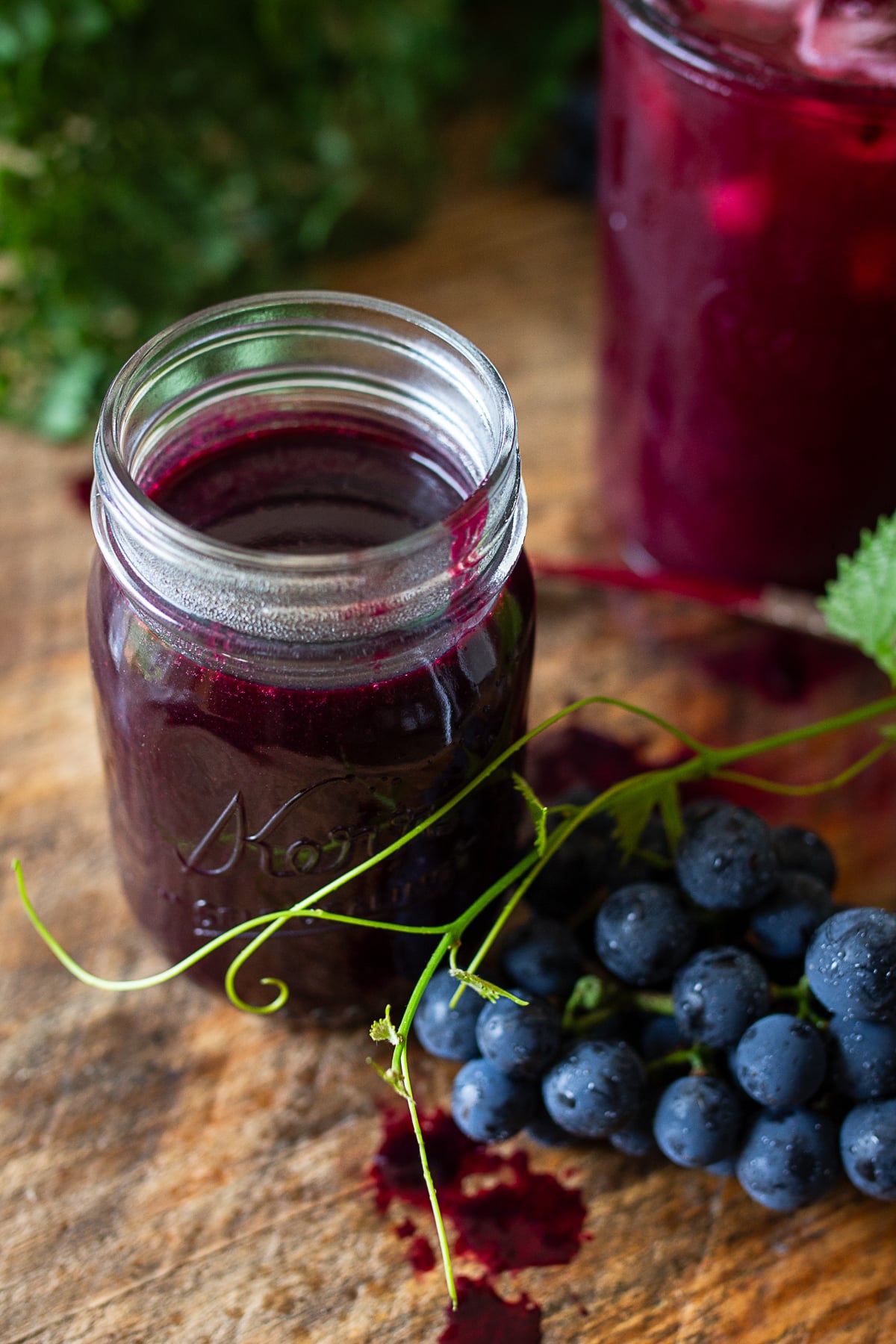
Remove the concentrate from the heat and allow it to cool. Transfer to a clean container and refrigerate for short-term use, or portion into freezer-safe containers and freeze for longer storage.
Grape Juice Concentrate FAQ's
No. Grapes already contain natural sugars, and removing some of the water concentrates those sugars along with the grape flavor. I don't add sugar to my homemade concentrate. However, if you have tart berries you can add sugar as needed.
Reducing grape juice doesn't only concentrate its sugar; it concentrates its acidity too. The ripeness and natural sweetness of your particular grapes will determine how sweet or tart the finished concentrate tastes.
Not quite. We're only reducing the juice enough to concentrate it by half. We're not continuing to cook it into a thick grape syrup.
Fresh grape juice can contain sediment and naturally occurring tartrate crystals. Chilling the juice overnight allows more of these to settle so you can strain the juice again before concentrating it.
How I Use Grape Juice Concentrate
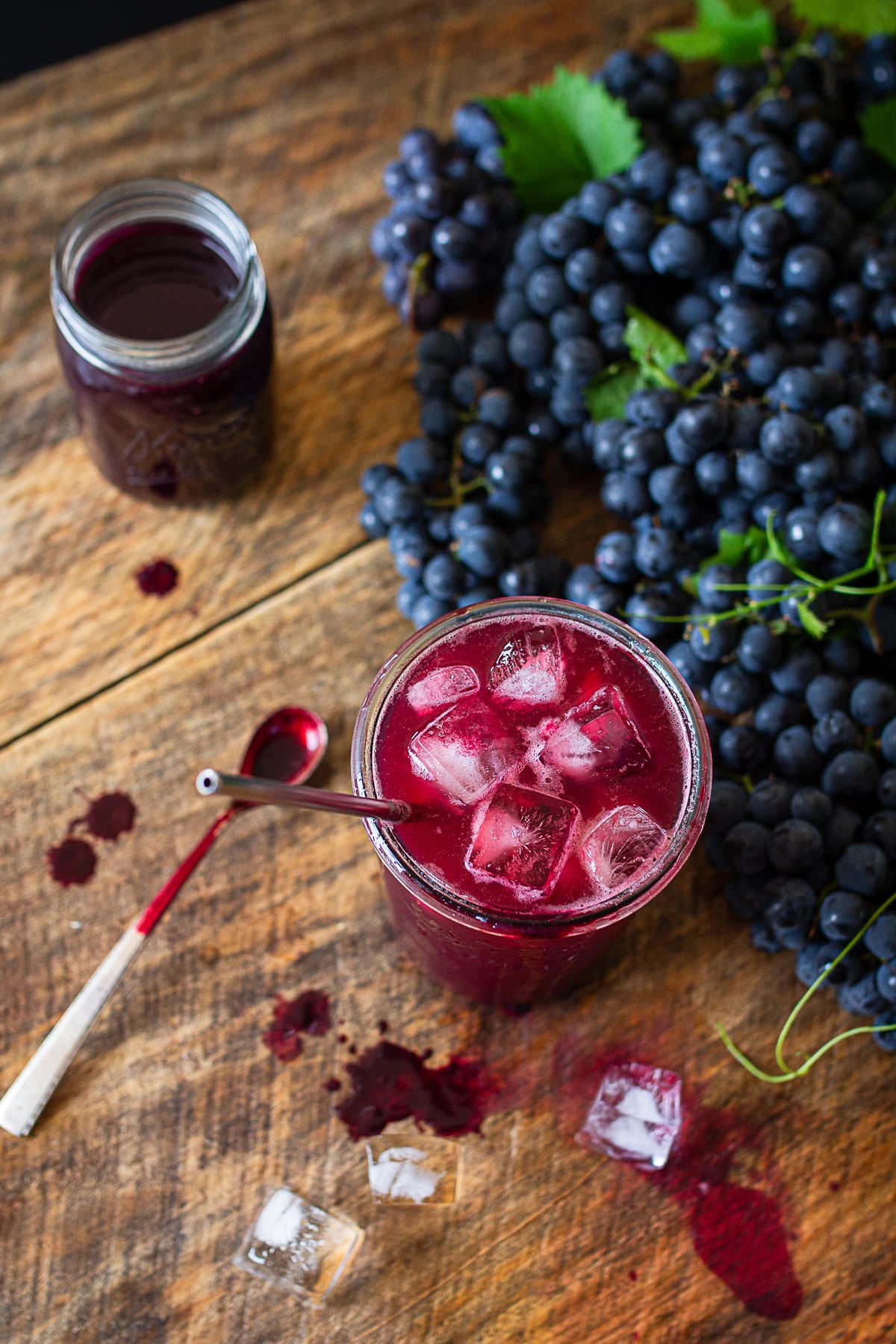
I like freezing this in smaller portions rather than one large container. That makes it easy to thaw what we need, dilute it into regular grape juice, or pour small servings for the kids.
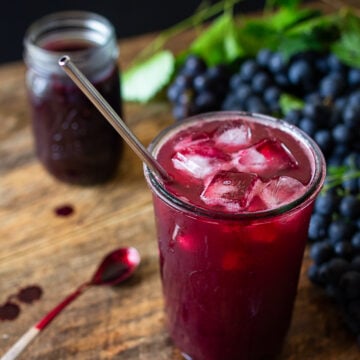
Because it's concentrated, you can also add water back until it tastes right to you. A 2:1 concentrate gives you an easy starting point: one part concentrate with approximately one part water brings it back toward the volume you started with.
Final Thoughts From the Homestead
Grape juice has been one of those things I've kept around for my kids since they were little, so being able to make it from grapes we've grown ourselves feels like a natural addition to our pantry. I love that this concentrate needs nothing more than grapes, a little water, and time, and freezing it in small portions means I can pull out exactly what our family needs all winter long.
Other Drink Recipes To Try:


Grape Juice Concentrate
Ingredients
- 3 ½ pounds Fresh Concord grapes
- ½ cup Water
Instructions
- Cook and mash: Remove the grapes from their stems and wash well. Place in a heavy-bottomed pot with ½ cup water and bring to a boil. Mash the softened grapes with a potato masher, reduce the heat, and simmer for about 10 minutes.
- Strain and chill: Pour the cooked grapes through a fine mesh strainer, gently working the pulp with a spoon to extract the juice. Strain again, cover, and refrigerate overnight.
- Strain and reduce: The following day, strain the chilled juice once more. Measure 4 cups into a wide, heavy-bottomed saucepan and simmer uncovered over medium-low heat until reduced to approximately 2 cups.
- Cool and store: Cool the concentrate and transfer it to a clean container. Refrigerate for short-term use or divide among freezer-safe containers and freeze for longer storage.


I love having this homemade grape juice concentrate tucked away for the winter! The flavor is rich and unmistakably Concord grape, and I love that I can make it from the grapes we grow right here at home. Once diluted, it makes a beautiful glass of homemade grape juice, and I can adjust the strength to taste. This will definitely be part of my grape harvest every year.