Easy Homemade Candy Caramel Recipe | No Corn Syrup
Caramel and chocolate are my ultimate love language. Every holiday season, my farmhouse kitchen smells of rich melting sugar and golden butter, and I'm reminded why homemade candy is such a joy to make. This easy homemade candy caramel recipe has become a yearly tradition here on the farm: buttery, rich, and soft enough to melt in your mouth.
If it's your first time making candy from scratch, don't be intimidated! I've spent years testing and tweaking this recipe in my own kitchen so you can skip the guesswork. You don't need corn syrup, brown sugar, or fancy tools. Just three simple ingredients, a little patience, and my step-by-step guidance.
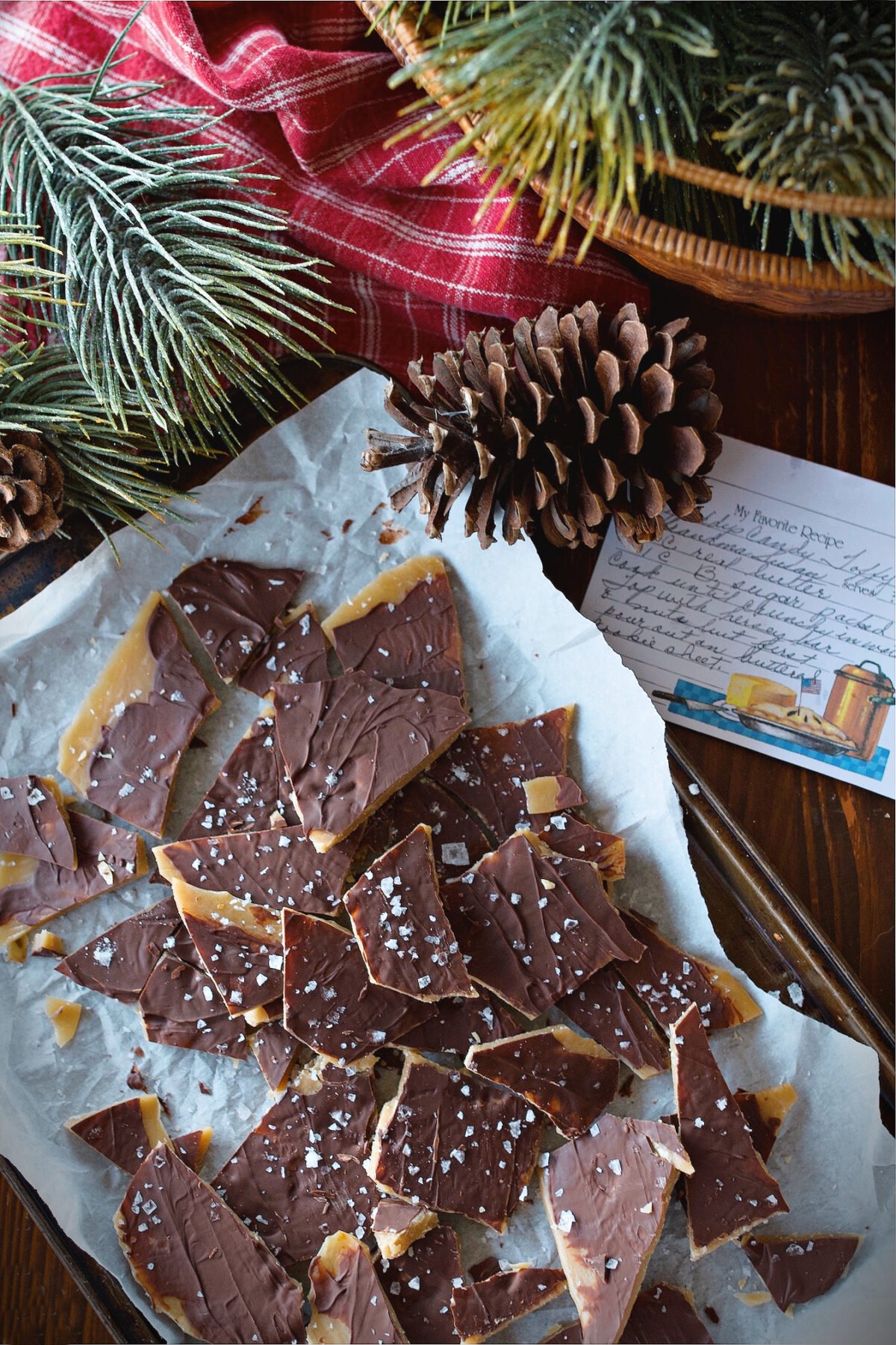
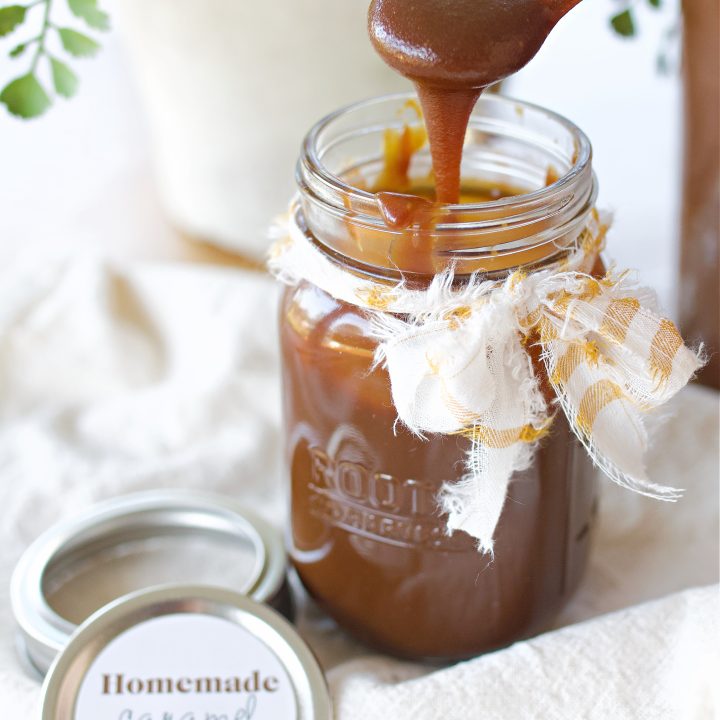
These golden chews make store-bought candy look sad in comparison, and they pair wonderfully on holiday dessert boards alongside Great Grandma's Toffee Recipe or my Homemade Caramel Sauce Recipe.
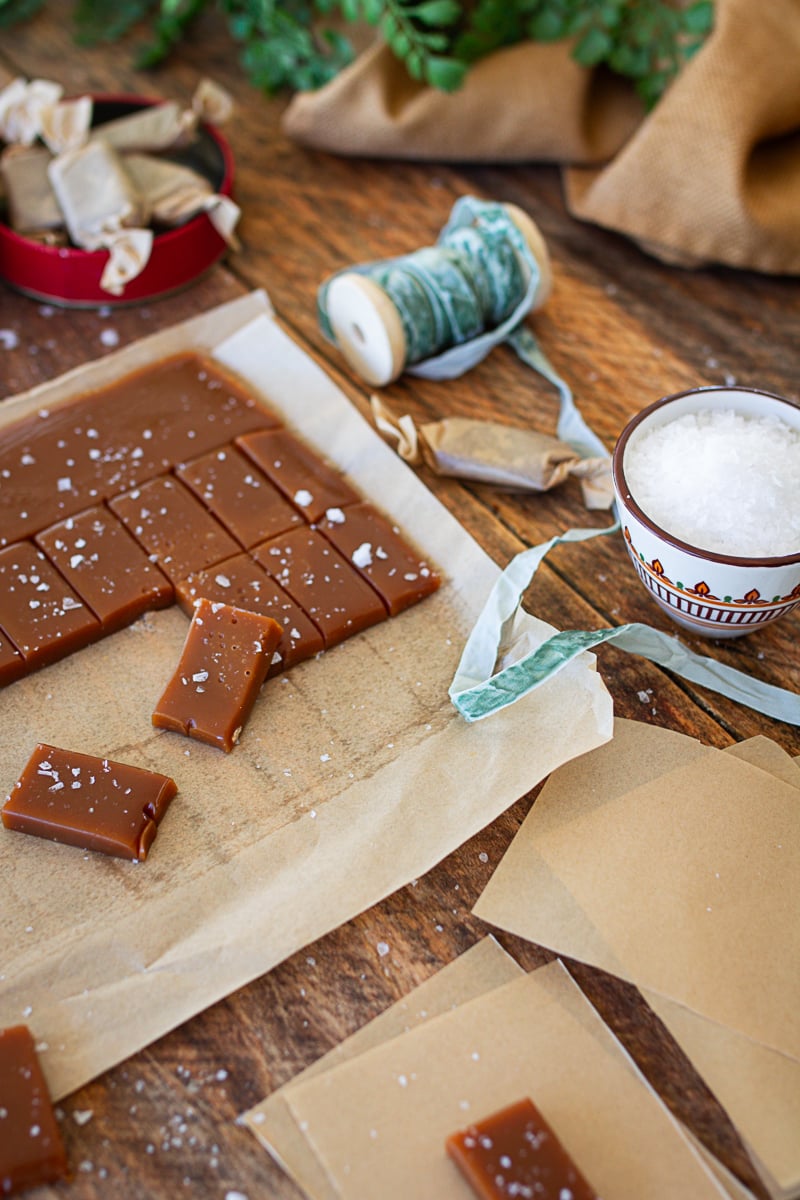
Quick Look: Easy Homemade Candy Caramel (No Corn Syrup)
⏱️ Prep Time: 10 minutes
🍯 Cook Time: 20 minutes
🕰️ Total Time: About 2½ hours (including cooling)
🍬 Yield: ~40 wrapped caramels
🧈 Main Ingredients: Sugar, butter, and heavy cream - that's it
🌽 No Corn Syrup: Made the old-fashioned way with pure ingredients
👩🍳 Skill Level: Intermediate - perfect for confident home cooks
✨ Texture & Flavor: Buttery, rich, and chewy with deep caramel notes
🎁 Best For: Holiday gifting, dessert trays, or after-dinner treats
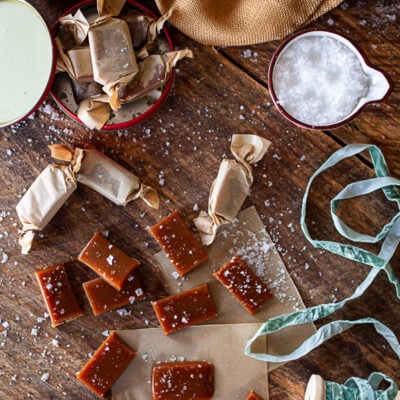
💡 Pro Tip: Sprinkle sea salt before wrapping for a perfect sweet-salty finish and chill for 10 minutes before slicing for clean squares.
SUMMARIZE & SAVE THIS CONTENT ON
Jump to:
- Quick Look: Easy Homemade Candy Caramel (No Corn Syrup)
- Making Caramel Without Corn Syrup
- Ingredients
- Candy Caramel Recipe Making Process:
- Eryn's Cutting Hint:
- Troubleshooting & Reader Advice (My Hard-Learned Tips)
- Why Won't My Butter Combine with the Sugar?
- Preventing a Grainy Batch (Crystallization)
- Can I Make This Dairy-Free?
- Substitutions & Variations
- Equipment
- Storage & Gifting
- Top Tip
- Homemade Candy Caramel FAQs
- Other Candy Recipes:
- Chewy Caramel Candies Recipe Card
Making Caramel Without Corn Syrup
When I first started making caramels on the farm, nearly every recipe I found called for corn syrup. Corn syrup was created in the 1800s to stabilize commercial candy and prevent sugar crystals, but it's highly processed. Frankly, it isn't something I want in my homemade sweets.
Caramel doesn't actually need it! People made beautiful caramel for generations long before glucose syrup existed. With a steady hand, real ingredients, and an understanding of how sugar melts, you can make caramels with a far cleaner flavor and deeper golden color. Skipping corn syrup takes a little patience, but that's part of what makes farmhouse baking so special.
Ingredients
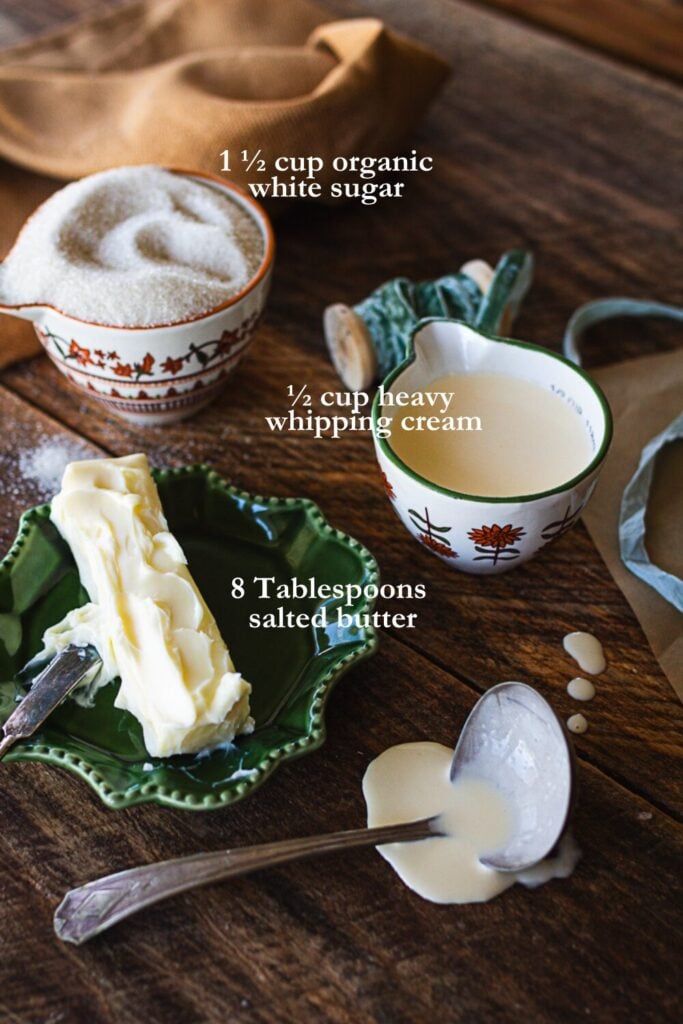
When a recipe relies on only three ingredients, quality makes all the difference. Simple ingredients mean there's nowhere for low quality to hide!
- Granulated Sugar: Standard white granulated sugar or organic cane sugar works best here.
- Butter: Use a good quality, rich butter. Crucial step: Make sure your butter is completely at room temperature so it doesn't shock the hot sugar.
- Heavy Whipping Cream: Look for real heavy cream with high milk fat. Just like the butter, this must be at room temperature before adding.
Candy Caramel Recipe Making Process:
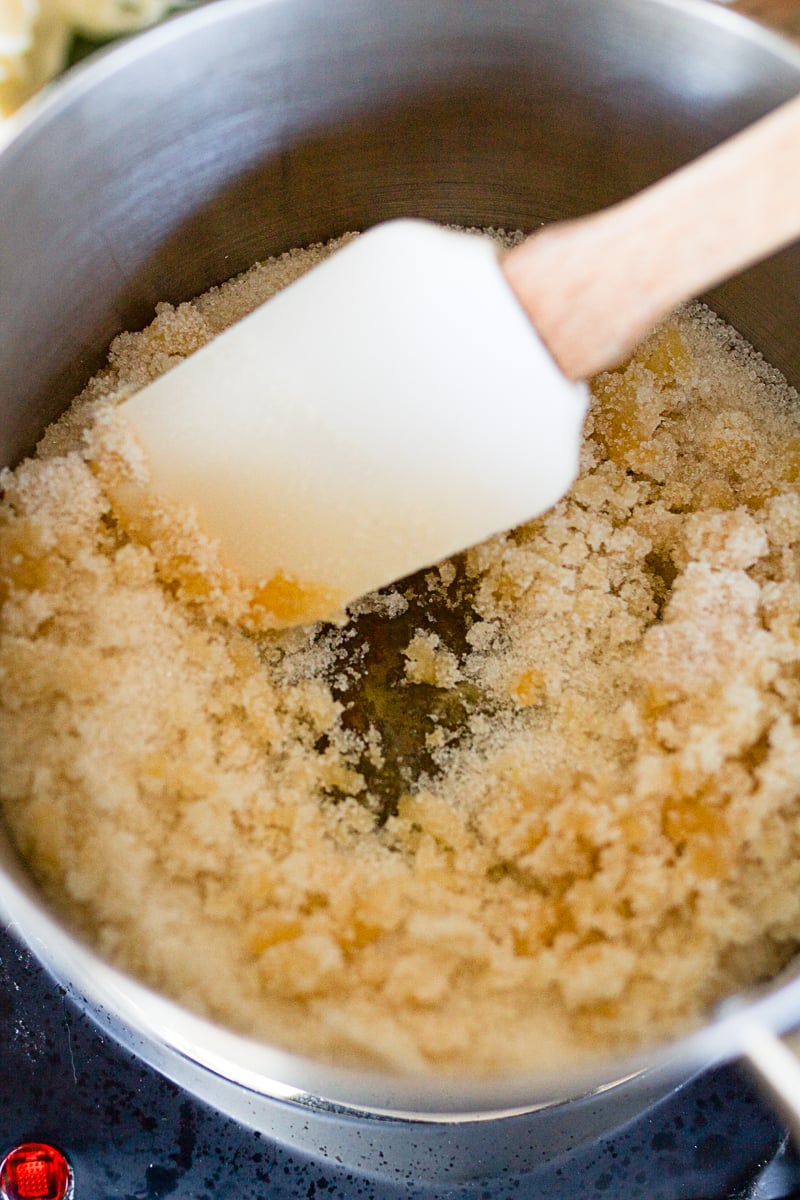
Prep the Pan & Start Melting Sugar: Line an 8x8-inch baking pan with parchment paper, leaving extra overhang on the sides. Add the granulated sugar to a medium, heavy-bottomed saucepan over medium heat. Let the sugar sit untouched for a minute until it starts melting and liquefying around the bottom of the pan.
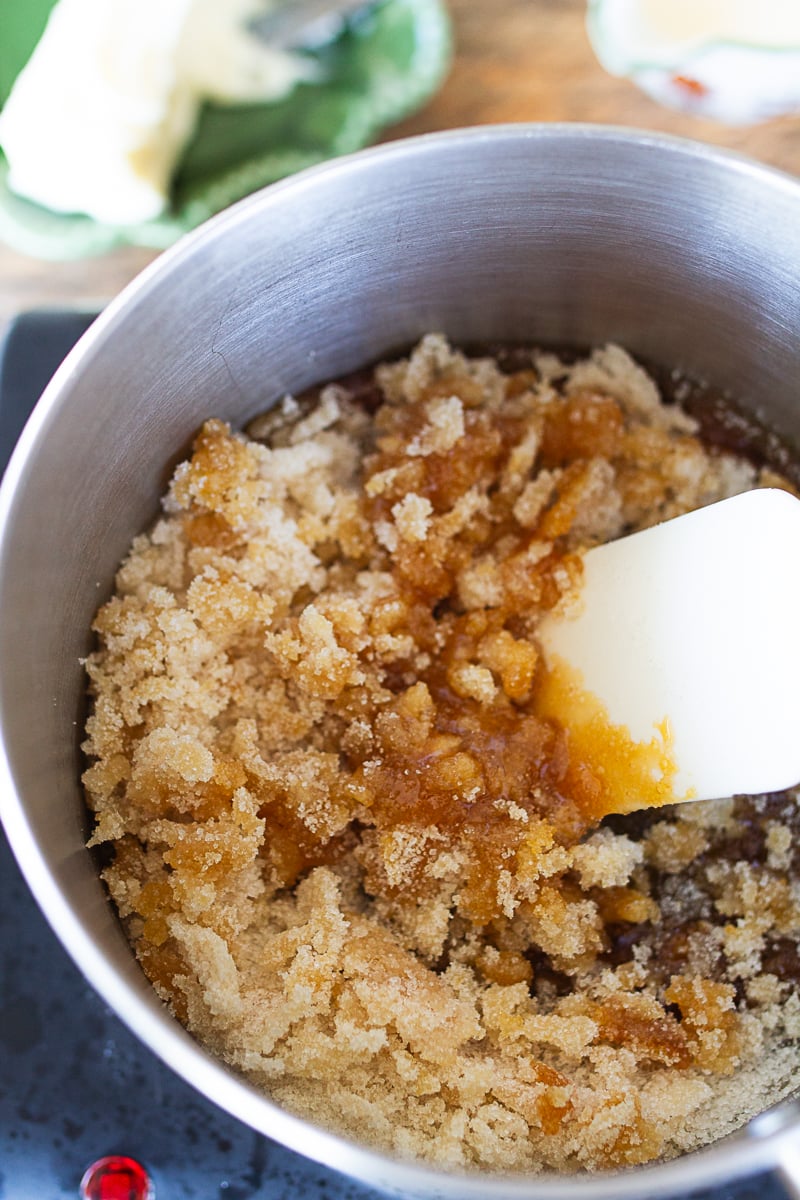
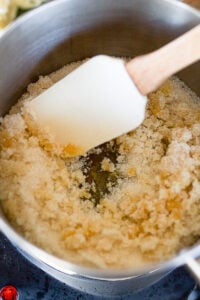
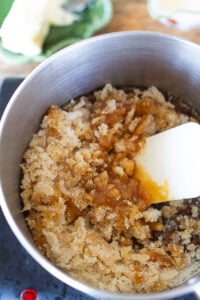
Melt Sugar into Clumps: As the sugar continues heating, gently push and stir it with a heat-safe spatula. It will go through a clumpy phase before completely melting-this is completely normal!
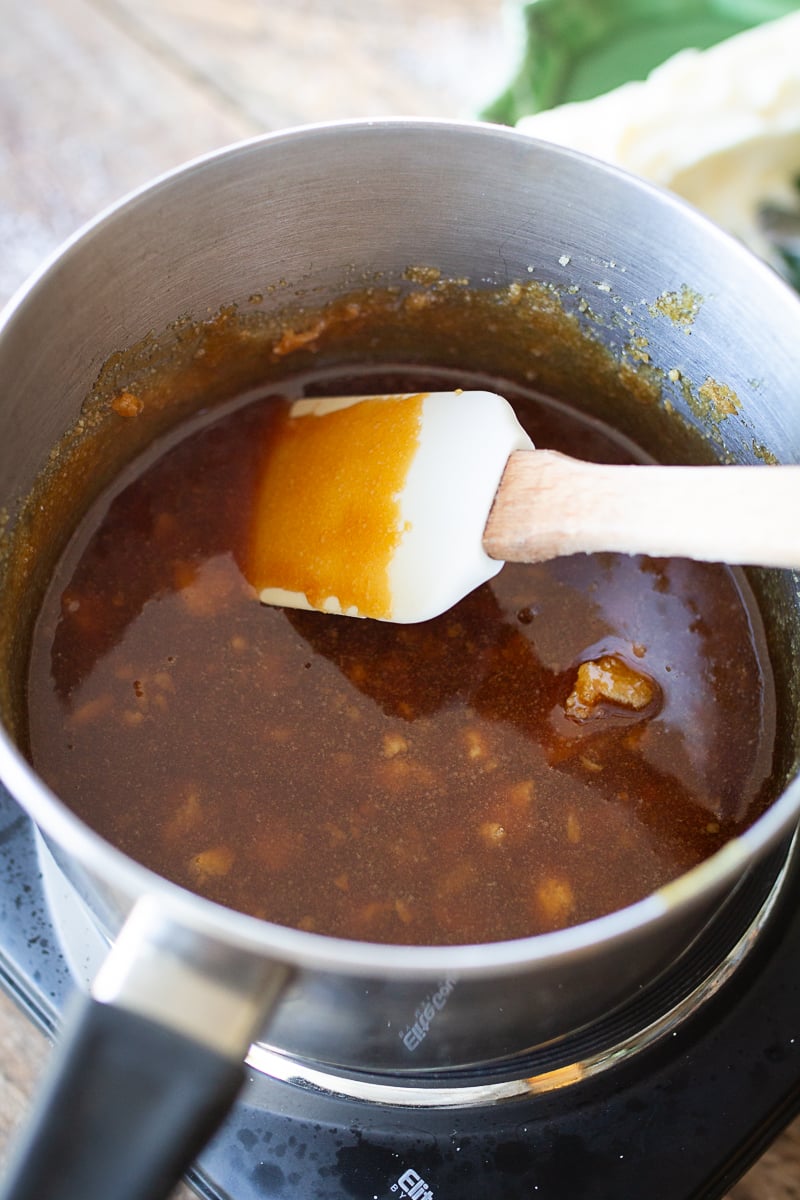
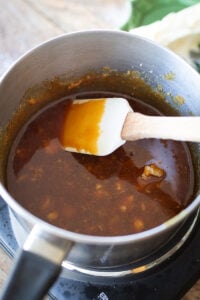
Dissolve to Deep Amber: Keep stirring gently until all sugar crystals are completely dissolved and the mixture transforms into a smooth, dark amber liquid syrup.
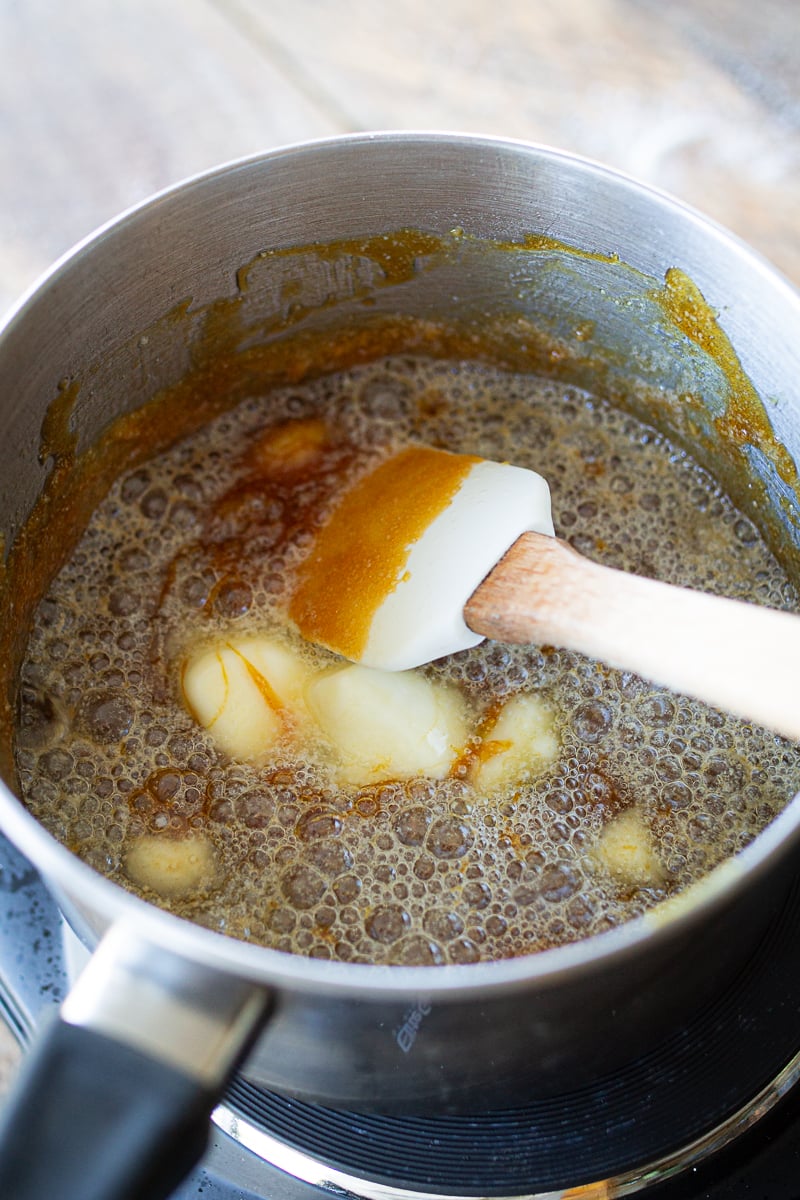
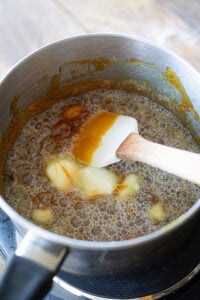
Whisk in Room-Temperature Butter: Add your room-temperature butter to the hot melted sugar. The mixture will bubble vigorously as the butter melts-stir continuously until fully combined and smooth.
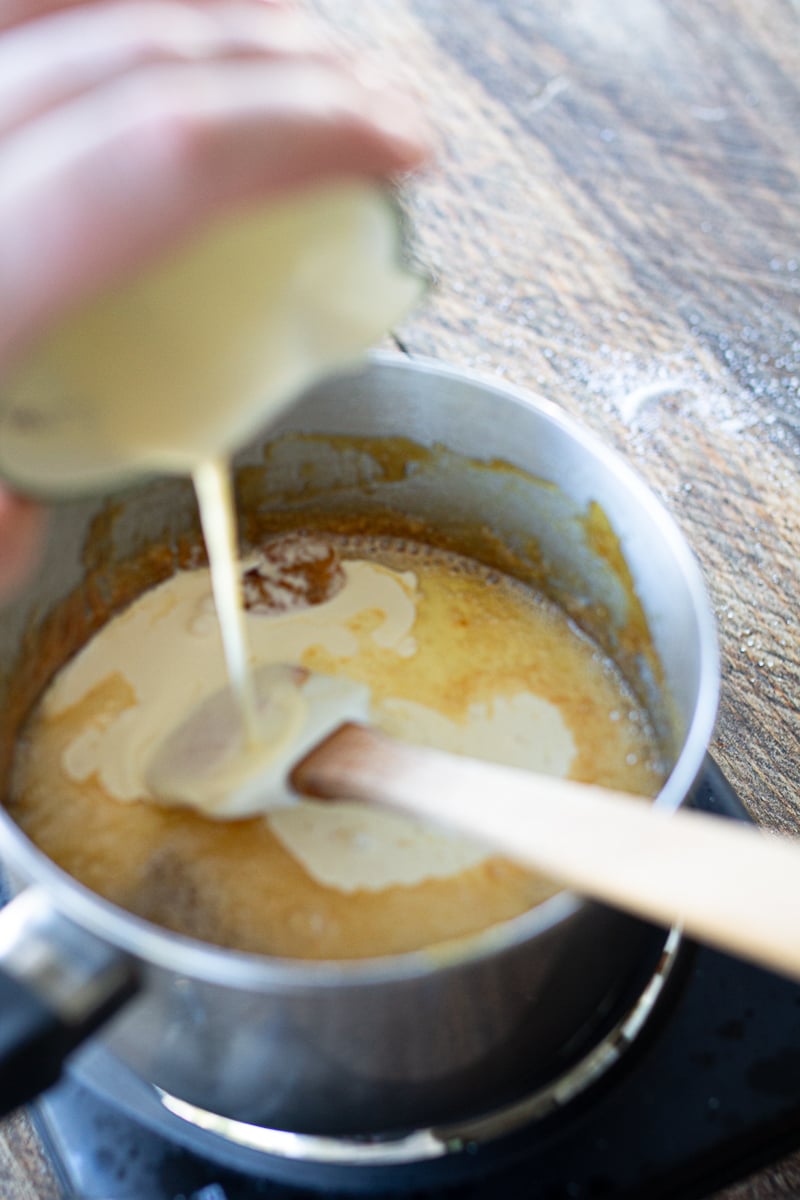
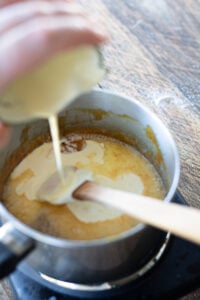
Stream in Heavy Cream: Slowly pour in your room-temperature heavy cream in a thin stream while stirring constantly. The mixture will steam and expand as the cream incorporates.
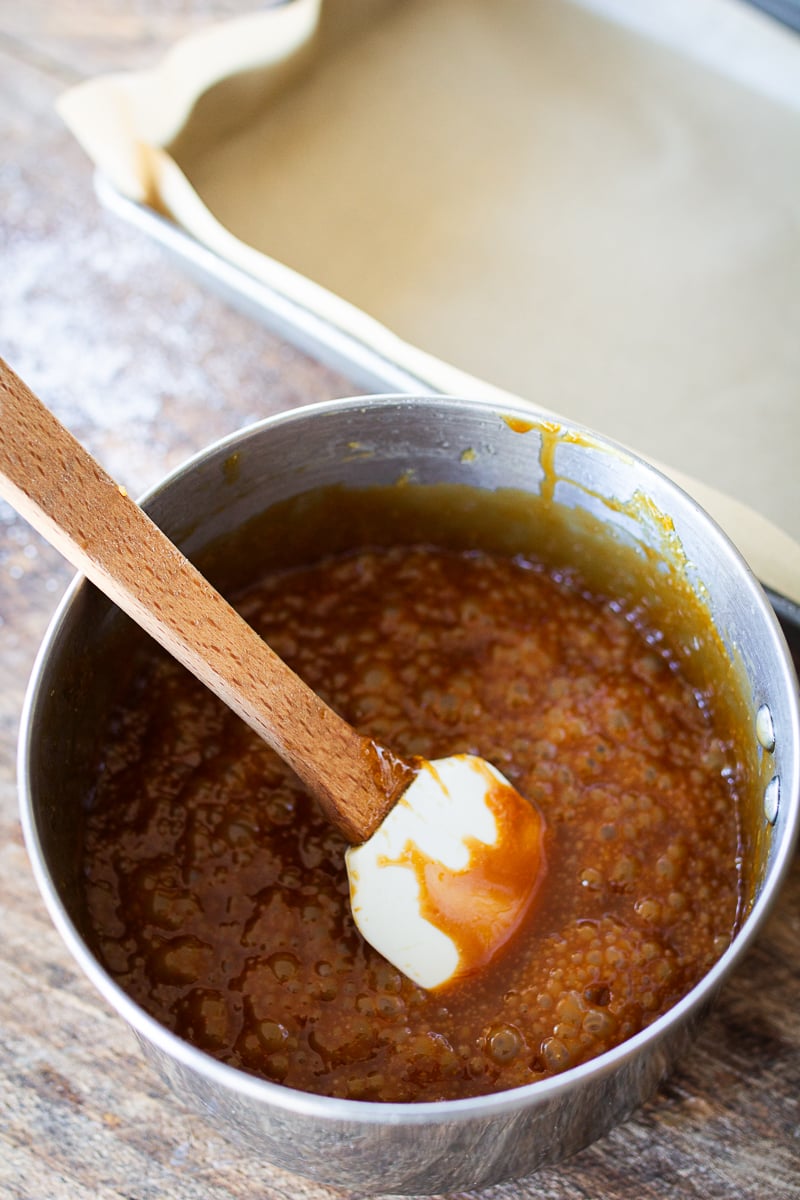
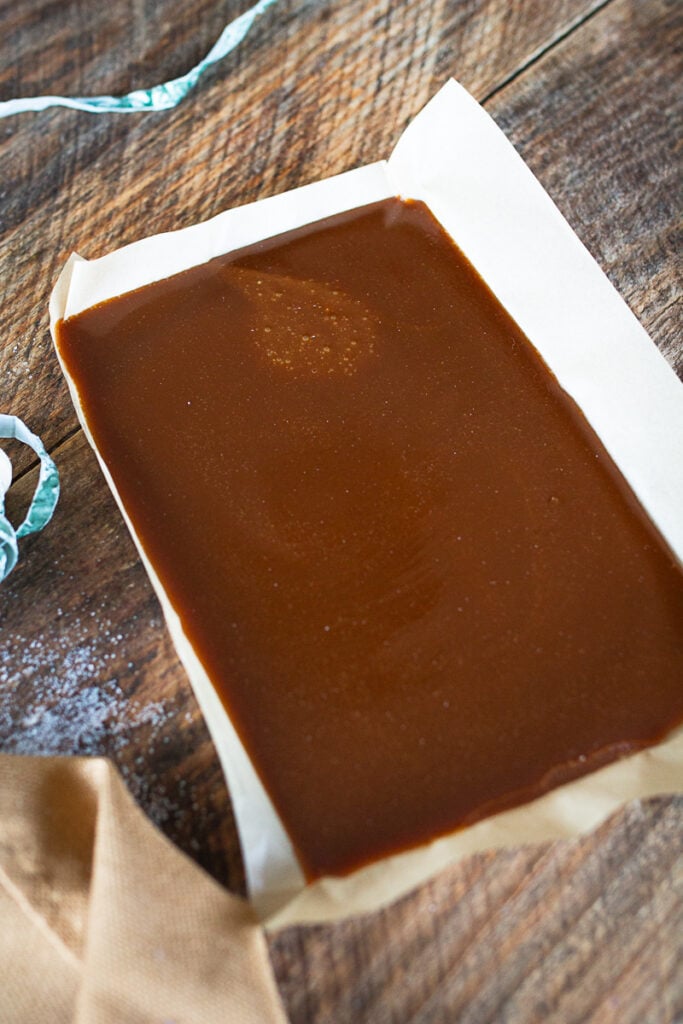
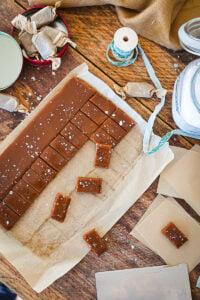
Cook, Pour & Slice: Return to medium heat and cook until the caramel reaches 245°F to 248°F (118°C-120°C) on a candy thermometer (or reaches the soft-ball stage in cold water). Pour carefully into your prepared pan without scraping the pot sides. Let cool completely for 1 to 2 hours, then lift out, slice into 40 squares, and wrap in wax paper.
Eryn's Cutting Hint:
If your caramel feels sticky or soft while cutting, pop the slab into the freezer for 10 minutesbefore slicing. Chilling firms the texture so your knife cuts clean, perfect squares without stretching or sticking!
Troubleshooting & Reader Advice (My Hard-Learned Tips)
I'll be honest: when I first started making candy, I made every mistake in the book! Here is what I learned the hard way-along with answers to common reader questions:
Why Won't My Butter Combine with the Sugar?
This is one of the most common questions I get! If your butter floats on top in an oily layer and refuses to mix, the sugar cooked a bit too far or too fast before the butter was added. Once sugar passes a certain temperature window, it won't re-emulsify with fat.
- Prevention: Keep your heat at steady medium-low and add the butter as soon as the sugar melts into an amber liquid.
- The Quick Fix: Remove the pan from heat immediately, add 1 to 2 tablespoons of warm heavy cream, and whisk vigorously until it pulls back together.
Preventing a Grainy Batch (Crystallization)
Sugar naturally wants to turn back into solid crystals. If dry sugar stuck on the sides of the pot gets stirred back into the liquid, it "seeds" the whole batch, making it gritty.
- Melt slowly: Never stir dry sugar early on. Let the bottom melt first!
- Use room-temperature dairy: Cold cream or butter shocks hot syrup and causes instant crystal formation.
- The "First-Timer" Insurance: If you're nervous or have had grainy batches in the past, add 1 teaspoon of lemon juice or corn syrup to the dry sugar before heating. It acts as an inhibitor against crystals without changing the delicious flavor!
- How to rescue a grainy batch: Don't throw it out! Add 2 tablespoons of warm water to the pan, set over medium heat, and stir gently until the sugar melts smooth again, then continue cooking.
Can I Make This Dairy-Free?
Yes! A wonderful reader (shoutout to Madi!) tested this with full-fat oat milk and dairy-free butter alternative with great success. If making these dairy-free, be sure to boil the caramel to the higher end of the temperature scale (248°F) so it sets firm and chewy rather than too soft.
Substitutions & Variations
Vanilla Bean: Stir 1 teaspoon of pure vanilla extract into the caramel right after removing it from the heat.
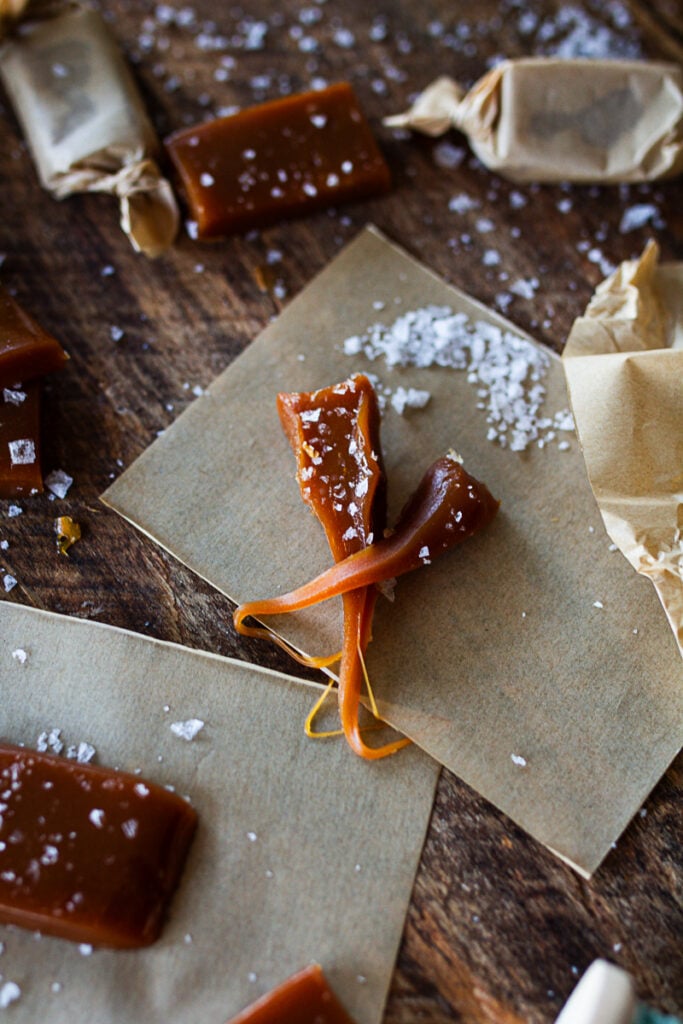
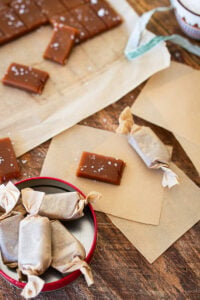
Salted Caramel Chews: Sprinkle flaky sea salt (like Maldon) over the top of the caramel slab right after pouring it into the pan before it sets.
Chocolate-Dipped: Once cut, dip half of each caramel in melted dark chocolate for a decadent holiday treat.
Equipment
- 8x8 Baking Pan & Parchment Paper: Essential for easy removal and clean slicing.
- Heavy-Bottomed Saucepan: Essential for even heating! Thin pots create hot spots that burn sugar before it melts evenly.
- Candy Thermometer Spatula: Highly recommended for accurate temperature readings (245°F-248°F).
Storage & Gifting
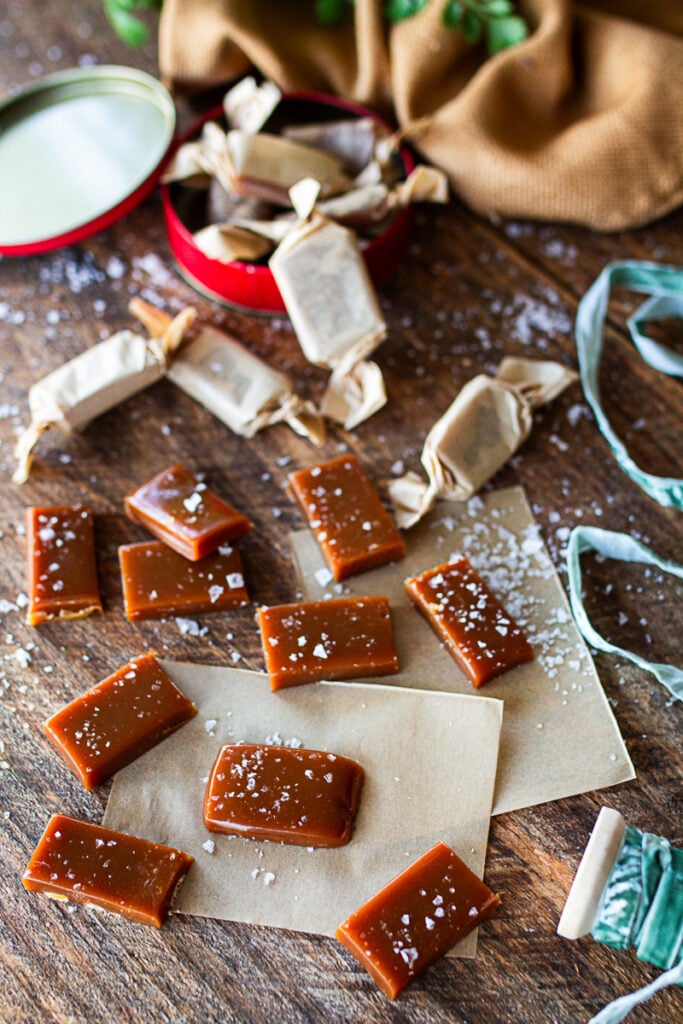
Part of the magic of this recipe is sharing it! Wrapped caramels make sweet holiday gifts packed into small glass jars, parchment-lined tins, or kraft boxes tied with twine and a sprig of fresh pine.
- Room Temperature: Store wrapped caramels in an airtight container at room temperature for up to 2 weeks.
- Refrigerator: Keeps wonderfully for up to 1 month. Bring to room temperature 15 minutes before serving for that soft, melt-in-your-mouth texture.
- Freezer: Can be frozen for up to 3 months.
Top Tip
Never scrape the bottom or sides of the pot when pouring! The syrup left clinging to the pot walls often contains tiny unmelted sugar crystals. If you scrape them into your pan, they can seed your batch and make your beautiful, silky caramels go grainy as they cool.
Homemade Candy Caramel FAQs
While a thermometer takes out the guessing game, you can use the cold water test. Drop a small spoonful of caramel into a bowl of cold water. If it forms a flexible, soft ball that holds its shape when pressed between your fingers, it's ready!
Yes! Leaving the pan covered at room temperature overnight before slicing and wrapping works completely fine.
If your caramels don't hold their shape, they were pulled off the heat slightly before reaching 245°F (118°C). You can re-melt them in a pan with a tablespoon of heavy cream and cook until they reach full temperature.
Chewy Caramel Candies Recipe Card
Equipment
Ingredients
- 1 ½ cups white or cane sugar 300 g
- 8 tablespoons salted butter, room temperature 113 g
- ½ cup heavy whipping cream, room temperature 120 ml
Instructions
- Prepare your pan: Line an 8x8-inch (20x20 cm) baking pan with parchment paper, leaving extra on the sides to lift the caramel later. Lightly butter or spray the parchment.
- Melt the sugar. Add the sugar to a medium saucepan (heavy-bottomed works best) and set over medium heat.

- Wait until the sugar at the bottom begins melting before stirring.
- Once melting starts, stir gently or swirl the pan until all the sugar dissolves and turns into a clear, amber-colored syrup.
- Add the butter: Carefully add the room-temperature butter. The mixture will bubble and steam, stir until fully combined and smooth.
- Add the cream: Slowly pour in the heavy cream, a few tablespoons at a time, stirring constantly. Add the rest gradually to avoid overflow. Continue stirring until the mixture is smooth.
- Cook to soft-ball stage: Return to medium heat and cook the caramel until it reaches 245∘F-248∘F (118∘C-120∘C) on a candy thermometer spatula. If you don't have a thermometer, drop a spoonful into cold water. It should form a flexible ball that holds its shape but still bends when pressed.
- Pour and cool: Carefully pour the hot caramel into the prepared pan, avoiding scraping the sides. Let cool completely at room temperature for about 1-2 hours.
- Cut and wrap: Lift the caramel slab out using the parchment and place it on a cutting board.
- Use a sharp knife to cut into small squares, then wrap each in wax paper.
- Store: Keep wrapped caramels in an airtight container at room temperature for up to 2 weeks, or refrigerate for a month.

Video
Notes
-
Target Texture & Temperatures:
- Softer, melt-in-your-mouth caramels: Cook to 242∘F ().
- Standard chewy caramels (recommended): Cook to - (-120∘C).
- Chewier, firm caramels: Cook to 248∘F-250∘F (-121∘C).
- Avoid Butter Separation: Ensure your butter and cream are completely at room temperature before adding. If the butter separates or floats while cooking, immediately remove the pot from heat, splash in 1 to 2 tablespoons of warm heavy cream, and whisk vigorously until smooth.
- Preventing Graininess: Never scrape the bottom or sides of the saucepan when pouring the caramel into your cooling dish. The sugar residue clinging to the pot walls often contains un-melted sugar crystals that will seed your batch and turn it gritty as it sets.
- Easy Slicing Trick: If the caramel feels sticky or difficult to cut, place the cooled slab in the freezer for 10 minutes before slicing. Use a large, sharp chef's knife wiped lightly with butter or neutral oil for clean, effortless squares.
- Dairy-Free Option: Swap heavy cream for full-fat canned coconut cream and use a high-fat plant-based stick butter (like Miyoko's). Cook dairy-free caramel to 248∘F so it sets firmly.
- Batch Size: This recipe can be doubled easily, just make sure to use a larger, heavy-bottomed pot to accommodate boiling and expansion, and expect the cooking time to increase slightly.



This was my first time ever trying to make chewy caramels. I am surprised I succeeded. My butter didnt want to combine, but I proceeded. I thought its either going to be a fail or it could be good. I stirred in a smidge of vanilla at the end and poured. They turned out better than the ones I got at the store!!!! Thanks for sharing your recipe and the tips.
Why won’t my butter combine with sugar?! I’ve been mixing forever
This usually means the sugar has cooked a bit too far. At that point, the butter won’t re-emulsify, no matter how long you stir, so it looks separated. Caramel is all about hitting the right temperature window, not mixing longer. Next time, try slightly lower heat and add the butter as soon as the sugar melts and turns amber. You were close, caramel just has a narrow sweet spot.
I am dairy free so I made this with full fat oat milk and dairy-free butter alternative. They turned out very good. If you do make it dairy free, I recommend boiling it to the higher temp so it’s thicker and chewier bc mine wasn’t a bit to soft at the lower temp.
Could I let them sit it room temp overnight before cutting them?
That would be completely fine! Enjoy! Eryn 🙂
I read your entire post, watched your video and then made these. They turned out perfectly on the first try!
Thank you, Jill! I’m so glad they turned out well for you on the first try. That’s exactly what I hope for when I share a recipe. Thanks for taking the time to come back and say so! xoxo - Eryn 🙂
I’ve made this recipe more times than I can count while testing and tweaking every detail, and I can honestly say these are the best caramels I’ve ever had. They’re buttery, rich, and chewy, exactly what homemade caramel should be. I love that they’re made the traditional way, without corn syrup, and they hold their shape beautifully for gifting. If you’ve never made caramel before, don’t be intimidated. Follow the steps and you’ll end up with a batch that tastes like it came straight out of a farmhouse kitchen.