
Chewy Caramel Candies Recipe Card
A timeless recipe passed down through generations, these classic holiday caramel chews capture the old-fashioned sweetness and chewy texture of homemade candy that’s been made the same way for hundreds of years.
Servings: 40 wrapped caramels
Calories: 59kcal
Cost: $8
Equipment
Ingredients
- 1 ½ cups white or cane sugar 300 g
- 8 tablespoons salted butter, room temperature 113 g
- ½ cup heavy whipping cream, room temperature 120 ml
Instructions
- Prepare your pan: Line an 8x8-inch (20x20 cm) baking pan with parchment paper, leaving extra on the sides to lift the caramel later. Lightly butter or spray the parchment.
- Melt the sugar. Add the sugar to a medium saucepan (heavy-bottomed works best) and set over medium heat.
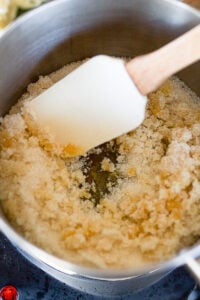
- Wait until the sugar at the bottom begins melting before stirring.
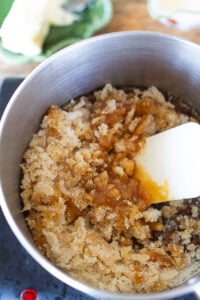
- Once melting starts, stir gently or swirl the pan until all the sugar dissolves and turns into a clear, amber-colored syrup.
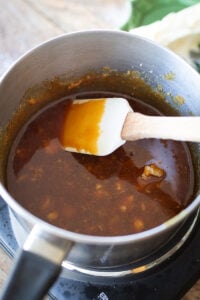
- Add the butter: Carefully add the room-temperature butter. The mixture will bubble and steam, stir until fully combined and smooth.
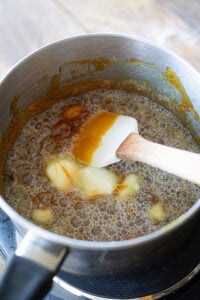
- Add the cream: Slowly pour in the heavy cream, a few tablespoons at a time, stirring constantly. Add the rest gradually to avoid overflow. Continue stirring until the mixture is smooth.
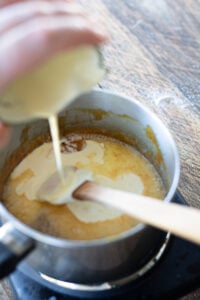
- Cook to soft-ball stage: Return to medium heat and cook the caramel until it reaches 245∘F–248∘F (118∘C–120∘C) on a candy thermometer spatula. If you don't have a thermometer, drop a spoonful into cold water. It should form a flexible ball that holds its shape but still bends when pressed.
- Pour and cool: Carefully pour the hot caramel into the prepared pan, avoiding scraping the sides. Let cool completely at room temperature for about 1–2 hours.

- Cut and wrap: Lift the caramel slab out using the parchment and place it on a cutting board.
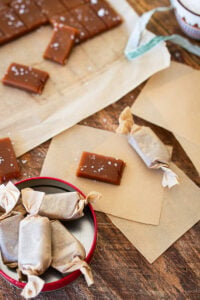
- Use a sharp knife to cut into small squares, then wrap each in wax paper.
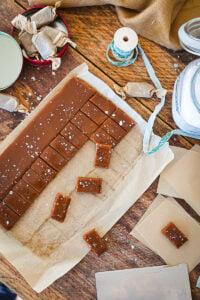
- Store: Keep wrapped caramels in an airtight container at room temperature for up to 2 weeks, or refrigerate for a month.
Video
Notes
-
Target Texture & Temperatures:
- Softer, melt-in-your-mouth caramels: Cook to 242∘F ().
- Standard chewy caramels (recommended): Cook to – (–120∘C).
- Chewier, firm caramels: Cook to 248∘F–250∘F (–121∘C).
- Avoid Butter Separation: Ensure your butter and cream are completely at room temperature before adding. If the butter separates or floats while cooking, immediately remove the pot from heat, splash in 1 to 2 tablespoons of warm heavy cream, and whisk vigorously until smooth.
- Preventing Graininess: Never scrape the bottom or sides of the saucepan when pouring the caramel into your cooling dish. The sugar residue clinging to the pot walls often contains un-melted sugar crystals that will seed your batch and turn it gritty as it sets.
- Easy Slicing Trick: If the caramel feels sticky or difficult to cut, place the cooled slab in the freezer for 10 minutes before slicing. Use a large, sharp chef's knife wiped lightly with butter or neutral oil for clean, effortless squares.
- Dairy-Free Option: Swap heavy cream for full-fat canned coconut cream and use a high-fat plant-based stick butter (like Miyoko's). Cook dairy-free caramel to 248∘F so it sets firmly.
- Batch Size: This recipe can be doubled easily, just make sure to use a larger, heavy-bottomed pot to accommodate boiling and expansion, and expect the cooking time to increase slightly.
Nutrition
Calories: 59kcal | Carbohydrates: 8g | Protein: 0.1g | Fat: 3g | Saturated Fat: 2g | Polyunsaturated Fat: 0.1g | Monounsaturated Fat: 1g | Trans Fat: 0.1g | Cholesterol: 9mg | Sodium: 19mg | Potassium: 4mg | Sugar: 8g | Vitamin A: 114IU | Vitamin C: 0.02mg | Calcium: 3mg | Iron: 0.01mg
