Thick Canned Pizza Sauce Recipe (Water Bath Method)
In our household, homemade pizza night is a cherished weekly tradition. Making a rich, thick canned pizza sauce straight from our garden harvest is the ultimate way to bring real homestead flavor to the table all year long. This simple water bath canning recipe transforms fresh, ripe garden tomatoes into a savory, herb-packed home-canned pizza sauce that completely beats anything from the grocery store. It is the perfect, straightforward project for both beginner canners and seasoned pros looking to fill their pantry shelves.
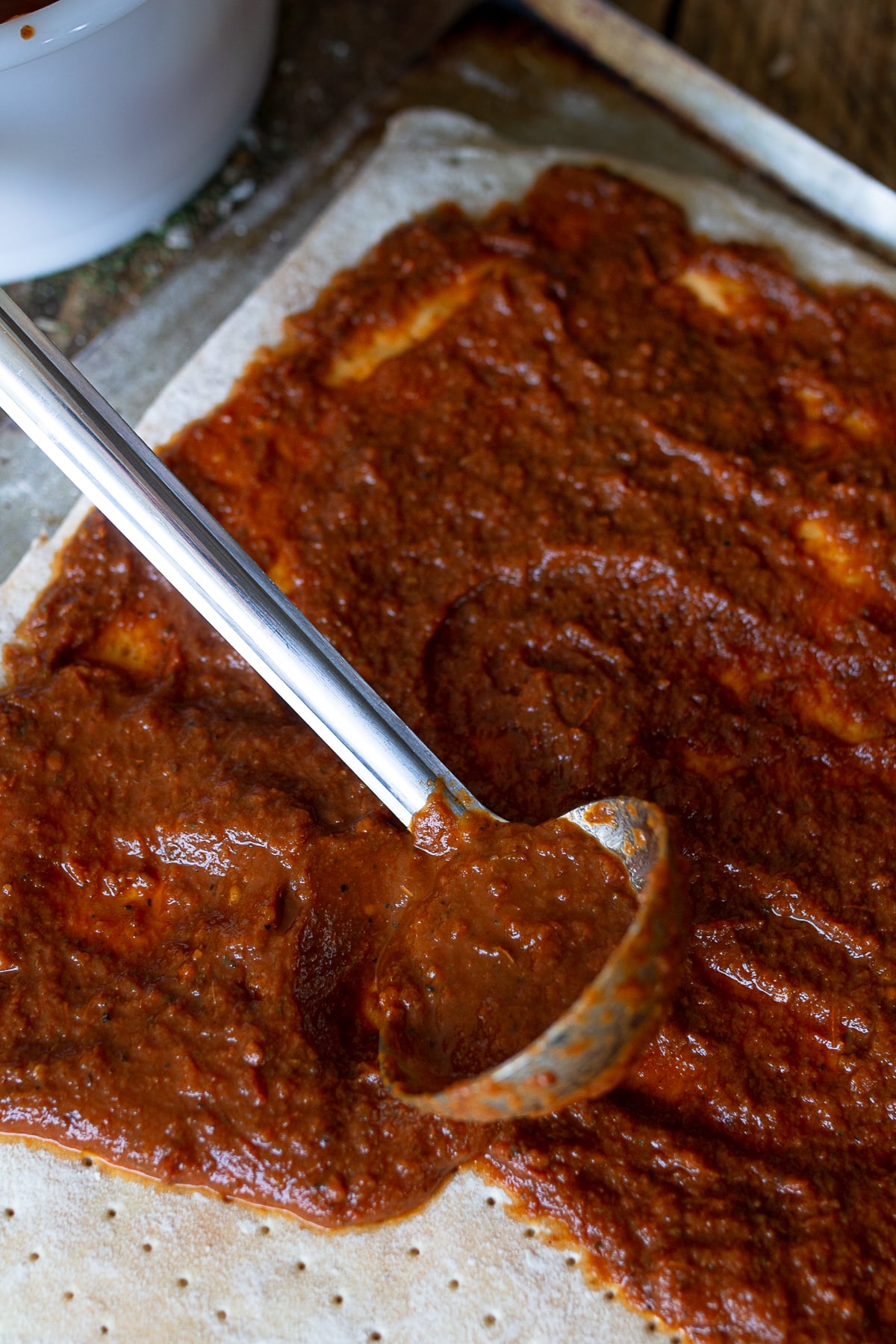
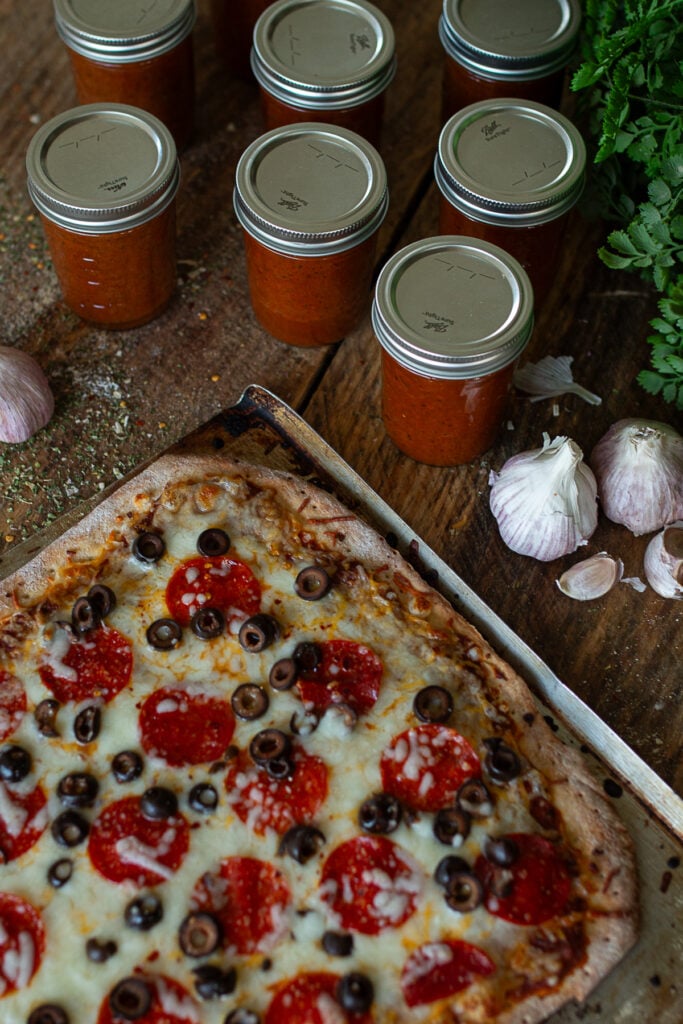
This thick, savory sauce coordinates perfectly with a busy summer preservation schedule. You can easily add a few jars to your pantry shelves on days you are already processing your garden harvest using my guide for canning tomatoes whole or halved or stirring up a batch of my popular easy canned salsa recipe. When Friday rolls around, you just have to pop a seal and drop a generous ladleful over my crispy easy pizza dough recipe to make family pizza night effortless.
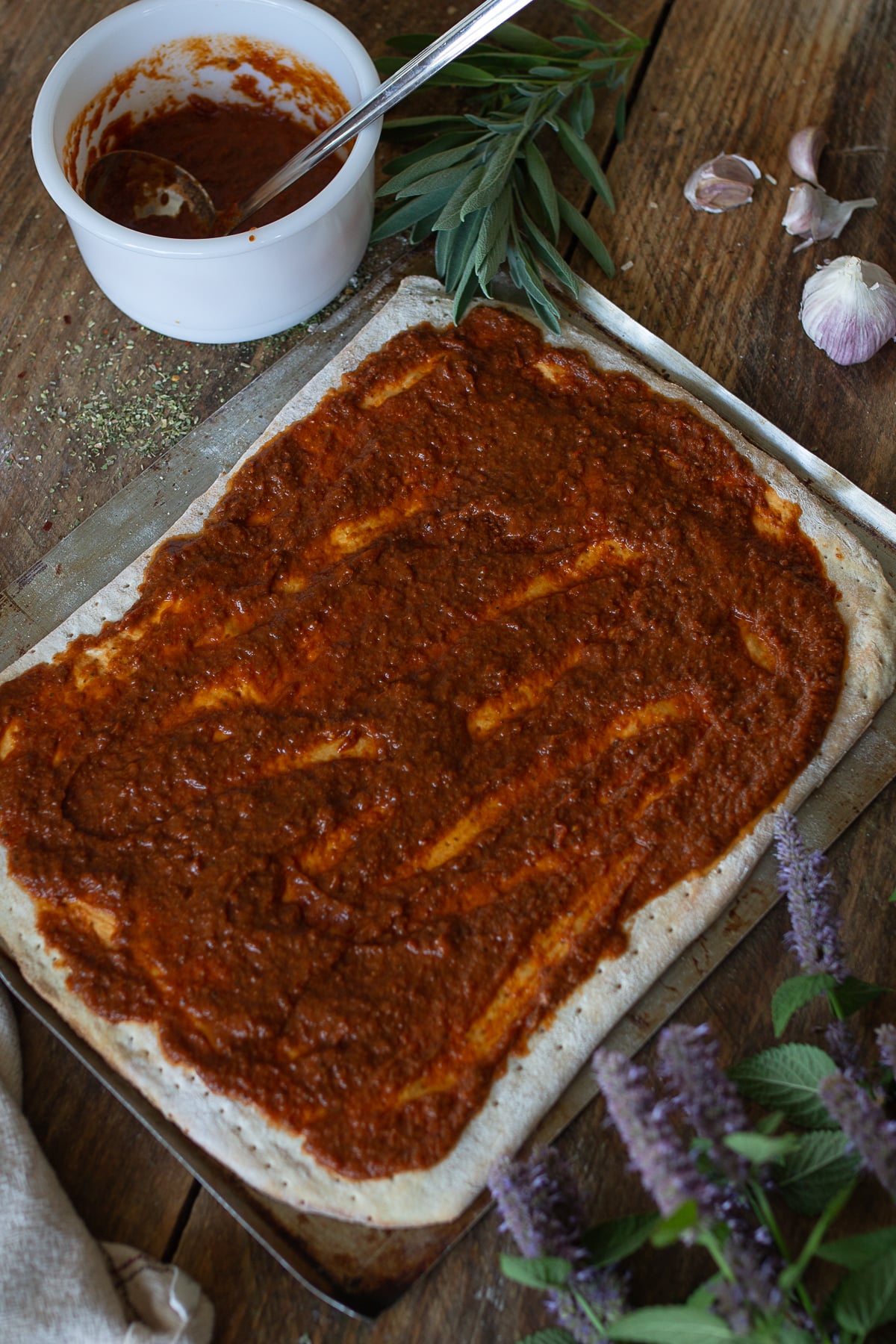
A Quick Look at This Canned Pizza Sauce
🍅Prep Time: About 1 hour of hands-on prep, followed by a slow 12-hour simmer that builds rich, old-fashioned flavor.
🍕The Texture: Thick, smooth, and ready to spread right onto your favorite pizza dough-no peeling tomatoes required.
🏡Pantry Life: Water bath canned for a shelf life of up to 12 months, so homemade pizza night is always within reach.
🥫Yield: Makes about 25 half-pint jars, giving you just the right amount for family pizza nights all year long.
The Secret to a Hearty Pizza Sauce (No Tomato Soup Taste!)
When we first started preserving our own sauce, I used standard pint jars. However, with just four of us at the table, we frequently found ourselves wasting the leftover sauce at the end of the night. Switching over to half-pint mason jars (also known as jam jars) provided the absolute perfect portion size for a standard family pizza night, ensuring every single drop gets used.
I also like to use a much bolder blend of herbs and spices than you will find in standard, watered-down supermarket brands. This sauce doesn't taste like generic tomato soup; it has real heart, a robust aroma, and a slight kick. The secret lies in an incredibly deep, slow simmer that allows the natural sugars in the tomatoes to caramelize. This creates a naturally thick, spreadable consistency that stays put on your dough without making it soggy.
Ingredients For Sauce
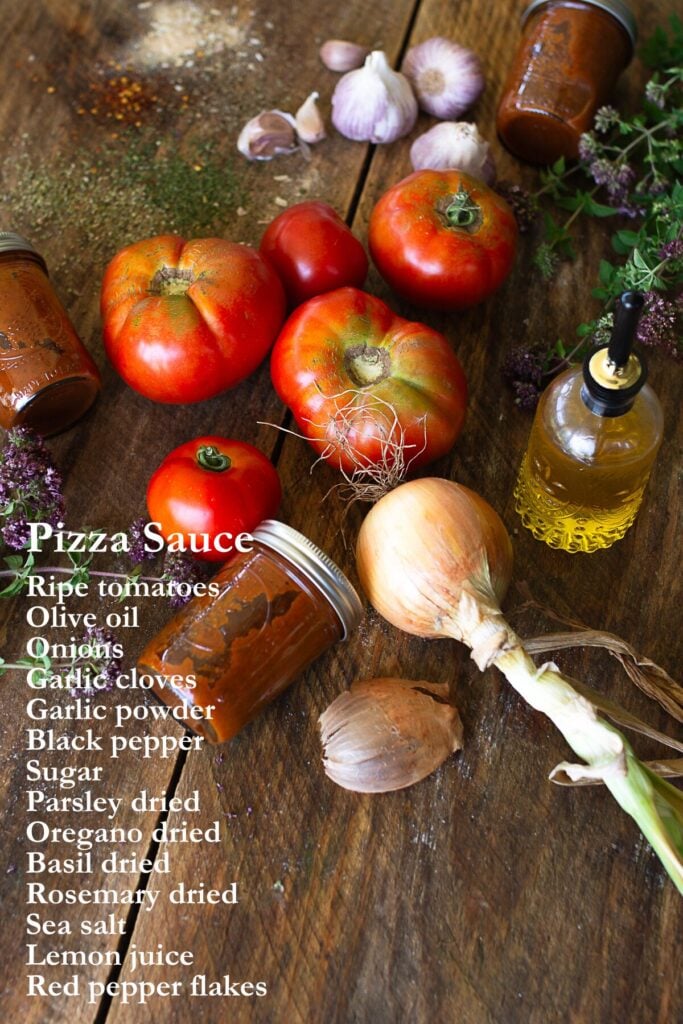
This sauce relies on basic garden staples and common pantry seasonings to create a bold flavor profile.
- Ripe Tomatoes: Paste tomatoes like Roma or San Marzano are highly recommended. They feature dense, meaty flesh and a low water and seed count, which gives you a naturally thicker sauce.
- Olive Oil: Used to sauté the aromatics and unlock the flavor oils of the spices.
- Onions and Garlic Bulbs: Freshly minced aromatics that form the savory foundation of the sauce.
- Garlic Powder: Added alongside fresh garlic to provide an extra layer of concentrated punch.
- Ground Parsley, Oregano, Basil, and Rosemary: A classic Mediterranean herb blend that gives the sauce its signature pizzeria aroma.
- Sea Salt and Black Pepper: Coarse sea salt rounds out the acidity of the tomatoes. I use Redmond's Real Salt for its nutritional value.
- Sugar: A small touch to balance out the sharp acidic bite of the cooked tomato skins.
- Bottled Lemon Juice: A non-negotiable canning safety requirement. It uniformly raises the acidity of the jars to guarantee safe water bath processing.
- Red Pepper Flakes: An optional addition if you prefer your pizza slices with a hint of background warmth.
Instructions on How to Make This Pizza Sauce
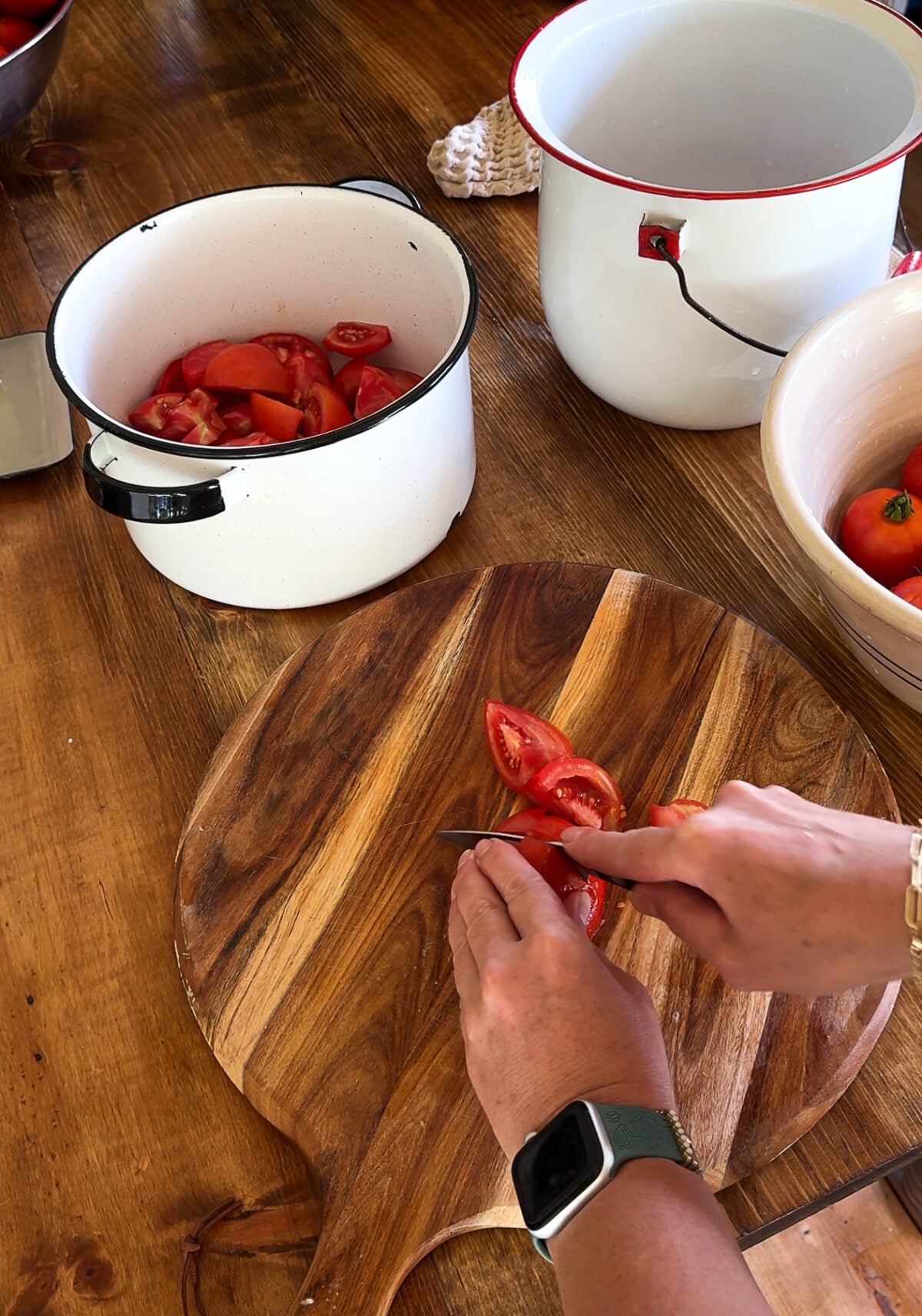
1. Cook and Reduce the Base
- Wash and core your tomatoes. You do not need to peel them; the skins will soften completely during the long cook time and blend out smoothly later.
- Heat the olive oil over medium heat in a large, heavy-bottomed pot. Sauté your minced onions and garlic until they are soft, translucent, and fragrant.
- Dump in the prepared tomatoes, black pepper, sugar, parsley, oregano, basil, rosemary, sea salt, garlic powder, and optional red pepper flakes. Stir thoroughly to combine.
- Bring the entire mixture up to a rolling boil, then immediately drop the heat down to a low simmer.
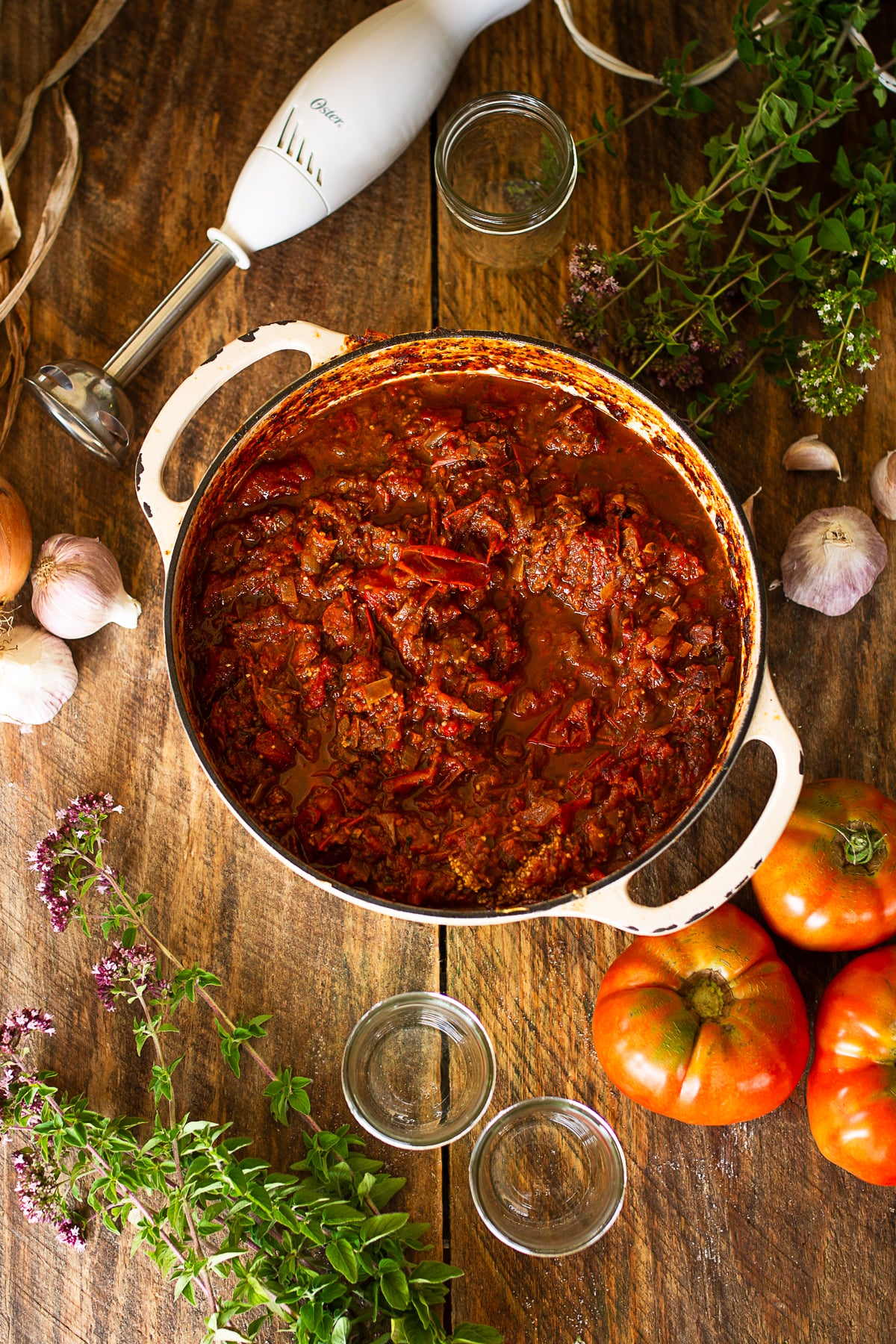
2. The Slow Simmer
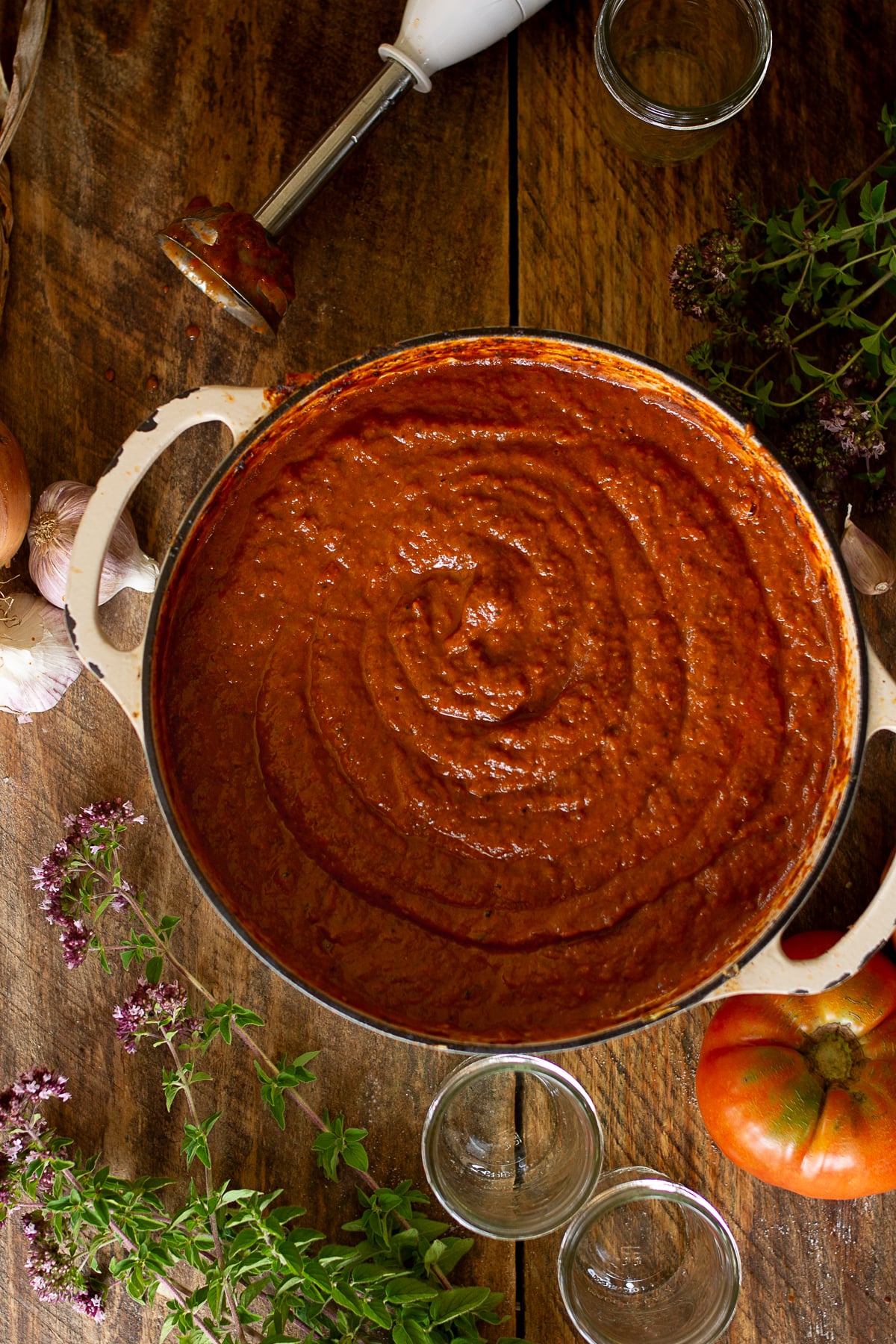
- Simmer the sauce uncovered for at least 12 hours, stirring occasionally to prevent scorching on the bottom of the pot. Do not judge the taste of the sauce during the first few hours; the flavors will naturally concentrate and deepen as the water content evaporates.
3. Blend Sauce
- Once the sauce has reduced into a thick, rich consistency, turn off the heat.
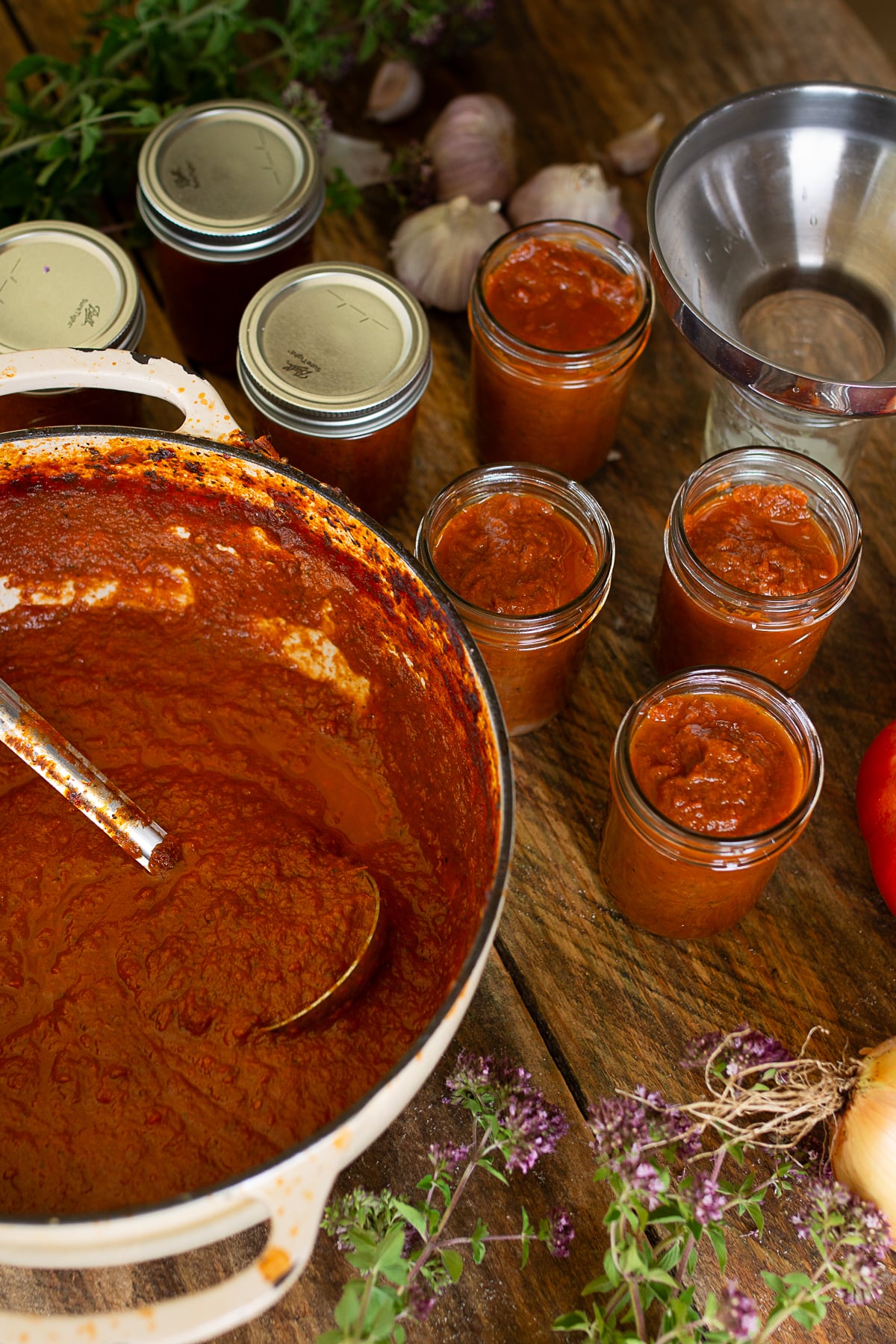
- Use an immersion blender (stick blender) directly in the pot to blend the sauce until it reaches your desired smoothness.
4. Prep and Fill the Jars
- Thoroughly wash your half-pint jars, lids, and screw bands in hot, soapy water. Sterilize the jars by submerging them in your boiling water bath canner for 10 minutes, keeping them hot until ready to fill.
- Add exactly 1 ½ teaspoons of bottled lemon juice into the bottom of each hot half-pint jar.
- Place your canning funnel over the jars and ladle the hot pizza sauce in, leaving exactly ½ inch of headspace at the top.
- Run a bubble remover tool down the inside of the jars to release trapped air, then wipe the rims completely clean with a damp cloth.
5. Process in the Water Bath
- Center the lids on the jars and screw the bands on until they are just fingertip tight.
- Use a jar lifter to lower the filled jars into your boiling water bath canner, ensuring they are covered by at least 1 inch of water.
- Process the jars at a full rolling boil for 35 minutes.
- Remove the jars carefully with your jar lifter and place them on a clean towel at room temperature to cool overnight. Check the center seals the next day, remove the screw tops, label with the date, and store them in your pantry!
Hint: If you prefer an absolutely flawless, seedless texture, you can run the cooked tomato mixture through a traditional food mill before hitting it with the immersion blender to catch any remaining stubborn pieces of skin.
Substitutions
- Tomatoes: If you do not have Roma or San Marzano tomatoes growing in your garden plots, you can use standard slicing tomatoes or heirloom varieties. Just note that they contain a much higher water content, so you will need to simmer them longer to achieve the same thickness.
- Salt: I highly prefer using Redmond's Real Salt for its unrefined quality, but any standard non-iodized canning or sea salt will work perfectly.

Variations
- The Fire-Roasted Spin: Roast your tomatoes, onions, and garlic on baking sheets under the oven broiler until charred before adding them to the pot to add a deep, smoky flavor.
- The Sweet Pizzeria Style: If your family prefers a sweeter style sauce, you can slightly increase the sugar content to mask the natural acidity of the paste tomatoes.
Equipment
- Boiling Water Bath Canner: A large pot with an interior rack to keep your jars off the direct heat of the bottom of the pan.
- Mason Jars: Half-pint (jam) jars with fresh, clean lids and bands.
- Immersion Blender: Essential for smoothly pureeing the cooked sauce directly inside your large stockpot.
- Canning Essentials: A sturdy jar lifter, canning funnel, ladle, and a non-metallic bubble remover tool.
Storage
- Pantry Storage: Sealed, processed jars should be stored in a cool, dark, and dry space. They will remain completely shelf-stable for at least 12 months.
- Refrigeration: Any jar that fails to ping and seal correctly should be placed in the refrigerator immediately and used up within one week.
- Freezer Option: If you have extra sauce left over that won't fill a final jar, simply pour it into a freezer-safe container, leave room for expansion, and freeze it until ready to use.
Top Tip
Never use fresh lemon juice for this canning recipe! Fresh lemons vary wildly in their natural acidity levels depending on the variety and season. Bottled lemon juice has a standardized, strictly controlled pH level, which ensures your home-canned tomato products stay perfectly safe from dangerous spoilage organisms like botulism.
FAQ about this sauce
Yes! Safely water bath canning low-acid mix-ins like garlic, onions, and dried herbs inside a tomato base depends entirely on balancing the pH level. The addition of the bottled lemon juice to each jar provides the exact amount of acidity required for complete safety.
Tomatoes vary wildly in their natural acidity based on the soil, climate, and variety. Adding 1 tablespoon of bottled lemon juice per half-pint ensures a safe, uniform pH level for water bath canning. It is a non-negotiable safety step!
No. You must never add meat, cheese, or any dairy products to a water bath canning recipe. Those low-acid ingredients require a pressure canner to prevent dangerous spoilage. Keep your base sauce clean for canning, and simply stir in your favorite meat or cheese toppings when you open the jar on pizza night!
Absolutely. If you prefer to use a pressure canner, you can easily process this sauce according to the USDA guidelines for your specific altitude and cooker type. However, this recipe is fully tested and optimized for the simple water bath method.
Other canning recipes to try:
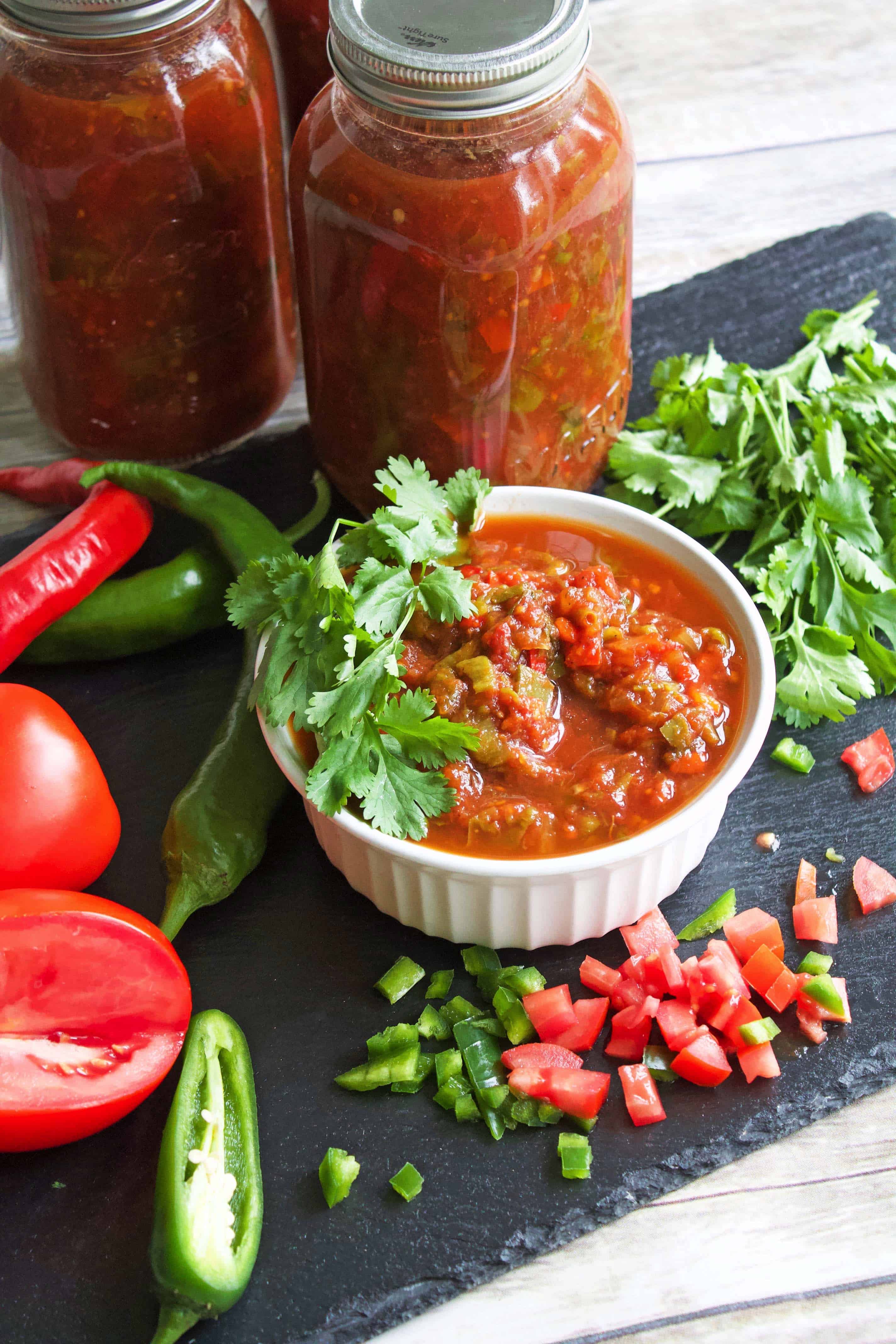

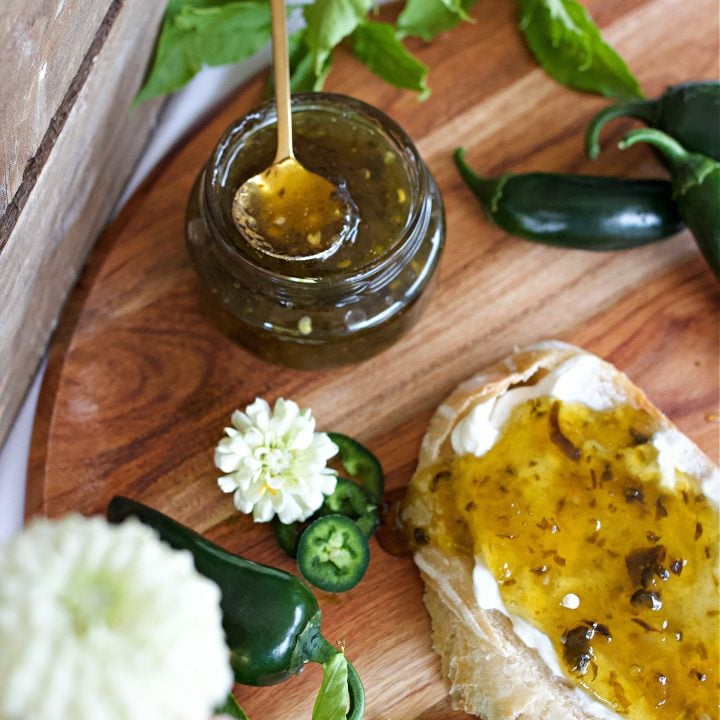

Water Bath Pizza Sauce Canning Recipe
Equipment
- 1 Pack of Half Pint Mason Jars
Ingredients
- 15 Lbs Ripe tomatoes Roma or San Marzano recommended
- 6 tablespoon Olive oil
- 4 Cups Onions minced (about 2 onions)
- 4-10 Cloves Garlic minced
- 1 tablespoon Garlic powder
- 1 tablespoon Black pepper
- 2 tablespoon Sugar
- 2 tablespoon Parsley dried
- 3 tablespoon Oregano dried
- 2 tablespoon Basil dried
- 1 tablespoon Rosemary dried
- 2 Tsp. Sea salt I prefer Redmond's Real Salt for its nutritional value
- 1 ½ teaspoon Lemon juice - Bottled Per half pint jam jar size
- 1 teaspoon Red pepper flakes to taste (optional for a kick)
Instructions
- Wash, core, and coarsely chop your garden tomatoes. Leave the skins on.
- Heat the olive oil in a large stockpot over medium heat. Add the minced onions and garlic, cooking until translucent and fragrant.
- Stir in the chopped tomatoes, garlic powder, black pepper, sugar, parsley, oregano, basil, rosemary, and sea salt.
- Bring the mixture up to a boil, then reduce heat to low and simmer uncovered for 12 hours, stirring occasionally until thick and rich.
- Puree the reduced sauce using an immersion stick blender directly in the pot until completely smooth.
- Sterilize your half-pint mason jars in a boiling water canner for 10 minutes. Keep them hot.
- Drop exactly 1 ½ teaspoon of bottled lemon juice into the bottom of each hot half-pint jar.
- Ladle the hot pizza sauce into the jars using a funnel, leaving exactly ½ inch of headspace. Remove air bubbles and wipe rims clean.
- Center the lids on the jars and adjust the bands until fingertip tight.
- Lower the jars into your boiling water bath canner, ensuring water covers the tops by 1 inch, and process for 35 minutes.
- Remove with a jar lifter and let cool undisturbed on a clean towel for 24 hours before checking seals.
Video
Notes
- Tomato Selection: Using paste tomatoes like Roma reduces your cook time because they carry significantly less liquid than standard slicing varieties.
- No-Peel Method: Leaving the skins on adds a beautiful rustic texture and color. The long 12-hour simmer breaks down the fibers completely, making peeling totally unnecessary.
- Thickening Tip: If your sauce still feels too loose near the end of cooking, increase the heat slightly to medium-low to accelerate the evaporation process, stirring constantly to prevent scorching.
- Adjust Seasonings: Always take a tiny taste test and adjust your herbs or salt right before ladling the hot sauce into your jars, as the flavors concentrate significantly during the 12-hour reduction window.


Can I put all ingredients into a crockpot for the 12 hour cook or does it need to be done on the stovetop? Thank you!
The crockpot would also work fine! - Eryn 🙂
Every year when the tomatoes start piling up, I know it’s time for pizza sauce day. There’s something so rewarding about watching those jars line the counter, knowing we’ll use each one on our Friday night pizzas all winter long. This recipe has been fine-tuned over years of canning, and it never fails us. I hope it brings your family the same joy and tradition it brings to ours. happy canning, friends! ?