Herb Seasoning Salt Recipe (Easy Rosemary Blend)
There's something deeply satisfying about mixing up your own herb seasoning salt at home. It takes just a few minutes, uses simple pantry ingredients, and instantly elevates everyday meals. This homemade herb seasoning salt recipe combines coarse salt, rosemary, sage, garlic, and onion into a savory blend that tastes fresher and more vibrant than anything you'll find in a packet.
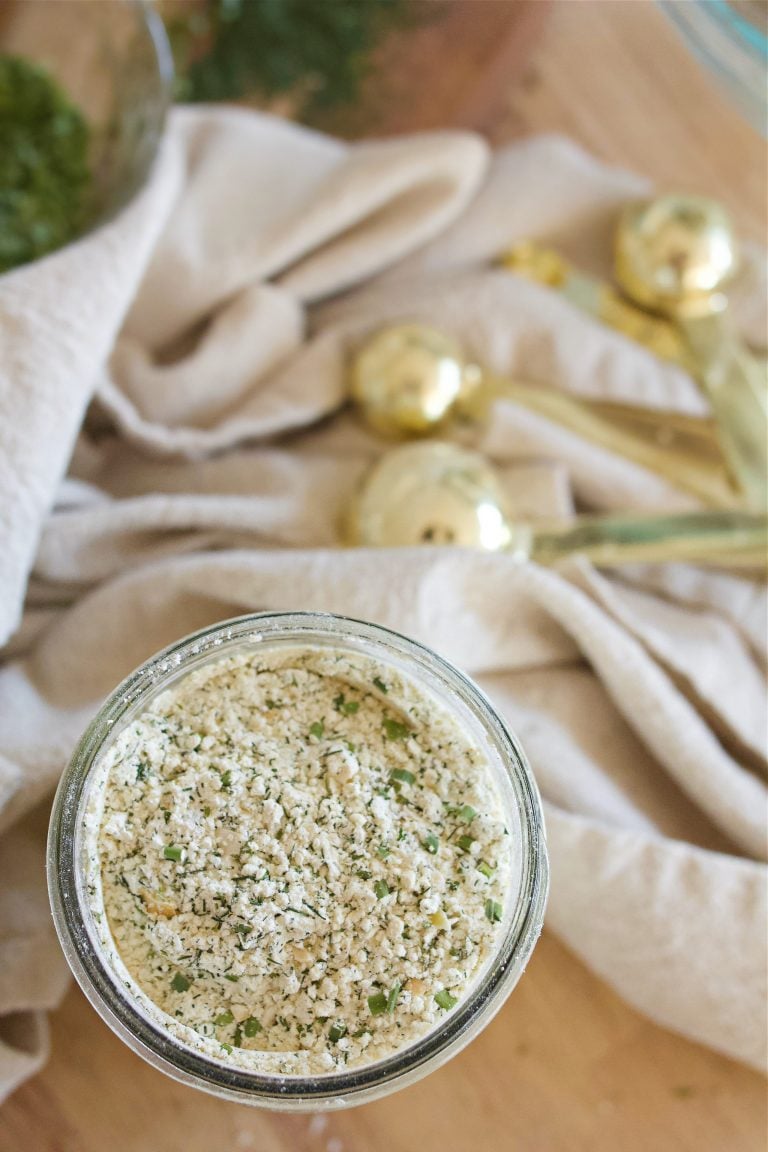
It's the kind of small kitchen staple that quietly makes everything better, from roasted vegetables to pork chops to warm bread dipped in olive oil. If you love building your pantry from scratch, you might also enjoy my ranch seasoning mix, easy taco seasoning mix, or homemade vanilla extract. All are simple, foundational recipes that become everyday workhorses in the kitchen.

Quick Look: Herb Seasoning Salt Recipe
⏱️ Time: 5 minutes
Cost: Under $5 per jar
Texture: Coarse, aromatic, slightly flaky
Flavor Profile: Savory, herby, lightly garlicky
Skill Level: Beginner
Best For: Roasted vegetables, meats, bread dipping, gifting
Pro Tip: Use coarse sea salt for the best texture and visual appeal.
SUMMARIZE & SAVE THIS CONTENT ON
Jump to:
- Quick Look: Herb Seasoning Salt Recipe
- Why You'll Love This Herb Seasoning Salt
- What Makes This Herb Seasoning Salt Special?
- Herb Seasoning Salt vs Rosemary Salt
- Key Ingredients (And Why They Matter)
- Where to get your herbs
- Substitutions and Variations
- Expert Tips
- How To Make Herb Seasoning Salt
- Packaging
- Storage and Shelf Life
- Creative Uses for Herb Seasoning Salt
- Shop salts:
- You may also want to make:
- Savory Rosemary Herb Seasoning Salt Recipe
- About Eryn
Why You'll Love This Herb Seasoning Salt
- Made with real, simple ingredients
- No fillers or anti-caking agents
- Ready in under 10 minutes
- Customizable to your taste
- Doubles as a thoughtful homemade gift
- Stores well for months
Once you start making your own seasoning blends, it's hard to go back to store-bought versions.

What Makes This Herb Seasoning Salt Special?
This isn't just rosemary mixed into salt. The balance matters.
Rosemary brings bold, woodsy depth.
Sage adds warmth.
Garlic and onion provide that savory backbone.
Parsley brightens the blend.
A dash of paprika and chili flakes add subtle complexity.
Combined with coarse salt, the herbs cling beautifully to food and give you flavor in every bite.
Herb Seasoning Salt vs Rosemary Salt
You'll see both terms used online, and they aren't exactly the same.
Rosemary salt is typically just rosemary and salt.
Herb seasoning salt is a more complete blend that includes multiple herbs and savory elements like garlic and onion.
This recipe leans rosemary-forward, but it's layered enough to work as a full seasoning blend-not just a finishing salt.
That broader flavor profile makes it more versatile in everyday cooking.
Key Ingredients (And Why They Matter)
• Coarse Sea Salt
This is the foundation of the entire blend. Flake or coarse sea salt gives structure and texture, allowing the herbs to cling to food instead of disappearing into it. Fine table salt won't give you that same visual appeal or balanced seasoning. Look for a clean, mineral-rich sea salt with visible flakes.

• Dried Rosemary
Rosemary is the backbone of this blend. It brings a bold, woodsy flavor that stands up beautifully to roasted meats and vegetables. Use high-quality dried rosemary that still smells fragrant when you open the jar. If it has no aroma, it won't add much flavor.
• Dried Sage
Sage adds warmth and depth. It rounds out rosemary's sharp edges and makes the blend feel fuller and more savory. A little goes a long way, but it makes a noticeable difference in the final flavor.
• Dried Onion Pieces
Onion brings subtle sweetness and balance. It softens the intensity of the herbs and gives the seasoning that familiar savory backbone you expect in a good all-purpose blend.
• Garlic Salt or Dried Garlic
Garlic adds richness and helps the blend taste complete. If using garlic salt, adjust your overall salt slightly so the mixture doesn't become too salty. If using dried garlic, make sure it's finely ground so it distributes evenly.
• Dried Parsley
Parsley brightens the blend. It adds color and freshness without overpowering the other herbs. While it may seem optional, it helps the seasoning feel balanced rather than heavy.
• Paprika (Optional)
A small pinch adds gentle warmth and a subtle earthiness. It doesn't make the blend spicy, it just deepens the flavor.
• Chili Flakes (Optional)
Just enough to create interest. Not heat-forward, but enough to keep the blend from tasting flat.
Where to get your herbs
For the best results, you want to use high-quality dried herbs. If you can, grow your own herbs at home, it's a great way to ensure maximum freshness and flavor. I grow and dry my own herbs, including rosemary, thyme, and sage. You can find out how to do this in my herb garden this post here.
If you can't grow your own, Mountain Rose Herbs is my go-to for buying herbs. Their quality is unbeatable, and they offer a wide variety of herbs that surpass the quality of what you might find at the grocery store.

Substitutions and Variations
- Keep it simple: Just rosemary + salt
- Add lemon zest (fully dried) for brightness
- Use smoked salt for a deeper flavor
- Blend it in a food processor for a finer texture
- Add thyme or oregano for a more Mediterranean profile
This recipe is a starting point. Once you make it once, you'll adjust it naturally to fit your cooking style.
Expert Tips
- If gifting, include a small card with usage ideas.
- Use completely dry herbs to prevent clumping.
- Store in an airtight glass jar.
- Keep away from heat and steam (no storing next to the stove).
- Make smaller batches if you prefer peak herb flavor.

How To Make Herb Seasoning Salt
Step 1: Combine Ingredients
Add the coarse salt and all dried herbs and spices to a mixing bowl.
Step 2: Mix Thoroughly
Stir gently until everything is evenly distributed.
Step 3: Transfer to Jar
Spoon into an airtight glass jar. Seal tightly.
That's it. No cooking required.

Packaging
Aesthetics matter, especially when gifting. Use butcher paper, twine, and jar lids to give your homemade herb salt a charming, rustic look. If you want to add a personal touch, include a recipe card that explains how to use the herb seasoning salt on dishes like pasta, pork chops, or as a finishing salt for pasta dishes and veggies.
Storage and Shelf Life
Your homemade herb salt should be stored in an airtight container in a cool place at room temperature, away from direct sunlight. The shelf life is typically around 6 months, but the herbs will start to lose their potency after that. I rotate my herb blends seasonally, swapping out lighter, fresh herb mixes for roast vegetables and meats during the winter months.
Creative Uses for Herb Seasoning Salt
These herb-infused salts are versatile and can be used in many ways:
- Dry rubs for meats
- Sprinkled over roasted veggies
- Mixed with olive oil for bread dipping
- As a finishing salt for pasta or salads
If you make a big batch, you can give them as gifts or keep them on hand for your own kitchen creations. And don't forget to tag me on Instagram if you make this! I love seeing your ideas.

Herb Seasoning Salt FAQ
Up to 6 months when stored in a cool, dry place. The salt itself lasts indefinitely, but the herbs slowly lose potency over time.
Not for long-term storage. Fresh herbs contain moisture and can cause spoilage. Stick to dried herbs.
Coarse sea salt or kosher salt. Flake salt gives the most beautiful texture and presentation.
Yes. It works beautifully as a base for chicken, pork, and roasted vegetables.
Shop salts:


You may also want to make:



Savory Rosemary Herb Seasoning Salt Recipe
Ingredients
- ¾ cup Large flake salt
- 2 tablespoons rosemary
- a few peppercorns
- 2 teaspoons garlic salt
- 2 tablespoons dried onion pieces
- 2 teaspoons parsley
- dash paprika
- 2 teaspoons sage
- ¼ teaspoon chili flakes
Instructions
- Combine Ingredients: Pour the coarse salt into a small mixing bowl. Add the dried herbs, garlic salt, peppercorns, paprika, and other spices on top. Stir gently with a spoon until the herbs and spices are evenly distributed throughout the salt.
- Transfer to Jar: Using a canning funnel or spoon, carefully scoop the herb seasoning salt mixture into a glass container. I recommend using 16 oz decorative canning jar for a beautiful presentation.
- Seal and Decorate: Cover the jar lid with a piece of butcher paper and secure it with the screw-top ring. For an extra personal touch, add a tag or write directly on the lid.And that's it-your homemade herb seasoning salt is ready to use or gift!
Notes
Proper Storage: Store your herb seasoning salt in an airtight glass jar or container, like glass canning jars, to preserve the freshness of the herbs and salt. Keep it in a cool, dark place away from direct sunlight and moisture to maintain its potency. Shelf Life: Your homemade seasoning mix will last up to 6 months when stored properly. While the salt will remain good, the herbs may start to lose their flavor over time. For the best flavor, consider making smaller batches and using them within 3-4 months.
Nutrition
About Eryn
Eryn Whalen is a homestead blogger and recipe developer with a lifetime of hands-on experience in gardening, home canning, animal husbandry, and traditional kitchen skills. From preserving homegrown harvests to baking sourdough from scratch, she shares her family's journey of intentional living on their 100-acre Tennessee farmstead. Recently, Eryn has expanded her homesteading life to include caring for a family milk cow, sharing the learning process and daily joys of small-scale dairying. Read more about Eryn here



This Herb Seasoning Salt is one of those simple pantry staples that makes everything better. The rosemary-forward blend with sage, garlic, and onion has real depth, and the coarse salt gives it beautiful texture.
It takes minutes to make and instantly upgrades roasted vegetables, meats, and warm bread with olive oil. Once you try it, store-bought just doesn’t compare.