Great-Grandma’s Homemade Egg Noodle Recipe | Easy
Make this homemade egg noodle recipe one time, and you'll understand why so many cooks stop buying noodles from the store. These old-fashioned egg noodles are made from scratch with just eggs and flour, no special equipment, and very little hands-on time. They're simple, hearty, and perfect for chicken noodle soup, beef stroganoff, or an easy buttered noodle side.
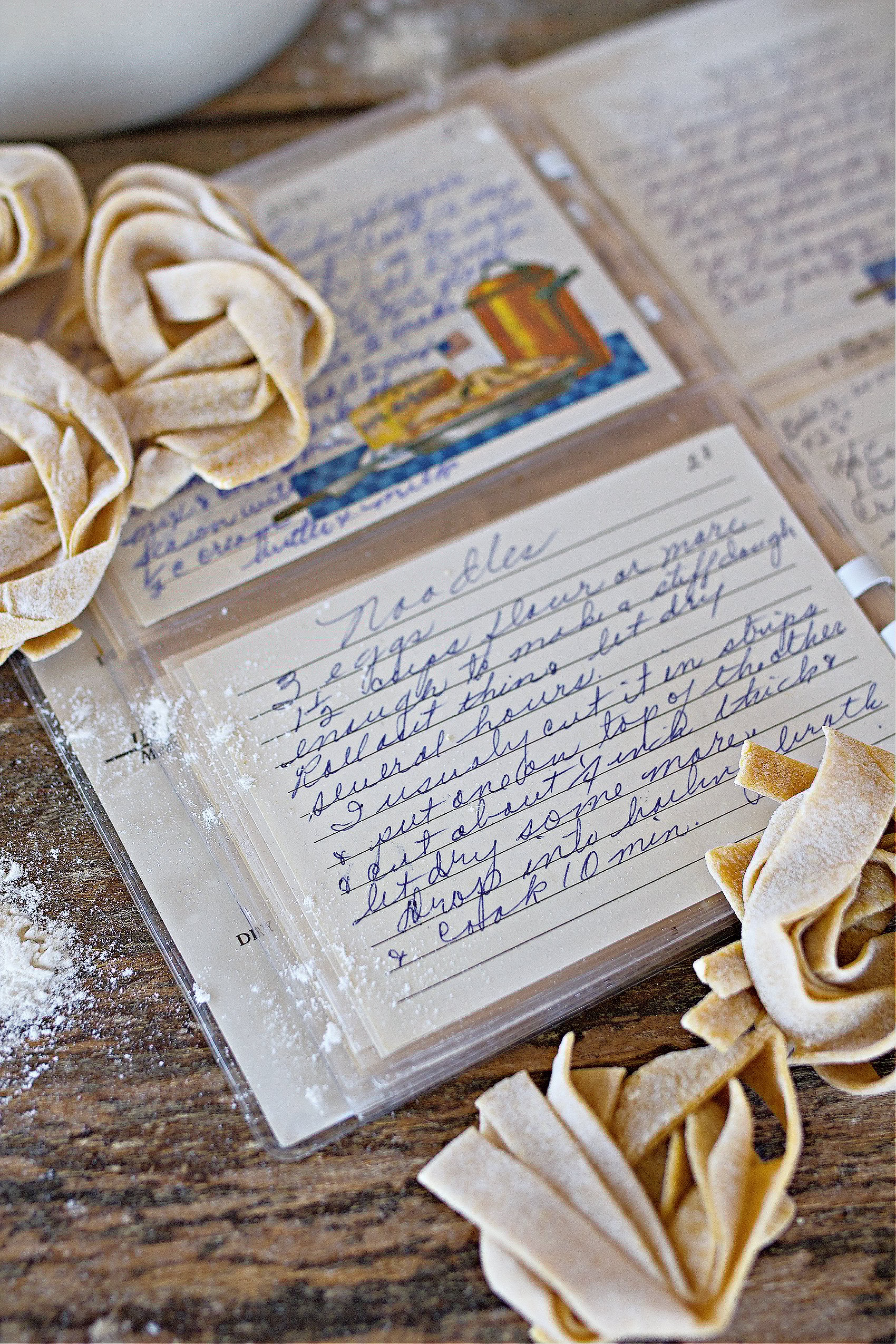
This egg noodle recipe comes from my great-grandmother Susan's handwritten cookbook, and it fits right alongside the from-scratch staples I make every week, like my sandwich bread, sourdough discard flatbread, and sourdough breadsticks. It's the same back-to-basics approach: basic ingredients, a few quiet minutes in the kitchen, and food that feels familiar and dependable.
Quick Look: Homemade Egg Noodles
- Recipe type: Old-fashioned homemade egg noodles
- Made with: Just eggs and flour
- Skill level: Easy, beginner-friendly
- Time needed: About 15 minutes hands-on, plus drying time
- Equipment: Rolling pin and knife (no pasta machine required)
- Best uses: Chicken noodle soup, beef stroganoff, buttered noodles, casseroles
SUMMARIZE & SAVE THIS CONTENT ON
Jump to:
- Quick Look: Homemade Egg Noodles
- Why You'll Love This Homemade Egg Noodle Recipe
- Ingredient Notes + Simple Substitutions
- Special Equipment (Optional)
- Step-by-Step: How to Make Homemade Egg Noodles
- Different Ways To Use These Egg Noodles
- Freezing Instructions
- Pro Tips for the Best Homemade Egg Noodles
- FAQ About Noodles
- Egg Noodles
Why You'll Love This Homemade Egg Noodle Recipe
- Made with just two core ingredients, so the quality of what you use actually matters-and you can taste the difference
- The dough is forgiving and flexible, easy to adjust as you work without feeling fussy or precise
- Rolls and cuts beautifully by hand, making it approachable even if you've never made pasta before
- Holds its shape well in soups and sauces without turning mushy
- A timeless, from-scratch recipe that fits naturally into everyday meals, not just special occasions
Ingredient Notes + Simple Substitutions
Eggs
Eggs do most of the work in this recipe. Farm-fresh eggs with deep yellow or orange yolks give the noodles better color and flavor, but good-quality store-bought eggs work beautifully too.
All-Purpose Flour
Use unbleached all-purpose flour for the best flavor and texture. If you have a higher-protein unbleached flour, even better, it gives the noodles a little more strength and structure without making them tough. As you work, add a light dusting of flour if the dough feels sticky. If it feels dry or crumbly, a small splash of water will bring it together quickly.
Special Equipment (Optional)
Sometimes, it feels like we need all the fancy tools, the noodle cutter, the drying rack, the pasta machine to get the perfect thickness. But the truth is, homemade noodles only need a rolling pin, a knife or pizza cutter, and a countertop. That's it. Keep it simple, unless you want to go all out! (Trust me, as the queen of kitchen gadgets, I see the appeal of both ways.)
- Rolling pin (to roll out the dough)
- Pizza cutter or sharp knife (to cut noodles into long strips)
- Pasta drying rack or cooling racks (to dry the noodles)
- Stand mixer with a dough hook attachment (if you don't want to mix by hand)
- Pasta roller or pasta machine (for extra smooth noodles)
Step-by-Step: How to Make Homemade Egg Noodles
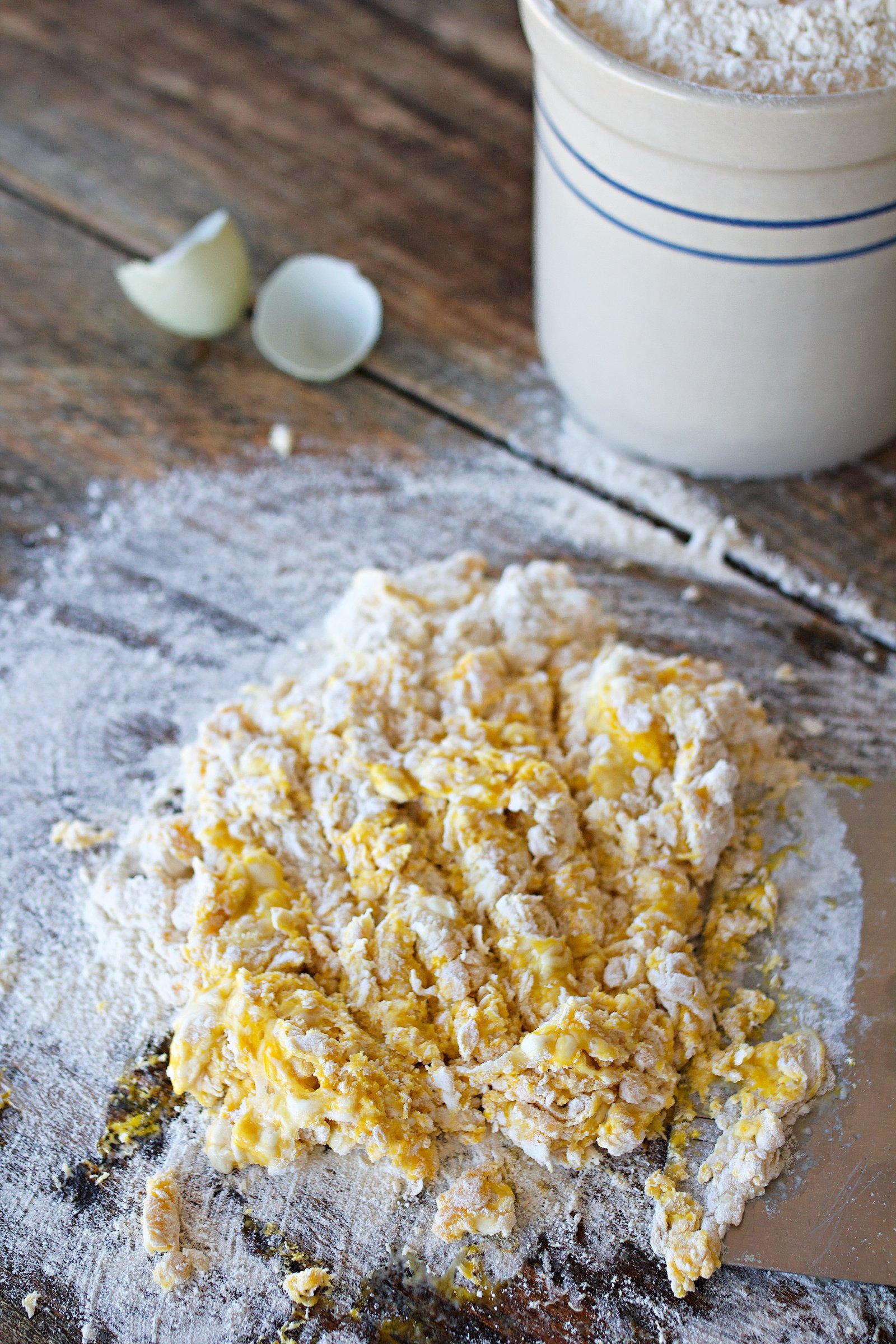
Start with a clean counter and keep extra flour nearby. This dough is forgiving, and small adjustments as you work are part of the process.
Bring the dough together.
Make a well in the flour and add the eggs, pulling flour in from the sides as you mix. At first it will look rough and uneven. Keep folding until it forms a cohesive dough. If it feels dry, add a few drops of water. If it's sticky, dust in a little more flour.
Knead and rest.
Knead the dough until smooth and elastic-it should feel firm but pliable, not tacky. Let it rest briefly so it rolls easily and doesn't spring back.
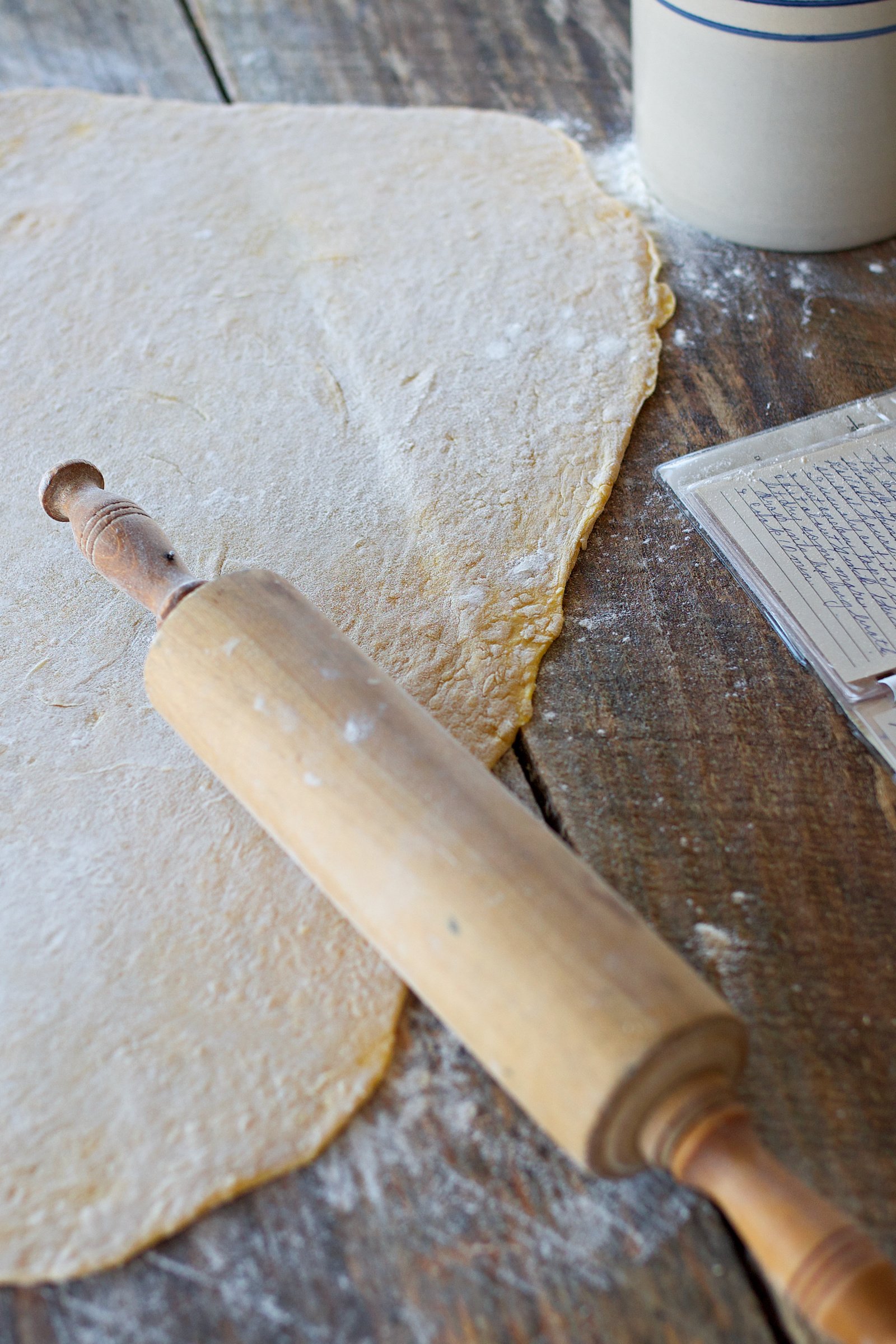
Roll and dry before cutting.
Roll the dough into a thin sheet, rotating as you go to keep it even. Before cutting, let the dough rest on the counter until the surface feels slightly dry but still flexible. This makes cleaner cuts and prevents sticking.
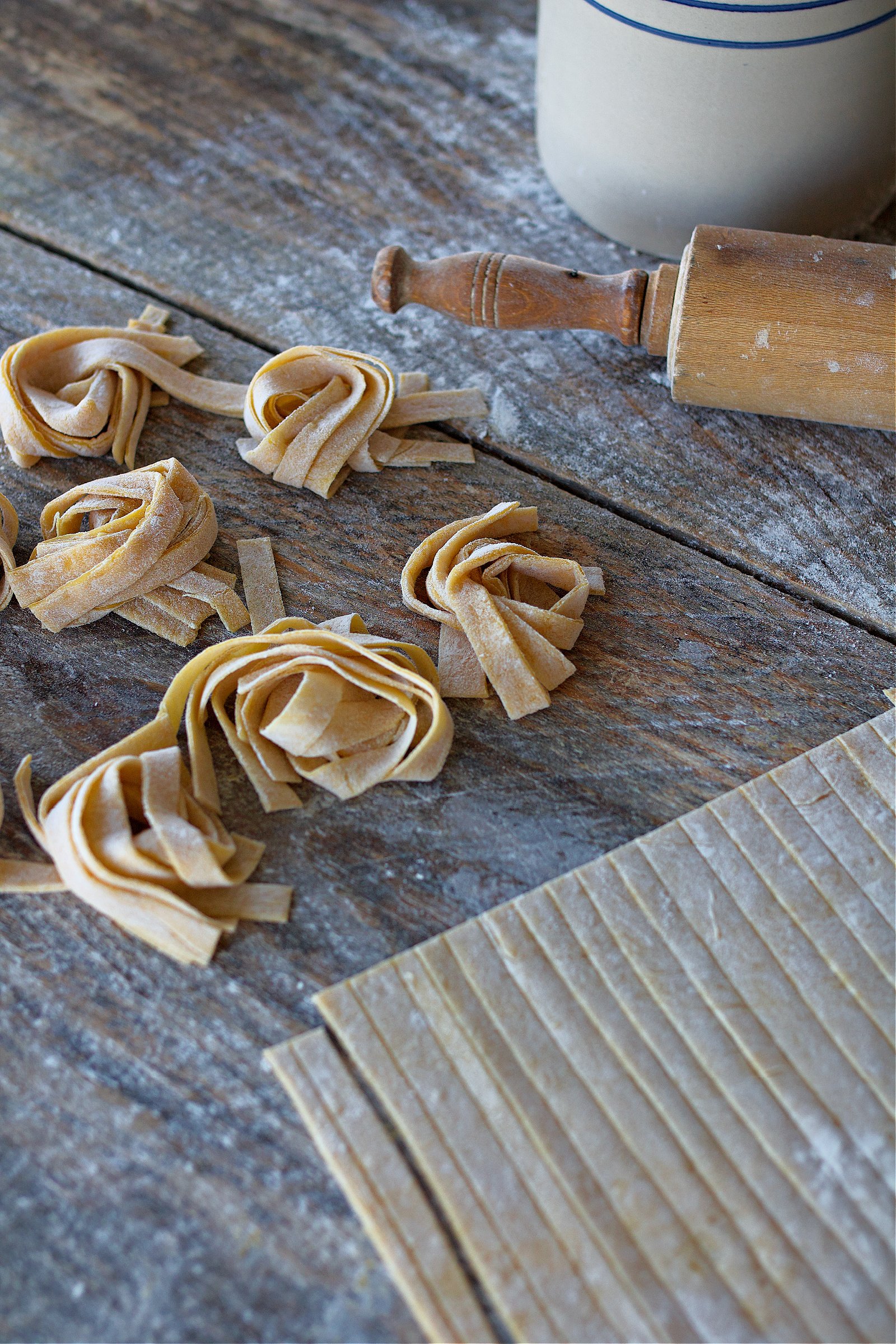
Cut, dry, and store.
Slice the dough into your preferred width. Gather the noodles into loose bundles or drape them over a rack so air can circulate. Once fully dry and firm to the touch, store them in an airtight container at room temperature. A dehydrator on low works well if your kitchen is humid or busy.
Cook gently.
Cook the noodles in well-salted water at a steady boil until tender with a little bite. Taste one and trust that more than the clock.
When cutting, go wider for soup-style noodles or slightly thinner for buttered noodles and casseroles. Keep the bundles loose so air can circulate as they dry.
Different Ways To Use These Egg Noodles
These homemade egg noodles work their way into meals all week long.
- Stirred into chicken noodle soup with a rich, homemade broth
- Served under beef stroganoff or pot roast gravy
- Tossed with butter, black pepper, and fresh herbs for a simple side
- Layered into casseroles where you want a sturdy noodle
- Added to brothy soups when you want something heartier than store-bought pasta
Freezing Instructions
Lay out the noodles on a cooling rack until fully dry. Then, transfer them to a freezer bag and freeze for up to 3 months. When ready to use, cook straight from frozen-just add 2-3 minutes to the boiling time.
Pro Tips for the Best Homemade Egg Noodles
- Use high-quality eggs. The egg yolks make a big difference in flavor and color. Farm-fresh or organic eggs will give you the best results.
- Don't rush the drying process. If drying for storage, make sure the noodles are fully dried to avoid mold. Use a pasta drying rack or spread them on a lightly floured surface for even airflow.
- Salt the boiling water. Just like with regular pasta, adding salted water enhances the flavor of the noodles.
FAQ About Noodles
If your noodles broke into tiny pieces while cooking, a few things could be the culprit, but don't worry, there's an easy fix!
Not Enough Kneading - Kneading develops gluten, which gives the noodles strength. If the dough isn't kneaded enough, the noodles can become fragile. Make sure to knead for at least 8-10 minutes until the dough is smooth and elastic.
Not Enough Kneading - Kneading develops gluten, which gives the noodles strength. If the dough isn't kneaded enough, the noodles can become fragile. Make sure to knead for at least 8-10 minutes until the dough is smooth and elastic.
Rolled Too Thin - Extra-thin noodles may break more easily. Try rolling them slightly thicker next time for a sturdier bite.
Yes. Once fully dried, they store well at room temperature or in the freezer, making them great for meal prep.
No. A rolling pin and knife work just fine. A pasta roller can speed things up, but it's not necessary.
Homemade noodles have a richer flavor and a silky texture that you just can't get from store-bought pasta. Plus, you get to control the texture of the dough, the desired thickness, and the ingredients. No preservatives, just real, fresh goodness!
Making this batch of fresh egg noodles isn't just about the food, its was about stepping into my great-grandmother's kitchen and honoring her legacy. I can't help but imagine how many times she made these, rolling out the dough with a rolling pin, cutting it with a sharp knife, and serving it to her family with love.


Egg Noodles
Ingredients
- 3 eggs large at room temperature
- 1 ½ cups all-purpose flour or more, as needed
Instructions
- Mix the Dough: In a large bowl, add the all-purpose flour and make a well in the center.
- Crack the whole eggs into the well and gently mix using a wooden spoon or dough scraper until combined.
- Knead the mixture into a dough ball, adding a little flour if sticky or a splash of water if too dry.
On a lightly floured surface, roll the dough into a thin sheet using a rolling pin. - Let it rest on the counter for at least an hour before cutting for easier handling.
- Cut the Noodles: Use a sharp knife or pizza cutter to slice into ¼-inch wide strips.Gather noodles into small twisted bundles for drying.
- Dry & Store: Dry on the counter for a few hours or in a dehydrator for 1 hour.Store in an airtight container in the pantry for 1-2 months or freeze for 3-6 months.
- Cook & Enjoy: Bring a pot of salted water to a boil.Drop in the fresh noodles and cook for 2-3 minutes, or until tender.
Notes
Nutrition
This recipe is part of a special series where I'm working my way through my great-grandmother Susan's handwritten recipe book, bringing her treasured dishes back to life one by one.
Passed down with care, her recipes hold the flavors of family gatherings, holiday dinners, and the warmth of a kitchen filled with good food and even better company. This journey through her recipe book is about sharing and honoring her legacy in the kitchen, and gifting her timeless recipes to the next generation.





I’ll never get tired of making these noodles. The texture, the rich flavor from the eggs, it’s pure comfort. Every time I roll out the dough, I think about my great-grandma doing the same in her farmhouse kitchen. Simple, honest food like this connects generations in the best way.