Homemade Fluffy Biscuit Recipe | Like Grandma Made
Waking up, I stretch my arms wide and pad into the kitchen to make my trusty, no-fail biscuit recipe before heading out to milk the cow. Morning light peeks in from the forest's edge, coffee steams in my favorite mug, and one hand reaches for the frozen butter. There's nothing better than pulling warm, golden brown homemade biscuits from the oven: simple, comforting, and ready in under 30 minutes. This easy biscuit recipe has become my go-to for everyday baking, especially on busy mornings, and it's the same quick biscuit recipe my grandma relied on, served warm with fresh jam after chores.
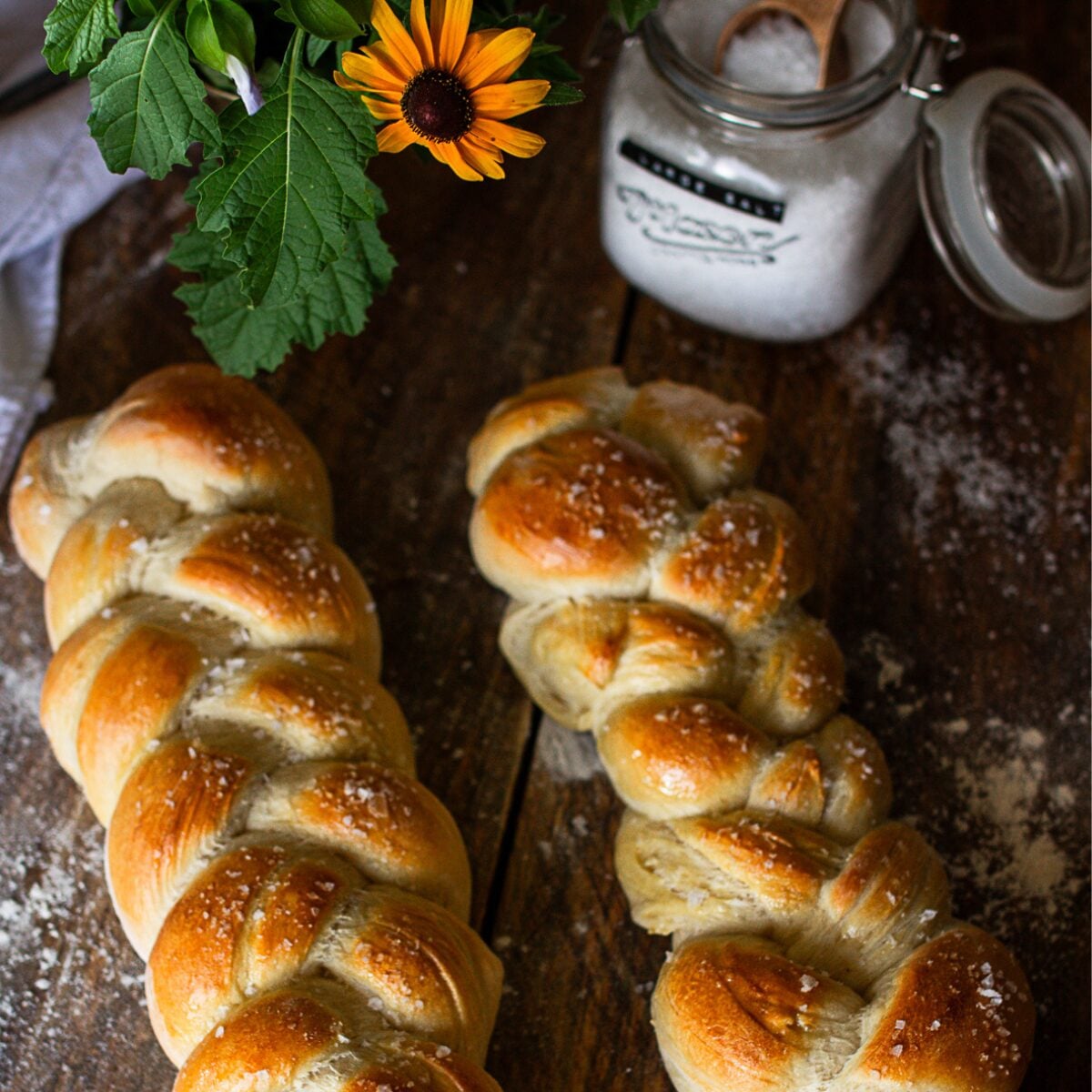
If you enjoy my homemade sandwich bread, braided french bread, or sourdough discard breadsticks, these biscuits will fit right into your kitchen rhythm. Once you make them from scratch, you'll forget all about the store-bought tubes.

Quick Look At This Recipe
✨ The Best Part: No fancy equipment, no yeast, and no waiting around for dough to rise. You can have warm, scratch-made, Southern-style biscuits on your table in under 20 minutes flat.
🧈 The Butter Secret: We always use salted butter here for that rich, old-fashioned flavor, and we grate it frozen! Those cold shreds of real butter release steam as they bake, forcing the dough into sky-high, flaky layers.
🚫 The Golden Rule: Never twist your biscuit cutter! Press straight down and pull straight up. Twisting seals the dough edges shut, while a clean press keeps the edges open so they can expand into magnificent, towering layers.
☁️ The Texture: Think shatteringly crisp, golden-brown tops brushing against a cloud-soft, buttery, pillowy farmhouse center that's just begging for a drizzle of honey or a scoop of sausage gravy.
SUMMARIZE & SAVE THIS CONTENT ON
Why You'll Love This Biscuit Recipe
- Reliable enough to become your go-to homemade biscuit recipe
- Flaky layers, a tender crumb, and that classic buttery top
- Comes together with simple, familiar ingredients you likely already have
- No special tools needed, just a bowl, frozen butter, and a few minutes
- Fast enough for busy mornings and steady enough for last-minute dinners
- Never tastes processed or store-bought
- A forgiving dough that still turns out beautifully for beginners
Ingredient Notes + Substitutions
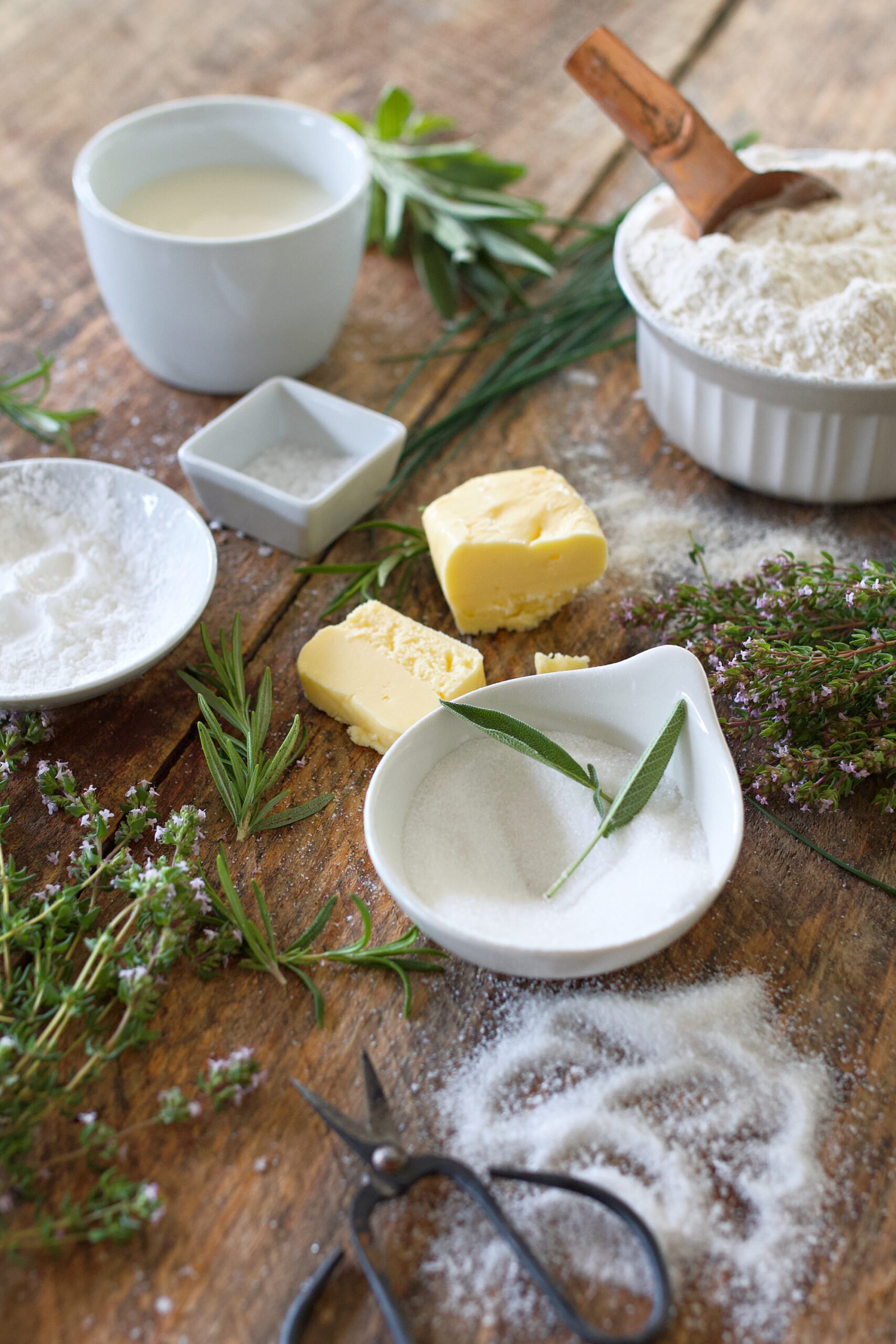
In our home, I live by a simple rule: less is more, but make it quality. You don't need a long list of ingredients to make the best biscuits, but what you use truly matters. Think of it the same way you would a sourdough starter - feed it high-quality unbleached flour and it thrives; switch to bleached, over-processed flour and it struggles. Food is, in many ways, alive. When ingredients are stripped, bleached, or overworked, the flavor is lost long before it ever reaches your mixing bowl.
Flour
I always reach for organic, unbleached all-purpose flour. It hydrates beautifully and creates lighter, taller biscuits with a cleaner flavor. Yes, cheaper flour will "work," but the difference in texture and taste is noticeable. If you can source local flour, even better.
Butter
Use unsalted frozen butter for the flakiest layers. Grating it with a box grater gives you perfect little pieces that melt into pockets of steam as the biscuits bake. Frozen butter is what separates a flat biscuit from a showstopper.
Milk or Buttermilk
Whole milk is my standard, but buttermilk gives an extra lift and tang. If you don't have buttermilk on hand, mix a tablespoon of vinegar into whole milk and let it sit a few minutes. The flavor is richer when you start with good-quality milk - especially farm-fresh if you have it.
Sugar + Salt
Just a touch of sugar balances the flavor. Kosher salt disperses more evenly throughout the dough than table salt, keeping every bite seasoned.
Baking Powder
Fresh baking powder ensures your biscuits rise high. If it's been open more than six months, replace it for the best results.
Better ingredients make better biscuits. It really is that simple.
Step-by-Step: How to Make This Biscuit Recipe
Start by keeping every ingredient as cold as possible. Cold butter turning into steam is what gives you height and flaky layers.
In your large bowl, stir together the dry ingredients before adding the grated or cubed frozen butter. Use a pastry cutter or fork to blend until you see coarse crumbs. You want visible pieces of butter - that's where the magic happens.
Pour the milk into the center and gently bring the dough together until it forms a shaggy mixture. Avoid overworking it; that develops gluten and reduces flakiness.
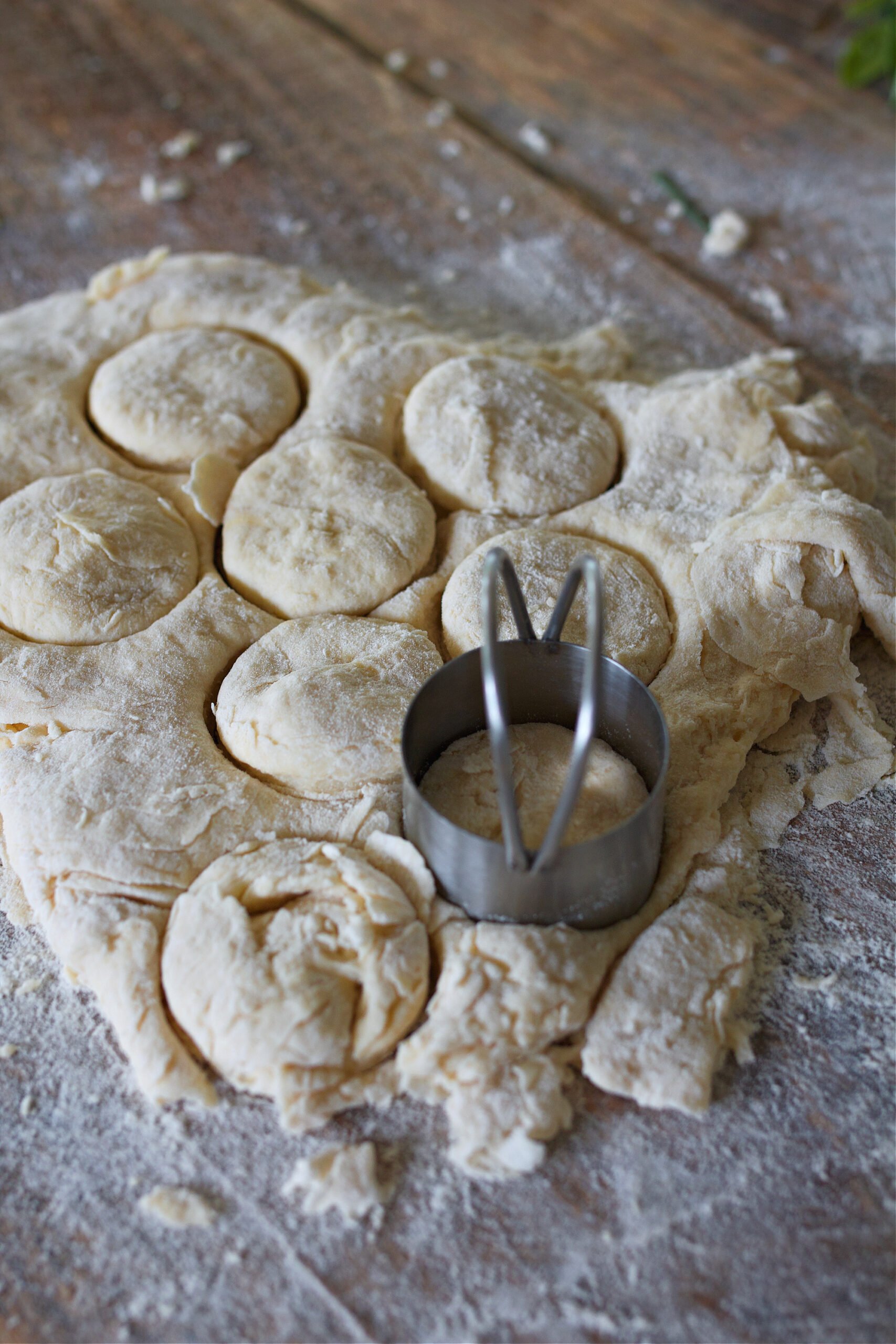
Turn the dough onto a lightly floured work surface and give it a few soft folds. This simple folding creates layers without needing laminated dough techniques. Press into a thick rectangle and cut cleanly with a biscuit cutter - no twisting.
Bake in a hot oven on a baking sheet or in a cast iron skillet, which gives great edges and even browning.
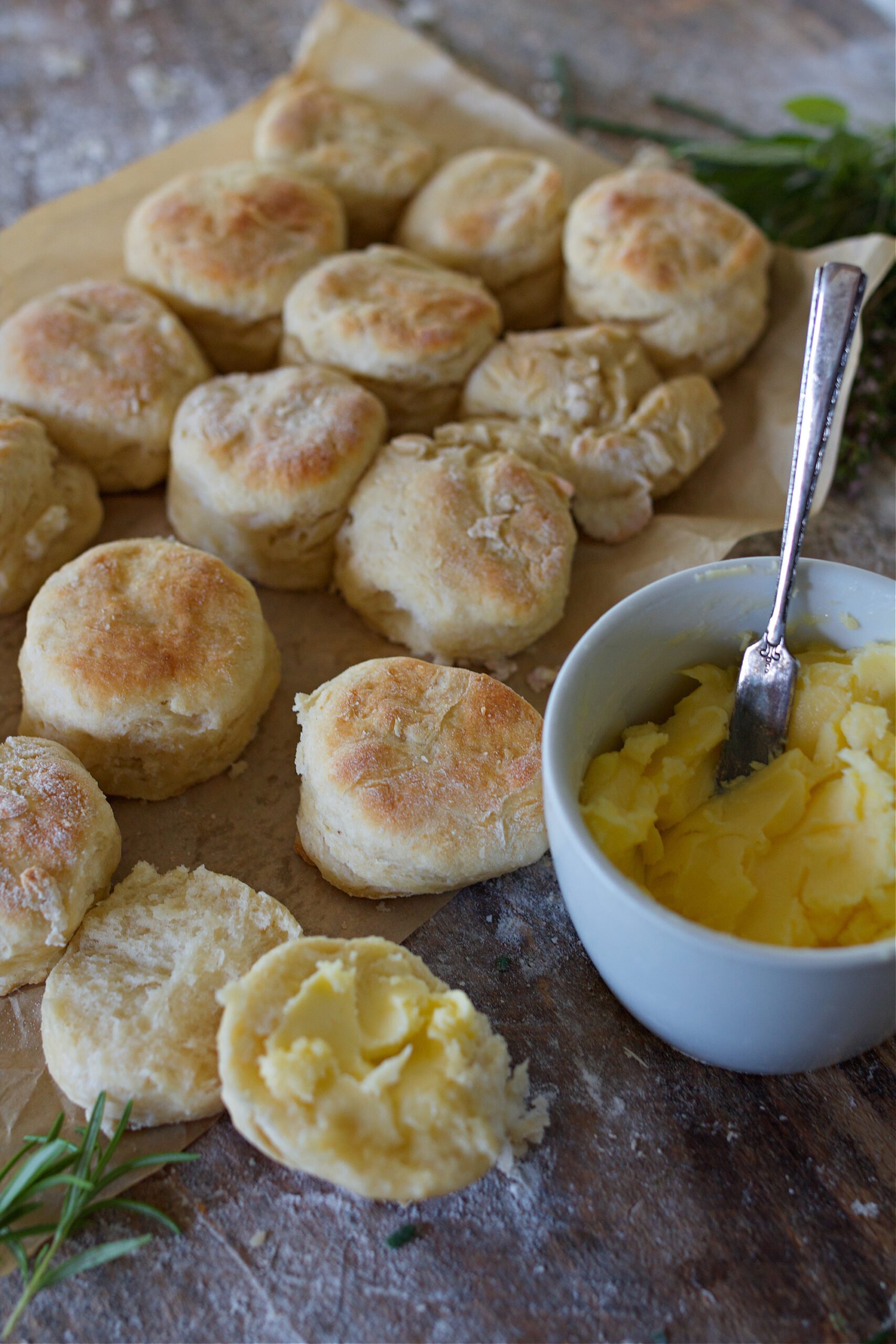
Brush the tops with melted butter as soon as they come out for that classic golden finish.
Variations
Herb Biscuits
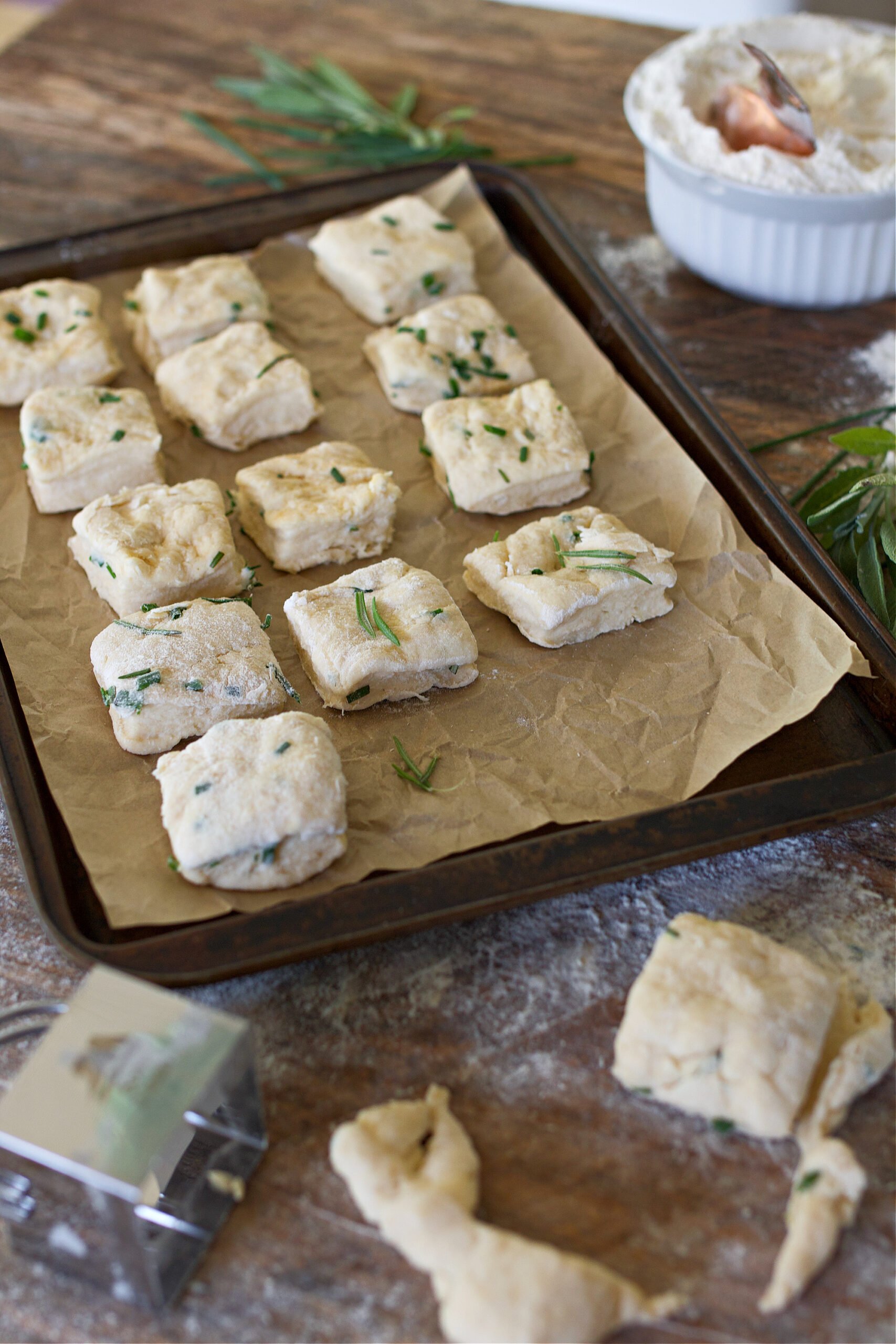
Fold in rosemary, thyme, sage, or basil for savory biscuits that pair beautifully with soups and roasted chicken.

Cheddar + Onion Biscuits
Mix grated cheddar and finely diced sweet onion into the dry ingredients. Add a splash more milk if needed to bring the biscuit dough together.
Drop Biscuits
Skip the rolling entirely. Spoon the dough onto a sheet pan for rustic biscuits when you're in a hurry.
FAQ About Biscuit Making
Flat or dense biscuits usually come down to two things: warm butter or overworked dough. Butter must stay cold so it can release steam in the oven, creating lift and flaky layers. If the dough is handled too much, the gluten develops and the biscuits toughen. Old baking powder can also keep biscuits from rising. Fresh leavening + cold butter + gentle hands = fluffy biscuits.
Biscuit dough should look shaggy, not wet like batter and not dry like pie dough. If it's too dry, the biscuits won't rise well and will crumble. If it's too sticky, the layers won't form. Add milk a tablespoon at a time until the dough just comes together. The less you handle it, the lighter the biscuits will be.
Unbleached all-purpose flour hydrates evenly and keeps the crumb tender.
Frozen butter creates steam pockets that turn into flaky layers.
Fresh baking powder provides height and softness; old baking powder loses its strength quickly.
Whole milk or buttermilk adds moisture, richness, and flavor.
Each ingredient affects texture, rise, and flavor. Small shifts in quality make a big difference.
Yes, as long as you pulse gently. A food processor can cut butter into the flour quickly, which keeps it cold. The danger is overmixing. Always transfer the mixture to a bowl and stir in the milk by hand. Machines should never do the final mixing, that's where overworking happens.
A few slip-ups can flatten even the best biscuit recipe:
Using warm or soft butter
Handling the dough too much
Twisting the biscuit cutter (it seals the edges and prevents rising)
Baking at too low a temperature
Letting baking powder expire
Adding too much flour during shaping
Pressing the dough too thin
Fix these, and your biscuits will improve instantly.
Cold ingredients, confident minimal handling, and quality ingredients.
Storage + Reheating Tips
Keep biscuits in an airtight container at room temperature for 24 hours. For longer storage, freeze them individually wrapped. Warm in the oven to restore that just-baked texture - even frozen biscuits revive beautifully with a few minutes of heat.
You May Also Enjoy:


Quick Biscuits
Ingredients
- 2 cups all purpose organic unbleached flour
- 1 tablespoon Baking powder
- 4 teaspoon Organic granulated sugar
- 6 tablespoon Butter frozen and sliced into pieces
- ¾ cup cold whole milk - more if needed 1 tablespoon at a time while kneading
- 1 teaspoon kosher salt
Instructions
- Preheat oven to 350°F. A hot oven is key for rise.
- In a large bowl, combine flour, baking powder, sugar, and salt. Slice frozen butter into small pieces or grate with a box grater. Add to the flour mixture and cut in with a pastry blender or fork until you see coarse crumbs.
- Pour milk into the center. Mix gently with a wooden spoon or silicone spatula until a shaggy dough forms. Transfer dough to a lightly floured surface.
- Knead by hand 3-4 times, then press into a thick rectangle. Use a biscuit cutter or measuring cup to cut biscuits. Avoid twisting the cutter to keep edges clean.
- Place biscuits on a prepared baking sheet or into a cast iron skillet. Bake 12-15 minutes until the tops of the biscuits are golden brown. Brush with melted butter for extra flavor.
Notes
Nutrition
If you make this quick biscuit recipe make sure to let me know over on Instagram. Tag me and let me know how they turned out!
Shop this post:

About Eryn
Eryn Whalen is a homestead blogger and recipe developer with a lifetime of hands-on experience in gardening, home canning, animal husbandry, and traditional kitchen skills. From preserving homegrown harvests to baking sourdough from scratch, she shares her family's journey of intentional living on their 100-acre Tennessee farmstead. Recently, Eryn has expanded her homesteading life to include caring for a family milk cow, sharing the learning process and daily joys of small-scale dairying. Read more about Eryn here






The recipe calls for whole milk, but the notes say buttermilk substitute. Which is it? Buttermilk or whole milk.
Sorry about that! Either work, but I usually go with whole milk. 🙂
This biscuit recipe is one I come back to over and over again. It’s the kind of dough you can make half-awake in the morning, with cold butter and a warm oven doing most of the work. If you try it, I’d love to hear how you serve them in your home, jam, gravy, soup, or straight from the pan with butter. And if something feels off as you bake, leave a comment and I’ll help you troubleshoot.
Instructions say place on prepared baking sheet or cast iron skillet . . . Prepared would mean? Buttered, parchment paper, ???
Any of those ways work just fine! Parchment paper makes for easy cleanup, but buttering or lightly greasing the pan works too. Whatever you prefer, biscuits aren’t picky ?.