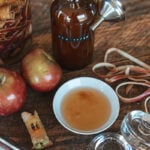
Apple Cider Vinegar
This homemade apple cider vinegar recipe is a simple and effective way to turn leftover apple scraps into your own apple cider vinegar. Ideal for everything from salad dressings to mayo and more, this homemade vinegar is a great way to add a powerful ingredient to your pantry.
Servings: 3 -4 quarts if using 2 half gallon jars to ferment
Calories: 2kcal
Cost: $1
Ingredients
- 2 quarts Apple scraps (enough to fill ¾ of a half gallon mason jar) peels, cores, and any leftover apple pieces
- ½ gallon Filtered or tap water enough to cover the apple scraps
- 4 tablespoon of sugar per half gallon container
- 2 tablespoons of raw apple cider vinegar (optional, to kickstart fermentation)
Instructions
- Prepare Apple Scraps: Collect apple peels, cores, and leftover pieces. Remove any rotting parts. Place the apple scraps into a clean half gallon mason jar, filling it half to three quarters of the way to to top.
- Add Sugar and Water: Add 4 tablespoons of sugar into your clean half-gallon jar. Then pour in enough water to completely cover the apple scraps, leaving about an inch of headspace at the top. Stir gently to dissolve the sugar. If you have some on hand, add a couple of tablespoons of raw apple cider vinegar to help kickstart fermentation.
- Cover and Store: Cover the jar with a clean tea towel or butter muslin, and secure it with a jar ring or rubber band. Store the jar in a dark, warm spot (around 70°F), away from direct sunlight. Let the mixture ferment for 2-3 weeks, stirring daily.
- Strain and Ferment Further: After 2-3 weeks, strain out the solids, keeping the liquid. Return the liquid to the jar and cover again. Let it ferment for another 3-4 weeks. Taste periodically to check the acidity level until it's to your liking.
- Store and Enjoy: Once you’re happy with the flavor, pour your homemade apple cider vinegar into jars with tight-fitting lids and store it in a cool, dry place. The vinegar will continue to develop in flavor over time.
Notes
Supplies
Half Gallon Mason
Tea towel or butter muslin
Jar ring or rubber band
Spoon for stirring
If you notice any mold or fruit flies during fermentation, skim them off; the vinegar underneath is still good.
If you’re not seeing bubbles or activity, don’t worry. The process can slow down based on the temperature.
You can add herbs like rosemary or thyme for extra flavor.
If you’re not seeing bubbles or activity, don’t worry. The process can slow down based on the temperature.
You can add herbs like rosemary or thyme for extra flavor.
Nutrition
Serving: 1g | Calories: 2kcal
